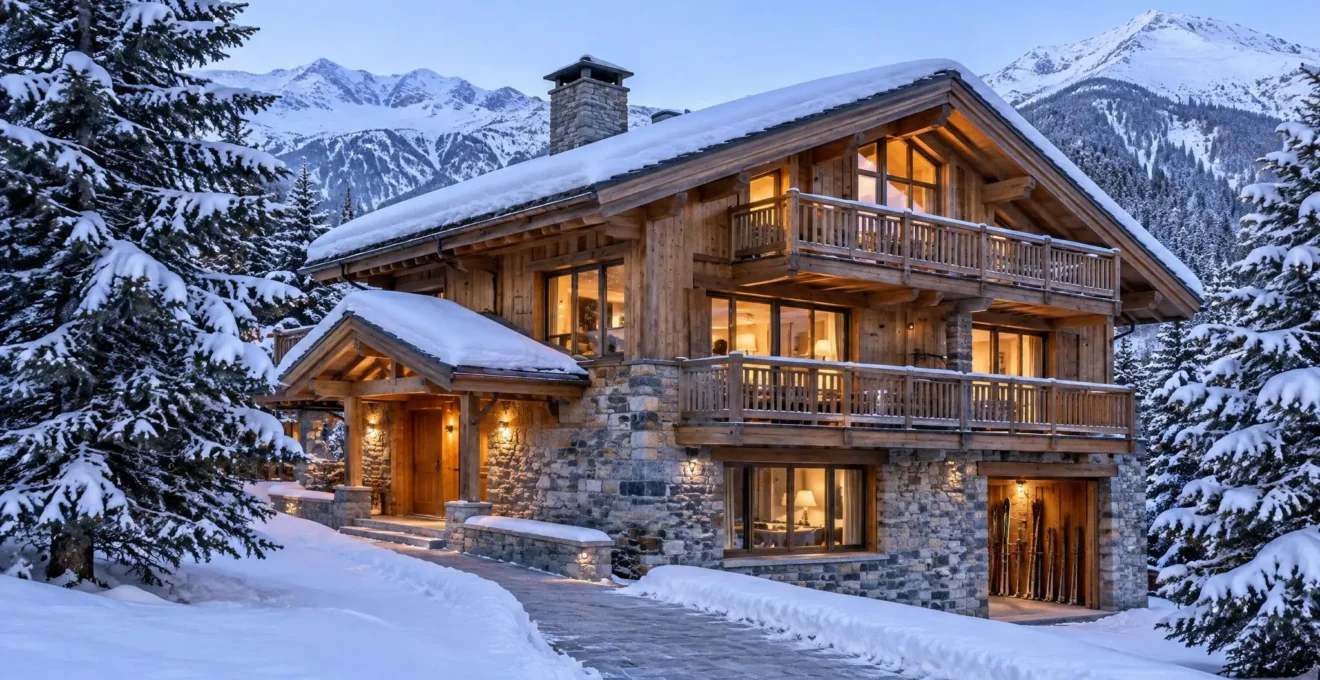
Renting a chalet in Courchevel can cost several thousand euros per week or considerably more for an exceptional luxury property. In one local agency’s catalogue examined in November 2026, advertised starting rates ranged from €4,600 for a smaller chalet to €233,750 for a high-end property. These examples illustrate the variation, not the resort’s overall minimum, maximum or average.
The amount you actually pay depends on your travel dates, chalet size, location and services. Tourist tax, optional catering, transfers and skiing expenses can also affect your budget. The most reliable comparison is a date-specific quotation showing what is included, what costs extra and what is refundable.
What does a Courchevel chalet cost per week?
Weekly prices differ enormously between compact mountain accommodation and large luxury chalets. In the catalogue examined on 18 November 2026, a two-bedroom chalet accommodating up to five guests was advertised from €4,600 per week. At the other end of the inspected listings, a seven-bedroom property accommodating 14 guests started at €233,750 per week.
These are individual advertised starting prices, not confirmed quotes for particular dates. They should not be treated as a complete price range for Courchevel. A week during a major winter holiday may have very different availability and pricing from a quieter period. Some listings may also use different rental durations, so always confirm the period covered.
When comparing chalets for a particular week, the number of guests, location and included facilities matter as much as the advertised starting rate. Altitude Courchevel Immobilier allows travellers to discover the available properties and examine their capacities, amenities and listed prices. These details can help narrow the shortlist, while a date-specific quotation is still needed to establish the actual amount payable.
Why rental prices vary so much
Two chalets advertised at different weekly prices may offer different experiences rather than simply different levels of quality. The useful question is what you receive for the same travel dates, duration and group size.
Peak weeks, villages and ski access
Christmas, New Year and popular school-holiday weeks should be priced separately from quieter dates. Compare quotations covering exactly the same arrival and departure dates; a flexible mid-season week is not a meaningful benchmark for a peak-period reservation.
Location matters too. Courchevel 1850, Moriond, Village, Le Praz and La Tania offer different positions within the wider ski area. Rather than assuming a village has universally cheaper accommodation, consider how its location affects your journey to the lifts, restaurants and activities.
Check the actual distance to a lift and the terrain between the chalet and the slopes. Ski-in/ski-out access is not interchangeable with a nearby lift, a walk in ski boots or a shuttle service. A chalet farther from the slopes might still suit a group using a driver or travelling with non-skiers.
Capacity, layout and premium facilities
A five-guest chalet and a 14-guest chalet should not be compared solely on their total weekly rate. Check permitted occupancy, actual bedrooms, bathrooms and whether advertised sleeping spaces include bunk beds or sofa beds.
Facilities also affect what you are comparing. A private pool, sauna, hot tub, ski room, garage or large dining area may be valuable to one group and unnecessary to another. A higher advertised rate does not, by itself, establish better value.
For an initial comparison, divide the total expected cost by the number of guests actually travelling. Then assess whether the layout and facilities meet their needs. The cheapest cost per person is not necessarily the most suitable arrangement.
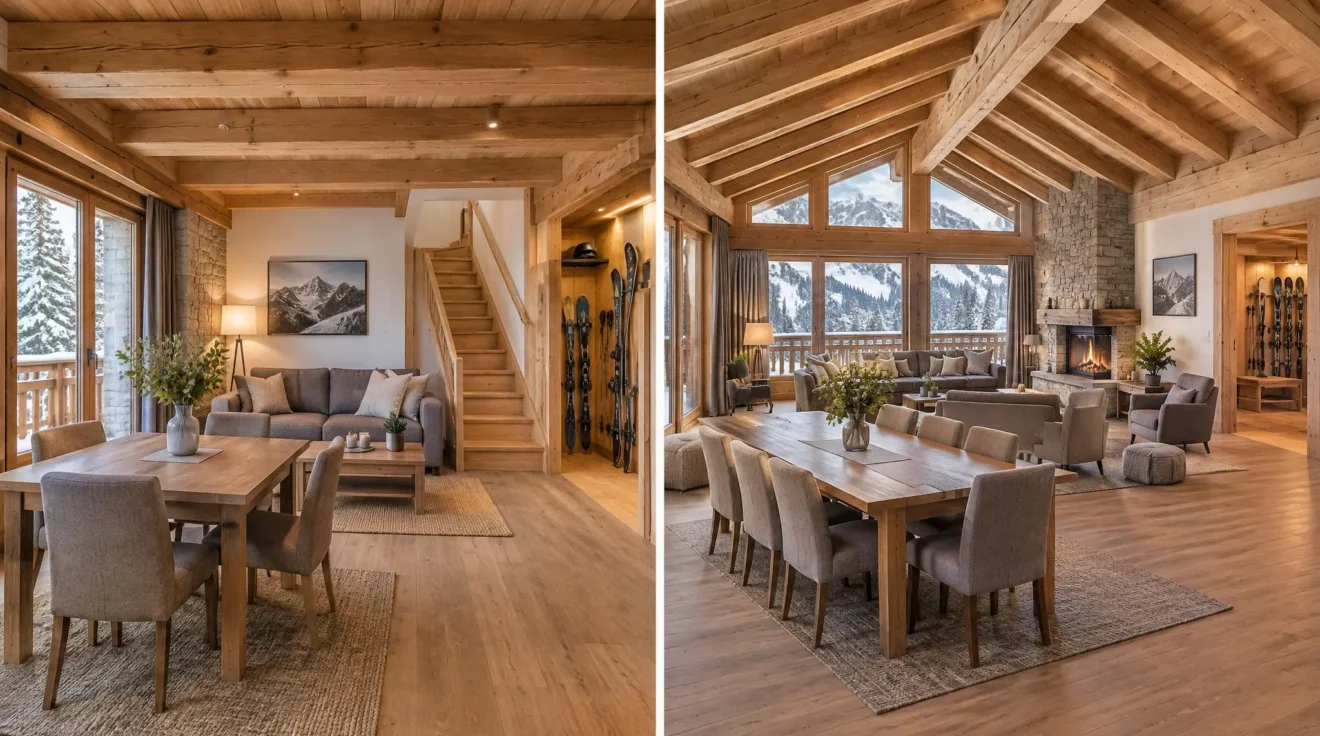
What services are included in chalet rent?
The service package can change the practical value of a rental considerably. Never assume that two similarly priced chalets include the same staffing, cleaning or food arrangements.
Self-catered, serviced and fully catered chalets
These descriptions indicate different hospitality arrangements, but their exact contents must be established in the individual rental terms.
| Arrangement | Typical scope | Check before booking |
|---|---|---|
| Self-catered | Accommodation with kitchen facilities; regular staffing is not assumed. | Linen, final cleaning and housekeeping charges. |
| Serviced | Specified housekeeping or guest assistance. | Frequency, included hours and additional service fees. |
| Fully catered | A defined meal or chef-service package. | Meals, groceries, beverages and staff availability. |
For example, an equipped kitchen allows guests to prepare meals, but it does not mean groceries are supplied. Likewise, a chef-service arrangement may distinguish the cost of preparing meals from the food purchased. Request the actual list of inclusions rather than relying on the package description alone.
Cleaning, concierge, chefs and transfers
Housekeeping deserves particular attention. One documented Courchevel chalet includes bed linen, towels, beds prepared for arrival, final cleaning and two hours of cleaning during the stay. This demonstrates that final cleaning is not necessarily an extra charge, although another property’s conditions may differ.
Concierge assistance requires the same distinction. The inspected listing includes help arranging transfers, but the driver is paid separately. Arranging a service is not the same as paying for it. Ask whether private drivers, airport transfers, grocery deliveries, restaurant arrangements and additional hospitality services are included or billed independently.
A written service schedule showing what happens, when it happens and who pays for it makes competing packages easier to compare.
Which fees and deposits can increase the amount payable?
Some charges increase the final holiday expenditure. Other amounts, particularly refundable security deposits, affect the funds required before arrival without necessarily increasing the ultimate cost.
Tourist tax and other compulsory charges
Tourist tax is governed by local decisions rather than a single fixed charge for every Courchevel chalet. The official French tourist tax guidance distinguishes charges based on actual stays from flat-rate arrangements applicable to accommodation operators. Ask how the tax applies to your particular booking and whether any amount is already reflected in the quoted price.
The applicable treatment can depend on accommodation characteristics, classification and local decisions. A flat-rate tax paid by an operator should not automatically be presented as an additional tax charged directly to every guest.
Other compulsory amounts, where applicable, should appear clearly in the quotation. Examine whether cleaning, booking-related charges or required services are included in the rent or added separately. Do not count the same charge twice.
Security deposits and payment terms
A security deposit protects against potential liabilities under the rental agreement. One inspected chalet requires a deposit before arrival, although the available listing details do not establish its amount.
Before paying, confirm how the deposit is collected, when it is normally returned, what deductions may be made and how a dispute would be handled. Also distinguish the deposit from an advance rental payment, which forms part of the agreed accommodation price.
Deposit versus actual cost: A refundable security deposit may increase the money required before arrival without automatically increasing the final holiday bill. Check its amount, collection method, return conditions and potential deductions.
What should you budget beyond the chalet?
Ski passes can make a substantial difference to a group’s holiday budget when they are not included in the accommodation package. According to the official ski pass rates, an adult six-day 3 Vallées pass costs €421 for 19 December 2026 to 9 April 2027. Six such passes would total €2,526 before equipment hire, lessons or other optional expenses.
Check whether everyone actually needs a pass covering the wider 3 Vallées area or whether a different ski-area product better matches their plans. Ages, skiing days and the applicable tariff period all matter.
Other potential expenses include ski and snowboard hire, lessons, travel insurance, airport transfers, groceries, restaurant meals and childcare. Some chalet packages may include selected services, so the budget should reflect the specific offer rather than assume every item is an extra.
How to calculate and compare your total chalet budget
A useful calculation is confirmed chalet rent + compulsory additional charges + separately purchased services + transport and activities. Keep refundable security deposits in a separate cash-required category rather than automatically counting them as expenditure.
A worked example for six guests
Consider a completely hypothetical six-person booking with assumed accommodation and service costs. Only the ski-pass calculation uses the published adult tariff for the specified 2026–2027 dates.
| Expense | Amount |
|---|---|
| Assumed weekly chalet rent | €12,000 |
| Assumed compulsory charges and tourist tax combined | €250 |
| Assumed optional services | €800 |
| Six adult six-day 3 Vallées passes | €2,526 |
| Total planned expenditure | €15,576 |
| Cost per guest | €2,596 |
The calculation is €12,000 + €250 + €800 + €2,526 = €15,576, divided by six guests. The €250 combined charge is fictional, not an official Courchevel tourist-tax figure. Refundable deposits, other transport costs and unselected activities are excluded. This is a budgeting illustration, not a real rental quotation.
The best way to compare chalet quotes
Once you have a shortlist, ask for an itemised quotation for identical travel dates and the actual number of guests. Use the same checks for every property.
- Confirm the dates, number of nights and permitted guest count.
- Request the complete property rental price in euros.
- Identify included cleaning, linen, catering and concierge services.
- Check compulsory charges, tourist tax and separately payable services.
- Budget for passes, equipment, lessons, food and transfers as needed.
- Review the security deposit, payment deadlines and cancellation conditions.
The real cost of a Courchevel chalet is the total amount required for the stay and the services your group actually intends to use. Compare written, date-specific totals rather than headline weekly prices alone, and distinguish money spent from refundable funds. That approach helps identify which chalet offers the most suitable overall arrangement for your holiday.