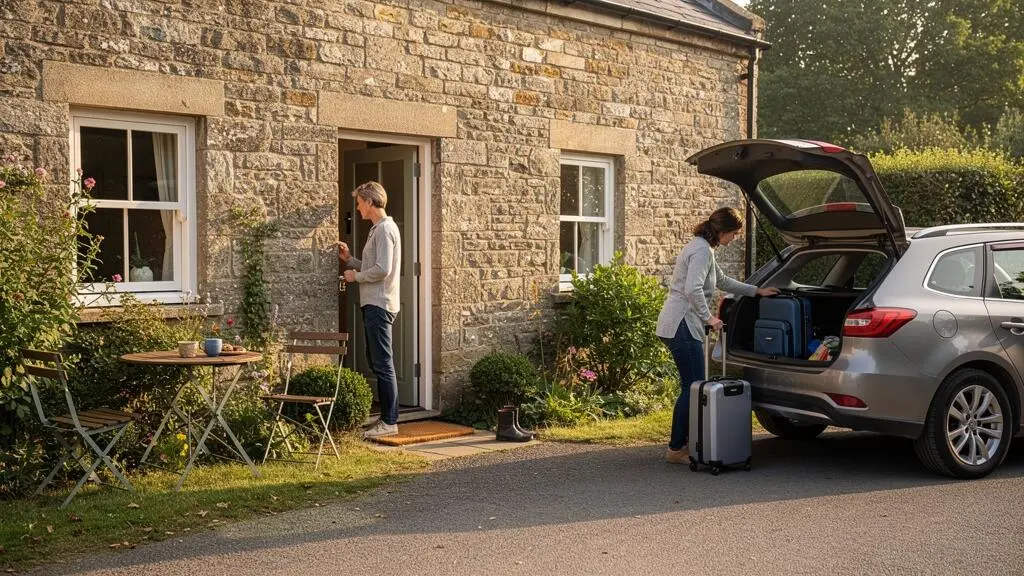
Owning a second home can make travelling easier, but it does not automatically create greater travel freedom. A permanently available property removes some accommodation decisions, provides a familiar place to return to and can simplify spontaneous weekends away. At the same time, ownership introduces financial commitments, maintenance responsibilities and an understandable temptation to keep returning to the same destination.
The distinction is between having more opportunities to travel and having more freedom to choose where those journeys take place. Someone who enjoys spending several holidays in one region may find that a permanent base supports an independent lifestyle. A traveller who values discovering unfamiliar countries, landscapes and cultures may find that the same property gradually narrows their options.
The decision therefore depends on actual travel habits, annual budgets, available holiday time and the amount of responsibility an owner is willing to accept. A second home works best when it remains an attractive option rather than becoming the destination that dictates every holiday.
Second-home ownership and travel freedom: the essentials
- A second home increases convenience and access to a familiar destination, but financial and maintenance commitments can reduce flexibility.
- Renting, timeshares and ownership offer different combinations of destination choice, availability, responsibility and long-term financial exposure.
- The best arrangement is the one that supports preferred travel patterns without consuming the time, budget or opportunities needed to explore elsewhere.
- 1.5: When Does Renting the Same Holiday Destination Stop Making Financial Sense?
- 2: How Can a Personal Holiday Base Make Frequent Trips Easier Without Limiting Flexibility?
- 2.4: Why Returning to One Holiday Base Can Quietly Restrict Your Travel Plans
- 3.1: Why Do Second-Home Owners Sometimes Feel Obliged to Spend Every Holiday There?
- 3.4: The Hidden Travel Restriction When Your Holiday Property Needs Constant Attention
- 3.2: How Can You Divide Six Weeks of Holiday Between Your Own Home and New Places?
- 3.3: Second Home, Timeshare or Holiday Rentals: Which Offers More Travel Flexibility?
- 3.5: When Should a Frequent Traveller Reconsider the Benefits of a Permanent Holiday Address?
1.5: When Does Renting the Same Holiday Destination Stop Making Financial Sense?
Renting the same holiday accommodation can become less attractive financially when repeated bookings cost more over time than the complete cost of owning a comparable property. However, the number of holidays alone does not establish whether purchasing makes sense. The calculation must include annual ownership expenses, actual nights of use, financing, resale considerations and the value of retaining money for other travel opportunities.
A useful starting point is to distinguish the cost of acquiring a property from the cost of keeping it. Annual ownership expenses can include:
- Mortgage interest and other financing charges.
- Property taxes and applicable local premiums.
- Buildings and contents insurance.
- Routine maintenance, repairs and replacement equipment.
- Utilities, internet and other standing charges.
- Cleaning, security and professional property management.
- Potential transaction and eventual resale costs.
Mortgage repayments need particular attention. The principal portion reduces outstanding debt and builds equity in the property, so it should not automatically be classified as an expense in the same way as interest, insurance or maintenance. Nevertheless, principal repayments still affect household cash flow. A realistic comparison should therefore distinguish economic costs from the amount of money that must actually be paid each year.
The CFPB guidance on total homeownership costs provides a useful framework for separating mortgage payments, property taxes and insurance. Its guidance concerns US homeownership, so the relevant tax, financing and insurance arrangements must be adapted to the country where the second home is located.
Local taxation can materially change the calculation. For example, UK government guidance explains that certain local councils can apply a second-home Council Tax premium of up to twice the normal charge, subject to applicable rules and exceptions. This is not a universal UK charge, and the arrangements differ in Scotland. It illustrates why an ownership estimate should use the actual property’s jurisdiction rather than a generic percentage.
Once annual costs have been established, compare them with the cost of renting equivalent accommodation for the nights actually required. A simplified break-even calculation is:
Break-even occupancy = Relevant net annual ownership costs ÷ Comparable rental cost per night.
For example, an explicitly hypothetical calculation might compare £9,000 in relevant annual ownership costs with equivalent accommodation costing £300 per night. The resulting break-even level would be 30 nights. These figures are illustrative, not market estimates or a recommendation to purchase. Variable expenses, financing treatment, transaction costs, tax consequences and potential resale losses could change the result.
Several occupancy scenarios should be tested. A property used for 15 nights annually presents a different financial proposition from one used for 50 or 80 nights. The comparison should also consider whether the property could generate permitted rental income during periods of non-use, without assuming that such income is guaranteed.
There is another cost that conventional rent-versus-buy calculations can overlook: destination flexibility. If ownership absorbs money that could otherwise finance flights, accommodation and longer journeys elsewhere, the financial commitment may reduce the number of experiences available to the household.
A traveller who spends several weeks annually in the same coastal region might value ownership highly. Someone whose interests change between mountain holidays, city breaks and long-distance journeys may benefit more from paying for accommodation only when a particular trip is planned.
Before purchasing, test the destination preference across different seasons and trip lengths. A location that feels ideal during a summer holiday may be less appealing during winter or for repeated short visits. Changes in employment, family circumstances and travel interests can also undermine the assumptions behind a purchase.
The strongest financial argument for ownership is therefore not simply that repeated rentals appear expensive. It is that the property provides lasting value while leaving enough disposable income and time to pursue other destinations when preferences change.
2: How Can a Personal Holiday Base Make Frequent Trips Easier Without Limiting Flexibility?
A personal holiday base can make frequent trips easier by removing repeated accommodation searches, reducing preparation and providing a familiar place to return to. Its value is greatest when it simplifies travel that the household already wants to undertake. To preserve flexibility, the property should support different journeys rather than turn every available holiday into another stay at the same address.
One practical advantage of a permanently equipped property is the reduction in departure friction. Travellers can keep appropriate clothing, toiletries, outdoor equipment and household essentials at the property. This avoids transporting the same items repeatedly and can make short breaks easier to organise.
There is also less uncertainty about accommodation. Owners know the layout, facilities, surroundings and practical arrangements. They do not need to compare unfamiliar rentals or worry about whether a booking will match expectations. For households with children or relatives who benefit from a predictable environment, this familiarity can be particularly valuable.
However, convenient access to one destination is not the same as freedom to travel widely. Location determines whether the property becomes a useful starting point for exploration or an isolated destination that is difficult to leave.
A flexible holiday base should ideally offer several practical transport options, reliable connections and reasonable access to surrounding regions. A property close to rail services, regional airports or major road connections may make multi-destination itineraries easier. By contrast, a remote home that requires complicated journeys for every departure can become a logistical constraint.
The idea of a modular holiday base offers a useful alternative to treating the property as the entire holiday. It can serve as:
- A short-break destination between longer international journeys.
- An overnight stop before travelling to another region.
- The starting point for exploring neighbouring towns and landscapes.
- A familiar place to return to after several days elsewhere.
- A convenient location for meeting relatives before continuing a wider itinerary.
This approach changes the role of ownership. Rather than requiring every holiday to revolve around the property, the home becomes one component of a wider travel routine.
For instance, a household with a countryside property might spend a weekend there before continuing to a nearby city for several days. Another trip could combine a short stay at the property with a longer journey through a different region. These arrangements preserve the convenience of familiar accommodation while leaving room for discovery.
The key is to ensure that visits remain voluntary. A property should not need to be used simply because an empty weekend appears available. Nor should every absence create a feeling that the household must compensate with another stay.
Practical flexibility also depends on the length of visits. If travelling to the property requires an entire day, the home may be unsuitable for spontaneous overnight breaks. If it is accessible within a manageable journey, shorter stays can become a genuine addition to the household’s available leisure time.
Before deciding whether a holiday base supports mobility, consider how easily it fits into existing travel patterns. Does it shorten journeys the household already makes? Can it be combined with other destinations? Does it make spontaneous trips possible without creating new obligations?
Ultimately, the greatest benefit comes from treating the property as an additional travel option. Its convenience should make it easier to travel more often, not harder to choose somewhere different.
2.4: Why Returning to One Holiday Base Can Quietly Restrict Your Travel Plans
Returning to one holiday base can restrict travel plans because familiarity gradually makes the same destination easier to choose than somewhere unfamiliar. Owners may still want to discover new places, but repeated accommodation searches, additional planning and unfamiliar logistics make alternative journeys feel less convenient. The restriction often develops through habit rather than an explicit decision to stop exploring.
Initially, a second home may represent an exciting opportunity to enjoy a preferred location more frequently. Over time, however, the property can become the easiest answer whenever a holiday period appears in the calendar.
Instead of researching a new destination, comparing transport options or organising accommodation, the household can simply return to a place it already knows. This is a genuine practical benefit, but it can also create a pattern in which convenience gradually replaces deliberate destination choice.
One way to recognise this pattern is to conduct a destination-diversity audit. Review the household’s recent travel history and compare intended journeys with completed ones.
Ask three questions:
- Which destinations were originally considered but never booked?
- Which journeys were postponed because returning to the second home seemed easier?
- How many holidays reflected a genuine preference for the property rather than convenience or perceived obligation?
The answers can reveal whether the property is complementing travel interests or gradually replacing them.
Destination diversity is not simply about counting different countries. It also involves experiencing different climates, landscapes, cultures and seasonal conditions. Someone who repeatedly visits the same coastal location may enjoy excellent holidays while missing opportunities for winter travel, mountain experiences or longer cultural journeys.
Some travel opportunities are also difficult to reproduce. A particular seasonal event, family gathering or long-distance itinerary may require a specific period of uninterrupted leave. Repeatedly allocating those dates to a familiar property can mean losing opportunities that cannot easily be rescheduled.
Household preferences make this question more complex. One partner may value the security and familiarity of a permanent holiday address, while the other prefers discovering unfamiliar destinations. Children may enjoy returning to the same swimming spots and local friendships, whereas adults may want more varied experiences.
These differences do not necessarily indicate that ownership is unsuitable. They indicate that repeated stays should reflect genuine agreement rather than an automatic household routine.
A practical solution is to separate collective travel priorities from individual preferences. Some holidays can be reserved for the familiar base, while others can accommodate different interests. Travellers may also organise occasional individual trips without expecting every member of the household to follow the same itinerary.
The objective is not to maximise the number of destinations visited. It is to ensure that the existence of a second home does not quietly remove destinations from consideration.
A second home can remain a valuable part of a varied travel lifestyle, provided that returning to it continues to be a preference rather than an unquestioned habit.
3.1: Why Do Second-Home Owners Sometimes Feel Obliged to Spend Every Holiday There?
Second-home owners sometimes feel obliged to spend every holiday at their property because a substantial purchase creates pressure to justify the decision. The desire to make the investment feel worthwhile can influence future travel choices, even when another destination would provide greater enjoyment. Financial reasoning, emotional attachment and family expectations can all contribute to this perceived obligation.
One important behavioural mechanism is the sunk-cost effect. Money already spent on purchasing a property cannot be recovered simply by using it more frequently. Nevertheless, previous expenditure can influence subsequent decisions, encouraging people to continue an activity because they have already invested heavily in it.
Research by Ariane Haller and Lars Schwabe, published in 2014 under the title Sunk costs in the human brain, examined how previous investments influence financial decision-making. The experimental research provides a scientific framework for understanding the behavioural mechanism, although it did not specifically investigate second-home owners or holiday-booking decisions.
The distinction matters. It would be inaccurate to suggest that every property owner experiences holiday-home guilt. However, the research illustrates why past expenditure can influence later choices even when future costs and benefits should be considered independently.
For second-home owners, the effect may appear in several ways. Someone might choose another holiday at the property because they have already paid for it, because they want to demonstrate that purchasing was a sensible decision or because they feel uncomfortable leaving an expensive asset unused.
Financial pressure is only one part of the problem. Emotional and social expectations can create additional obligations.
Relatives may expect regular access to the property. Children may associate every school holiday with returning to the same destination. A partner who supported the original purchase may feel disappointed if the household begins spending more time elsewhere.
These expectations can turn a discretionary lifestyle choice into a perceived responsibility.
A useful way to distinguish preference from obligation is to apply a counterfactual decision test:
A practical holiday-choice test
Imagine that the household does not own the second home and must choose its next holiday from scratch. Would everyone still select the same destination, at the same time, and for the same length of stay?
If the answer is yes, the next visit probably reflects a genuine preference. If the answer is no, ownership may be influencing the decision more strongly than enjoyment. This hypothetical exercise is a decision aid, not evidence that the purchase was necessarily a mistake.
Another useful safeguard is to establish an explicit household agreement that ownership does not create a minimum number of compulsory visits. The household can decide how much time it genuinely wants to spend there without treating occupancy as a measure of success.
For example, family members might agree that the property is available whenever someone wants to return, but that other holidays will be planned according to their own merits. This preserves the pleasure of familiarity without making it an obligation.
Ownership should make a preferred destination more accessible, not create a duty to keep returning regardless of changing interests, family needs or alternative travel opportunities.
3.4: The Hidden Travel Restriction When Your Holiday Property Needs Constant Attention
A holiday property can restrict travel even when its owners are not staying there. Inspections, repairs, cleaning, garden care and unexpected incidents create responsibilities that may determine when owners can leave, how long they can remain away and whether they feel comfortable travelling somewhere difficult to reach. The practical freedom provided by a second home therefore depends partly on how independently it can be managed.
Unlike accommodation booked for individual holidays, a privately owned property continues to require attention throughout the year. Its operational demands may include:
- Checking the property after periods of bad weather.
- Preparing heating, plumbing and other systems for seasonal changes.
- Arranging cleaning and laundry between visits.
- Maintaining gardens, outdoor spaces and access areas.
- Responding to repairs and equipment failures.
- Checking security and dealing with unexpected incidents.
Some tasks can be planned in advance. Others arise without warning and may interrupt travel at particularly inconvenient moments.
A leaking pipe, security problem or essential heating failure creates a different challenge from routine cleaning. The owner must establish whether the issue can be resolved remotely, whether a contractor can attend independently and whether someone needs to make decisions on the owner’s behalf.
This makes local support an important part of the ownership decision. A trusted neighbour, professional property manager or network of reliable contractors can reduce the need for the owner to attend every incident personally.
However, delegation does not eliminate responsibility. The cost, availability and precise scope of management services vary. Some providers handle routine inspections and cleaning but exclude emergency repairs, insurance matters or decisions involving significant expenditure.
Remote monitoring can also help owners understand the condition of an unoccupied property. Appropriate security systems, temperature monitoring and leak detection may provide useful information, but they do not replace physical inspections or guarantee that every incident can be resolved without intervention.
Self-management versus delegated management should therefore be assessed using three practical measures:
- Annual cost: What are the professional fees, contractor charges and additional service expenses?
- Owner time: How many hours are required for inspections, coordination and decision-making?
- Travel interruption: How likely is an unexpected incident to interrupt an existing journey?
The following visual illustrates why even a relatively minor domestic problem can create a practical obligation.
Before purchasing or retaining a property, owners should conduct a travel-interruption stress test. Imagine being abroad for several weeks with limited access to communication. Could a local representative inspect the property, arrange an appropriate contractor and handle routine decisions without requiring an immediate return?
The answer depends on the property’s age, construction, location, complexity and the reliability of available local support. A relatively straightforward apartment with professional building management may create different responsibilities from an older detached house with extensive grounds and independent utilities.
Five practical checks before committing to property ownership
- List every recurring property task and produce a written annual maintenance calendar.
- Identify at least the locally available maintenance and management services, recording their responsibilities and contact details.
- Obtain written estimates for routine inspections, cleaning, garden care and emergency assistance.
- Prepare an incident-response document identifying who can access the property, authorise repairs and contact relevant contractors.
- Complete a travel-interruption assessment by checking whether the property could be managed during an extended absence without requiring the owner’s physical attendance.
Reliable delegation, manageable maintenance and realistic contingency arrangements can make ownership more compatible with international travel. Without them, the second home may become another fixed responsibility rather than a convenient holiday option.
3.2: How Can You Divide Six Weeks of Holiday Between Your Own Home and New Places?
Dividing six weeks of annual holiday between a second home and unfamiliar destinations requires prioritising travel opportunities rather than automatically allocating most available time to the familiar property. Six weeks is an illustrative planning allowance, not a universal holiday entitlement. The appropriate balance depends on actual leave availability, family commitments, travel time and the journeys the household genuinely wants to make.
Before allocating days, establish how much usable time is available. Annual leave may be constrained by work schedules, school holidays, overlapping family commitments and the practical time required to reach distant destinations.
It is also important to distinguish annual leave from weekends and remote-working stays. A person who works remotely from a second home for several days has not necessarily used the same amount of holiday as someone taking an uninterrupted week away from work.
Once the available time is clear, divide it into three categories:
- Second-home visits: Time allocated to the familiar destination for relaxation, family activities or short breaks.
- New destinations: Journeys requiring different accommodation, transport arrangements or longer periods away.
- Uncommitted time: Days deliberately left available for spontaneous opportunities or changing circumstances.
An illustrative six-week allocation could involve two weeks at the second home, three weeks exploring other destinations and one flexible week. This is a hypothetical planning example, not a recommended formula. A household that strongly prefers its familiar destination may choose a different balance, while frequent international travellers may want to reserve substantially more time for longer journeys.
The most important principle is to prioritise journeys that are difficult to reschedule before filling the remaining calendar with repeatable visits.
A seasonal destination, an important family event or a trip requiring several consecutive weeks may need to be booked well in advance. A weekend at the second home may be much easier to arrange later. Allocating time in that order helps prevent convenient repeat visits from displacing opportunities with narrower availability.
For example, a traveller interested in a particular seasonal experience should identify the relevant dates first. A household coordinating school holidays should also account for the periods when all family members can travel together. The remaining time can then be allocated between the second home and other destinations.
The practical challenge is that initial plans often change. A family may decide to extend a familiar stay, take an unexpected trip or postpone a destination because of transport disruption or personal circumstances.
A midyear review can help maintain balance without turning the calendar into a rigid quota. Compare the original allocation with actual travel and ask whether additional visits to the property have consumed days reserved for exploration.
The following exercise illustrates how a household can make this allocation visible.
Ultimately, the best allocation is the one that reflects genuine preferences and preserves room for change. A second home should make it easier to enjoy familiar surroundings while leaving enough time for the journeys that would otherwise never happen.
Key considerations before choosing a permanent holiday address
- Assess whether ownership genuinely expands destination choice or mainly makes returning to one location more convenient.
- Account for the financial, operational and emotional commitments that may influence future holiday decisions.
- Compare ownership with alternatives according to actual travel behaviour, the ability to change plans and the difficulty of reversing long-term commitments.
3.3: Second Home, Timeshare or Holiday Rentals: Which Offers More Travel Flexibility?
A second home, timeshare and holiday rental offer different forms of travel flexibility. Owning a property provides control and familiar access to one destination, while rentals allow travellers to change locations without maintaining a permanent asset. Timeshares can offer predictable access to particular accommodation or a wider exchange network, but availability and contractual conditions determine how flexible they are in practice.
The best option depends on how often travellers return to the same destination, how much control they want over accommodation and how easily they need to change their plans.
| Criterion | Second home | Timeshare | Holiday rentals |
|---|---|---|---|
| Destination choice | Usually concentrated on one location | Depends on the available network and exchange arrangements | Broad choice according to market availability |
| Access | Generally available to the owner, subject to access and personal arrangements | Subject to allocated weeks, points and booking conditions | Depends on booking availability and confirmation |
| Length of stay | Potentially flexible | Determined by the agreement and booking system | Can be selected for individual trips |
| Personalisation | High control over furnishings and facilities | Usually limited to the accommodation provided | Varies between properties |
| Ongoing responsibilities | Maintenance, insurance, taxes and management | Recurring fees and contractual obligations | Generally limited to individual bookings and their terms |
| Changing arrangements | May require selling or otherwise managing the property | May involve contractual exit or resale difficulties | Usually easier between bookings, subject to cancellation terms |
Second-home ownership is particularly suitable for travellers who repeatedly return to one destination and value immediate access. Personal belongings can remain in place, accommodation does not need to be booked for every visit and the owner can organise the property according to individual preferences.
However, unrestricted access to one property does not provide unrestricted access to other destinations. The owner still needs to organise and pay for alternative accommodation when travelling elsewhere, while continuing to meet the costs of the second home.
Timeshares occupy a different position. They generally provide access to accommodation for specified periods, sometimes through fixed-week arrangements and sometimes through points-based systems.
Points requirements may vary according to the property, destination, duration and season. Exchange systems can extend the range of available destinations, but they do not guarantee access to every property or preferred travel date.
The FTC guidance on timeshares and vacation clubs explains how fixed-week and points-based arrangements operate and highlights recurring maintenance fees, exchange charges and potential resale difficulties. The guidance is US-focused; contractual rights and exit procedures depend on the relevant agreement and jurisdiction.
Holiday rentals generally offer the greatest practical freedom to change destinations between trips. Travellers can choose a city apartment for one journey, a rural cottage for another and accommodation near a different coastline for a third. They avoid the responsibility of maintaining a permanent holiday property, although availability, rental prices and cancellation conditions still matter.
To select between these arrangements, consider the following travel profiles:
- Frequent repeat visitors: Ownership may provide the strongest combination of familiarity, personalisation and immediate access.
- Travellers with changing destinations: Individual rentals may preserve more choice and avoid long-term property commitments.
- Travellers seeking predictable resort accommodation: A suitable timeshare may offer value if the available destinations, booking windows and fees match their habits.
The ability to reverse a commitment is another important consideration. A rental booking can generally be reconsidered when planning a future trip, although individual cancellation terms apply. Selling a second home may involve transaction costs, market uncertainty and a substantial period before a suitable buyer is found.
Timeshare exit arrangements can also be complicated by contract terms, ongoing charges and the availability of legitimate resale opportunities. Travellers should examine the specific agreement rather than assuming that a membership can easily be cancelled or transferred.
For frequent travellers who value variety, the ability to change destination without carrying a permanent financial and operational commitment can be more valuable than having guaranteed access to one familiar address.
3.5: When Should a Frequent Traveller Reconsider the Benefits of a Permanent Holiday Address?
A frequent traveller should reconsider the benefits of a permanent holiday address when the property no longer reflects actual travel habits, consumes too much of the available budget or creates responsibilities that interfere with preferred journeys. The decision does not automatically mean selling. It means assessing whether ownership still provides enough practical and personal value to justify its financial and operational commitments.
The original reasons for purchasing a second home may change substantially over time. A property bought for frequent family weekends might become less useful when children leave home. A location that once suited an active lifestyle may become difficult to access if mobility changes. Retirement may create opportunities for longer international journeys that were previously impossible because of work commitments.
Other changes can also influence the decision:
- Relocation to another city or country.
- New family responsibilities or changing household composition.
- Different preferences regarding climate, activities or travel distance.
- Greater interest in long-distance journeys and unfamiliar destinations.
- Changes in household finances or the cost of maintaining the property.
- Reduced willingness to organise inspections, maintenance and repairs.
A periodic ownership review should focus on actual behaviour rather than the original purchase rationale. Useful indicators include voluntary nights spent at the property, holidays taken elsewhere, unused travel opportunities and satisfaction with different types of journeys.
It is important to distinguish nights spent at the property from nights spent there because of perceived obligation. A high occupancy level does not necessarily demonstrate that the property is supporting the owner’s preferred lifestyle.
Before deciding to sell, consider whether a different ownership arrangement could restore flexibility.
One option is to reduce personal visits and reserve the property for selected periods. Another is to arrange professional management, allowing the owner to spend longer away without personally coordinating every maintenance task.
Where local regulations, insurance conditions and ownership arrangements permit, longer-term rental arrangements may also be worth considering. This could change the property’s financial contribution, although it may introduce additional management, tax and regulatory responsibilities.
Finally, selling may be the most appropriate option when the property has become an ongoing financial or practical burden. The decision should account for realistic sale proceeds, transaction expenses, outstanding financing and applicable tax consequences rather than assuming that the original purchase price can be recovered.
A useful forward-looking question is:
If the decision had to be made today, would the household still purchase this particular property, given its current budget, available holiday time and preferred destinations?
A clear yes suggests that ownership continues to support a meaningful lifestyle choice. Uncertainty may indicate that the household should reconsider how the property fits into future travel plans. A clear no does not automatically require an immediate sale, but it is a reason to examine the available alternatives.
The central measure should be the freedom the property creates, not the number of times it is occupied or the amount already invested in it.
For travellers deciding what to do next, the most sensible step is to compare the property’s current contribution with the opportunities it consumes. Keeping, adapting or relinquishing a second home can all be reasonable decisions when they are based on the lifestyle the household wants now, rather than the one it expected to have when purchasing the property.
Does owning a second home mean spending less money on holidays?
Not necessarily. Ownership can reduce repeated accommodation bookings, but mortgage interest, property taxes, insurance, maintenance, utilities and management remain ongoing expenses. Whether it saves money depends on actual occupancy, the comparable cost of renting and the opportunity cost of the capital invested. Travellers should compare complete annual costs rather than assuming that free accommodation makes every visit inexpensive.
Can a second home make spontaneous international travel more difficult?
Yes, particularly when the property requires regular inspections, maintenance or personal intervention. Unexpected repairs can interrupt journeys, while ownership costs may reduce the available budget for other destinations. Professional management and reliable local support can reduce these difficulties, although they introduce additional expenses and do not remove every responsibility.
Is renting better than owning for someone who travels frequently?
Renting is often more suitable for travellers who regularly change destinations, travel for different lengths of time or prefer to avoid permanent property responsibilities. Ownership may be more attractive to people who repeatedly visit the same location and value familiar accommodation. The appropriate choice depends on travel frequency, destination preferences, total costs and the importance of being able to change plans.
How many weeks should someone spend at their second home each year?
There is no universally appropriate number of weeks. The ideal amount depends on the owner’s preferences, annual leave, family commitments, property expenses and alternative travel opportunities. Rather than pursuing a particular occupancy target, owners should prioritise stays they genuinely want and retain sufficient time for other destinations.
What is the biggest sign that a second home is restricting travel freedom?
A strong warning sign is repeatedly choosing the second home when household members would prefer to travel elsewhere. Other indicators include postponing important journeys because of maintenance responsibilities, feeling compelled to use the property to justify its purchase and finding that ownership costs leave insufficient money for other holidays. When convenience turns into obligation, the arrangement deserves reassessment.