Owning a holiday home abroad means maintaining a functioning property even when nobody is there to notice a problem. Water leaks, utility accounts, security arrangements, official correspondence and routine maintenance all require attention between visits. The practical challenge is not necessarily the volume of work, but arranging for essential tasks to happen without your physical presence.
For first-time international property owners, the most reliable approach is to establish a local support network, define emergency procedures, organise accessible records and schedule inspections around the property’s actual risks. These arrangements should be in place before the first prolonged absence, rather than assembled during an emergency.
Responsibilities also vary by country. Insurance conditions, property taxes, postal services, contractor practices and access regulations may differ substantially between your main residence and your holiday home. A system that works for a property in England may need adapting for one in Spain, Portugal, France or another destination. The objective is to make ownership manageable through clear responsibilities, timely detection and predictable spending.
Holiday home ownership abroad: what matters most
- Arrange local access, emergency contacts and documented inspections before leaving the property unoccupied.
- Monitor utilities, correspondence and insurance conditions throughout the year, even when the home is unused.
- Budget separately for routine maintenance, unavoidable standing costs and unexpected repairs.
- Why Can a Minor Plumbing Issue Become Expensive When Your Holiday Home Is Overseas?
- How Can You Build a Local Support Network for a Holiday Home You Rarely Visit?
- Smart Lock, Key Safe or Local Keyholder: Which Is Safest for an Empty Holiday Home?
- The Missed-Post Problem That Can Disrupt Ownership of a Property Abroad
- When Should an Empty Holiday Home Be Inspected During a Six-Month Absence?
- How Can You Organise Utility Accounts and Property Documents Across Two Homes?
- Why Do Empty Holiday Homes Still Generate Unexpected Maintenance Bills?
- How Much Should You Budget for Holiday Property Maintenance Each Year?
Why Can a Minor Plumbing Issue Become Expensive When Your Holiday Home Is Overseas?
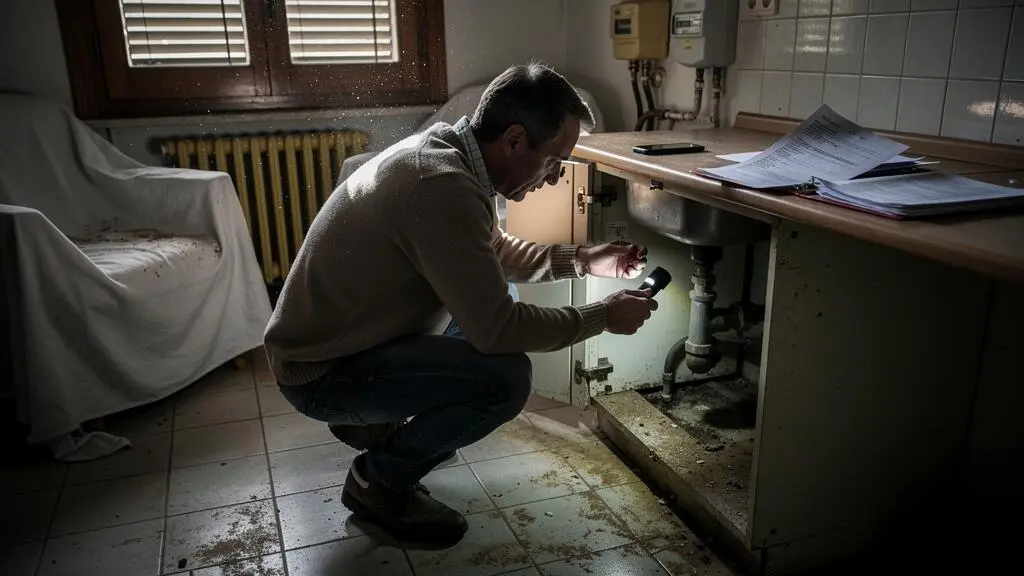
A minor plumbing problem can become expensive in an overseas holiday home because nobody may discover it until significant damage has occurred. A slow leak that would attract attention in an occupied property can continue unnoticed, damaging flooring, plasterwork and electrical installations. Remote ownership also adds emergency access costs, contractor coordination and potential insurance complications.
The critical variable is often the time between failure and detection, rather than the complexity of the original repair. A leaking pipe connection might initially require a straightforward replacement. If water continues escaping into an enclosed space, however, the eventual work may include drying, replacing damaged materials and checking affected electrical systems.
Distance increases the difficulty of organising even a small repair. Contractors may charge for travelling to the property, impose minimum call-out fees or require someone to provide access. A minor job may also be less attractive to a busy tradesperson when there is no owner available to approve additional work or resolve unexpected complications.
Owners should establish an emergency triage rule that local contacts can apply without repeatedly seeking instructions:
- Immediate response: active water escape, electrical danger, suspected intrusion or another condition threatening safety or significant property damage.
- Prompt assessment: unexplained dampness, loss of essential heating during freezing conditions or a potentially unstable building component.
- Scheduled maintenance: cosmetic defects and non-urgent work that can safely wait without creating further damage.
For an active leak, the contact should know how to shut off the water safely, obtain professional help and send photographs before remedial work begins. Written spending limits can prevent delays, although they should allow a clear exception for urgent measures needed to protect people or prevent serious damage.
30–60 days
The period after which UK home insurance policies commonly restrict certain types of cover for unoccupied properties, according to the Financial Ombudsman Service. This is not a universal requirement or a rule for insurance policies in other countries.
Financial Ombudsman Service guidance on unoccupied properties
Insurance adds a separate consideration. Depending on the policy, prolonged vacancy may affect escape-of-water cover or introduce conditions relating to inspections, heating or water isolation. An undetected leak does not automatically invalidate a claim, but insurers may examine whether applicable policy conditions were met. Keep inspection records and confirm the definition of an unoccupied property with the insurer before departure.
Once emergency priorities are established, the next responsibility is making sure the right people can respond locally without waiting for the owner to travel.
How Can You Build a Local Support Network for a Holiday Home You Rarely Visit?
A dependable local support network should include someone who can enter the property, qualified tradespeople who can resolve technical faults, a nearby observer who notices unusual activity and a person who can handle administrative tasks. These responsibilities should be assigned explicitly, supported by written instructions and paid arrangements where appropriate, rather than depending entirely on informal favours.
Although a friendly neighbour may offer occasional help, one person rarely provides every service reliably. Someone who notices a damaged shutter may not be qualified to diagnose an electrical fault or available to supervise repairs.
A practical network distributes responsibilities across four complementary roles:
| Role | Main responsibility | Essential arrangement |
|---|---|---|
| Local keyholder | Provide access, carry out basic checks and respond to urgent requests. | Agreed availability, response arrangements and backup access. |
| Qualified tradespeople | Handle plumbing, electrical, roofing and other technical faults. | Verified qualifications where required, contact details and call-out terms. |
| Nearby neighbour | Report visible changes, unusual activity or apparent damage. | Clear reporting expectations without imposing technical responsibilities. |
| Administrative contact | Monitor correspondence, forward notices and support local paperwork. | Confidentiality arrangements and clearly defined authority. |
Vet contacts while visiting the property. A paid trial task, such as arranging a routine inspection or supervising a minor repair, can reveal whether someone communicates promptly, documents work and follows instructions. For technical contractors, check relevant credentials, insurance and local licensing requirements.
Compensation should match the responsibility. A neighbour who occasionally reports visible problems may prefer an informal arrangement. A keyholder expected to attend inspections or emergencies should generally have agreed payment terms. A monthly retainer may suit recurring duties, while per-visit charges work better for infrequent inspections. Emergency fees and out-of-hours availability should be discussed separately.
Provide local contacts with one controlled, accessible property information file containing the address, emergency numbers, shut-off locations, meter information, contractor details and owner contact methods. Store security credentials separately using a secure sharing method, and restrict sensitive information to people who genuinely need it. Specify which expenses contacts can authorise independently and which require approval.
Review the arrangements periodically. Confirm that contacts remain available, replace outdated telephone numbers and identify a substitute keyholder. An emergency network is only useful when its members know what they are expected to do.
With suitable local support established, the next decision is how to give authorised people access while retaining control over who can enter the property.
Smart Lock, Key Safe or Local Keyholder: Which Is Safest for an Empty Holiday Home?
No access method is universally safest for an empty holiday home. Smart locks offer remotely managed permissions, key safes provide relatively simple access and trusted local keyholders can respond physically when something goes wrong. The best arrangement depends on reliability, access control, insurance conditions and whether the home is used only by its owners or also by guests.
For overseas owners, security involves more than preventing unauthorised entry. Controlled remote access means knowing who can enter, how permissions are issued and withdrawn, and who can physically attend if an alarm activates or a system fails.
A comparison of practical operating constraints helps clarify the options:
| Criterion | Smart lock | Key safe | Local keyholder |
|---|---|---|---|
| Remote permission management | Often available, depending on the model and connectivity. | Usually requires manual code management, unless electronically controlled. | Access depends on arrangements with the person holding the key. |
| Access records | May provide electronic logs. | Basic models generally do not record individual entries. | Can maintain written visit records. |
| Main vulnerability | Battery failure, connectivity problems or configuration errors. | Shared codes, poor placement and untracked key retrieval. | Unavailability, lost keys or dependence on one person. |
| Emergency response | Enables authorised entry if functioning, but cannot provide a physical responder. | Provides a stored key, but someone must attend. | Can attend personally if available. |
| Best operational fit | Properties requiring frequent, individually controlled access. | Properties needing straightforward backup access. | Properties requiring inspections and hands-on local assistance. |
A smart lock may be convenient for a property regularly accessed by guests or cleaners, but its battery and connectivity arrangements require attention during long vacant periods. A mechanical key safe avoids those electronic dependencies, although codes must be changed when necessary and should not circulate indefinitely among contractors.
The right combination also depends on use. An owner-only property visited occasionally may need a reliable keyholder and secure backup key. A frequently rented holiday home may benefit from individually assigned access codes, provided local rules and insurance arrangements permit the system. Homes in areas with heightened security concerns require particular attention to the positioning and specification of any external key storage.
Before selecting a device, check the insurer’s security requirements and any applicable rules governing guest access. Where entry records are needed for management or contractual purposes, establish a documented process rather than assuming an electronic lock automatically satisfies every requirement.
Access arrangements should support more than maintenance visits: they also enable someone trusted to notice and handle important correspondence before an administrative issue becomes urgent.
The Missed-Post Problem That Can Disrupt Ownership of a Property Abroad
Uncollected post can create financial and legal complications for an overseas property owner because important deadlines may continue while the home is empty. Tax assessments, municipal notices, utility demands and community-management correspondence may require action regardless of whether the owner has seen the letter. Reliable mail monitoring is therefore a property-management responsibility, not simply a convenience.
An overlooked envelope may contain a reminder about an unpaid local charge, an insurance renewal, a utility contract change or a notice requiring a response. The longer the property remains unattended, the greater the opportunity for correspondence to accumulate without being reviewed.
The potential escalation is straightforward: an initial payment request may be followed by a reminder, a formal demand and additional charges. Depending on the jurisdiction, the type of debt and the applicable procedures, unresolved obligations can eventually lead to enforcement measures affecting the owner or property. Such consequences are not automatic, and their legal basis differs between countries.
Build redundancy into the correspondence process:
- Register a reliable correspondence address with each relevant institution, where permitted.
- Enable electronic billing and official online accounts when available.
- Arrange lawful postal forwarding or a local mail collection service.
- Ask an authorised contact to report urgent envelopes promptly and send secure scans when appropriate.
- Record payment and response deadlines in a calendar that is checked independently of incoming post.
Postal forwarding is not a universal solution. For example, Royal Mail‘s international mail redirection guidance describes forwarding from UK addresses to destinations abroad, but certain items are excluded. Its service does not establish what postal redirection arrangements are available for a property located in another country.
Where local law requires an official address for service, a fiscal representative or another designated recipient, verify the arrangement with the relevant authority or a qualified local adviser. An informal neighbour who scans envelopes may not be legally authorised to receive formal notifications on your behalf.
The most effective safeguard combines delivery arrangements with a regular detection routine. A trusted contact should confirm that mail has been checked, even when nothing significant has arrived. Keep a separate log of notices requiring action and record their resolution.
Mail checks can often be incorporated into physical property visits, making a well-planned inspection schedule useful for both building condition and administrative continuity.
When Should an Empty Holiday Home Be Inspected During a Six-Month Absence?
An empty holiday home should be inspected according to its insurance conditions, seasonal hazards and building systems, rather than an assumed universal timetable. During a six–month absence, owners should arrange recurring security and condition checks, additional visits after significant weather events and appropriate technical maintenance. The exact frequency must reflect the property and any contractual inspection requirements.
Start by checking the insurance policy’s vacancy definition and inspection clauses. A policy may specify a maximum interval between visits or require particular precautions. These conditions take priority over any general property-management recommendation, and compliance should be documented.
Climate and building characteristics then determine whether more frequent checks are prudent. A property exposed to freezing temperatures may need water isolation and appropriate heating precautions. A coastal or humid home may require closer monitoring for condensation, water ingress and corrosion. Properties with pools, gardens or complex equipment add further maintenance responsibilities.
It helps to distinguish three levels of inspection:
| Inspection type | What it should cover | Scheduling approach |
|---|---|---|
| Brief keyholder walkthrough | Signs of leaks, unusual smells, visible mould, forced entry, unexpected water and basic security. | Recurring visits at intervals compatible with policy conditions and local risks. |
| Technical condition check | Plumbing, drainage, heating, appliance condition, accessible gutters and known defects. | Planned servicing intervals and checks before or after periods of non-use. |
| Detailed or professional inspection | Roof condition, persistent damp, building fabric, pest entry points and specialist systems. | Based on maintenance history, seasonal exposure, damage indicators and specialist recommendations. |
These tiers complement one another. A five-minute walkthrough may reveal a wet floor, but it cannot establish whether a boiler is operating safely or whether a roof defect requires specialist repair. Plumbing and heating systems should be operated, isolated or maintained only according to manufacturer guidance and appropriate professional advice.
For a six-month absence, develop a dated schedule before departure. Include routine visits, any seasonal servicing and a procedure for exceptional checks following storms, freezing weather or alarm notifications. If the property is let during the absence, guest turnovers and cleaning visits may provide additional observations, but they should not automatically be treated as complete inspections.
Five actions to prepare your holiday home for a long absence
- Check the insurance policy. Save a written summary of vacancy definitions, required precautions and inspection conditions, including confirmation from the insurer where needed.
- Assign inspection responsibility. Produce a contact sheet naming the primary keyholder, backup person and relevant contractors.
- Prepare the property checklist. Create a room-by-room inspection form covering visible leaks, damp, security, utility systems and obvious damage.
- Schedule and document visits. Add agreed inspection dates to a shared calendar and create a dated report template for findings and photographs.
- Establish escalation instructions. Prepare a one-page emergency procedure with shut-off locations, professional contacts, notification rules and spending authority.
Inspection records should note the date, person attending, observations, photographs where relevant and any corrective action. Documentation provides continuity between different contacts and may help demonstrate compliance with applicable insurance conditions, without guaranteeing that a future claim will be accepted.
Once inspections are organised, the same structured approach can be applied to utility accounts and property records, ensuring that nobody must search for essential documents during an emergency.
How Can You Organise Utility Accounts and Property Documents Across Two Homes?
The simplest way to manage utility accounts and property documents across two homes is to maintain a separate administrative record for each property within one secure system. Track contracts, payments, meter readings, insurance, taxes and renewal dates independently, while using a shared calendar for deadlines. Authorised local contacts should have access to the information required for their responsibilities.
A holiday home operates as a separate administrative household. Its electricity, water, internet and other supply arrangements may follow different billing cycles, contractual terms and supplier requirements from those at your main residence. Seasonal consumption can also make bills difficult to interpret without historical readings.
Some contracts include standing charges or minimum payments even when usage is low. Owners should check whether seasonal occupancy affects tariff eligibility, supply arrangements or cancellation conditions. Assuming that an unused property creates no utility expense can lead to avoidable surprises.
Organise a secure digital repository by property, then divide each property’s records into consistent categories:
- Ownership and compliance: title documents, relevant permits, warranties and required certificates.
- Utilities: supplier names, account numbers, contracts, meter readings, tariffs and emergency telephone numbers.
- Insurance: policy documents, renewal dates, vacancy conditions and claims procedures.
- Tax and community obligations: assessments, payment confirmations, local authority correspondence and management charges.
- Maintenance: servicing records, contractor details, invoices, inspection reports and equipment manuals.
Maintain a physical backup of selected essentials where appropriate, but avoid leaving confidential documents or unrestricted account credentials in an easily accessible location. A local representative may need a supplier’s emergency number and property account reference without needing access to your personal financial accounts.
Tax obligations also depend on the property’s jurisdiction and classification. As a specific example, UK government guidance on Council Tax for second homes explains that second homes in England generally remain liable for Council Tax and that local councils may apply additional premiums. This example should not be treated as a rule for overseas properties or other parts of the United Kingdom.
A shared master calendar should cover recurring payments, policy renewals, utility contract reviews, tax dates and scheduled inspections. Where possible, configure payment notifications and retain confirmation of completed transactions. Automated payments can reduce missed deadlines but still require periodic review for billing errors or unexpected changes.
Finally, document authorisation arrangements. Some suppliers or authorities will not discuss an account with a third party unless the account holder has completed the appropriate consent or representation process. Establishing this before an emergency can prevent avoidable delays.
Accurate records also reveal which expenses continue during vacancy, helping distinguish unavoidable ownership costs from deterioration that could be prevented.
Why Do Empty Holiday Homes Still Generate Unexpected Maintenance Bills?
Empty holiday homes can generate unexpected maintenance bills because some building systems deteriorate through inactivity, while small defects remain undetected for longer. Moisture problems, drainage issues, damaged seals and pest activity may develop without obvious warning. At the same time, insurance, security and utility standing costs continue even when the property is not occupied.
The absence of occupants does not eliminate environmental exposure. Rain, wind, temperature changes and humidity continue to affect the building. Without regular observation, a blocked gutter or deteriorating roof seal can allow moisture to spread before anyone notices.
Inadequate ventilation and unresolved moisture sources are especially relevant. UK government guidance on damp and mould in homes identifies building defects, water intrusion and insufficient ventilation as important contributors to damp and mould. Although that guidance primarily concerns housing in England, the underlying building-maintenance considerations can help owners recognise problems requiring investigation.
Non-use can create additional system-specific issues. Water standing in little-used pipework may require precautions based on the plumbing installation and local health guidance. Drain traps can lose their water seals in some conditions, allowing unpleasant odours, while insufficiently checked openings may provide opportunities for pests.
Water isolation and system maintenance require particular care. Turning off the mains supply may be an appropriate safeguard during a prolonged absence, but draining plumbing or heating equipment is not suitable for every installation. Frost protection, sealed heating circuits and manufacturer requirements should be assessed before changing operating settings.
To understand unexpected bills, distinguish three categories:
| Cost category | Typical examples | Most useful response |
|---|---|---|
| Reactive repairs | Repairing leaks, water-damaged surfaces or faults discovered after an absence. | Improve detection, emergency access and response arrangements. |
| Preventive maintenance | Inspections, drainage checks, servicing and humidity management. | Plan appropriate tasks before seasonal absences. |
| Standing costs | Insurance, alarms, security services and utility fixed charges. | Review contracts, tariffs and necessary service levels. |
The deferred-maintenance trap is particularly important. A dripping fitting, cracked tile or blocked gutter that would be noticed during ordinary daily use may remain unresolved until a later visit. The additional cost comes from the progression of the defect, not simply from the property’s location.
Owners with existing expense records can examine the previous two years of bills and classify each item as planned maintenance, reactive repair or standing cost. If the property was purchased recently, start the record immediately and build a comparable history over time.
The dominant category indicates where action may have the greatest practical value. Repeated reactive repairs suggest inadequate detection or preventive care. High standing costs suggest a contract review. Frequent planned servicing expenses may be justified by the property’s equipment or exposure rather than evidence of poor management.
That distinction provides the basis for an annual budget built around actual systems, local conditions and expected future replacements rather than a generic percentage of the purchase price.
Key takeaways before setting your maintenance budget
- Separate expenditure that can be reduced through better monitoring from essential costs that continue regardless of occupancy.
- Allow for major component replacements, even when no immediate repair is required.
- Build the budget in the property’s local currency and account for changes in exchange rates and contractor costs.
How Much Should You Budget for Holiday Property Maintenance Each Year?
The annual maintenance budget for an overseas holiday home should be calculated from its actual operating requirements rather than a universal percentage of property value. Include routine servicing, inspections, insurance, utility standing charges, security and local management fees. Then create separate reserves for unexpected repairs and infrequent major replacements, reviewing the estimate each year.
Two properties with similar market values may have very different maintenance requirements. Building age, construction materials, weather exposure, gardens, pools, heating systems and the availability of local contractors can all affect annual expenditure.
Start by identifying every recurring obligation. Include only services and equipment relevant to the property, then obtain local quotations, contractual charges or previous invoices wherever possible.
| Budget category | What to include | How to estimate |
|---|---|---|
| Routine maintenance | Heating and cooling servicing, plumbing checks, garden or pool care and other scheduled work. | Local quotations, maintenance contracts and previous invoices. |
| Property inspections | Keyholder visits, condition reports and specialist inspections. | Agreed visit charges multiplied by the planned number of visits. |
| Standing ownership costs | Insurance, utility fixed charges, alarms and relevant recurring property charges. | Current contracts, bills and applicable local assessments. |
| Local management | Retainers, caretaker services, administrative assistance and emergency call-outs. | Contracted fees and separately chargeable services. |
| Major replacement reserve | Roof work, boiler replacement, exterior repainting and significant equipment renewal. | Estimated future replacement costs allocated across the remaining expected service life. |
| Contingency | Unplanned repairs, urgent access and exceptional maintenance. | A property-specific reserve informed by condition, exposure and repair history. |
Distinguish annual running costs from larger, irregular expenses. A roof may require no major expenditure in one year but create a substantial bill when repairs become unavoidable. Building an annual reserve for foreseeable replacements spreads the financial planning burden across several years.
For a hypothetical illustration, suppose a particular component has an estimated replacement cost established through a local contractor quotation and a remaining expected service life assessed by a competent professional. Dividing that estimated cost by the remaining years provides a starting annual reserve contribution. This is a budgeting method, not a guarantee about the component’s actual replacement date or future price.
Keep the emergency contingency separate from planned replacement savings. A contingency covers unpredictable faults, while the replacement reserve prepares for significant expenditure that is foreseeable in principle but uncertain in timing.
Where a management company is employed, examine the contract carefully. A management fee may cover inspections and coordination while excluding repairs, materials, specialist contractor fees or emergency attendance. Ask for an itemised explanation of included services, additional charges and spending authorisation procedures.
Currency exposure also matters. The budget should primarily reflect expenses in the currency in which local suppliers are paid. If the owner’s income or savings are held in another currency, the amount needed to cover the same local bill can change with exchange rates. Labour and material prices may also rise independently of costs in the owner’s home country.
Review the budget annually against actual invoices, new contractor quotations, equipment condition and updated insurance or utility contracts. A recently acquired property may need a more cautious reserve until its maintenance history becomes clearer.
Begin with a complete list of property systems and recurring obligations, obtain current local cost information, and assign responsibility for monitoring expenditure. A realistic overseas holiday home budget is one that can be updated, evidenced and acted upon throughout the year, not merely an estimate made at purchase.
Can a holiday home be managed abroad without hiring a property management company?
Yes, provided the owner has reliable local contacts, secure access arrangements, appropriate inspections and a way to coordinate essential repairs. This approach generally requires more direct administration. A professional management company may be more practical when the property has complex systems, frequent guest turnover or no dependable local support network. Any contractual or insurance requirements still need to be satisfied.
Should the water and electricity be turned off whenever a holiday home is empty?
Not automatically. Isolating the water supply may reduce certain leak risks, but the appropriate procedure depends on the plumbing and heating installation. Electricity may be needed for frost protection, security alarms, monitoring devices or other essential equipment. Follow manufacturer guidance, obtain professional advice where necessary and check the insurance policy before shutting down systems.
What records should a local caretaker provide after inspecting an overseas property?
A useful report includes the inspection date, identity of the person attending, areas checked, visible defects, photographs where relevant and any recommended action. It should also record urgent interventions and whether follow-up work has been completed. The level of documentation must meet any applicable insurance or management agreement requirements, rather than relying solely on a generic checklist.
What should an overseas property owner do if their local keyholder becomes unavailable?
Arrange a backup keyholder before an absence begins. The substitute should know the access procedure, emergency contacts and limits of their authority. Update access permissions when responsibilities change, retrieve physical keys where appropriate and ensure that essential information remains available without exposing unnecessary personal or security details.
Are property inspections still necessary if smart sensors monitor leaks and security?
Yes. Connected sensors can provide useful alerts, but they cannot detect every maintenance issue, and their performance depends on placement, power, connectivity and equipment condition. They also cannot independently inspect roof defects, pest entry points or all forms of deterioration. Physical inspections remain important, particularly where an insurer or management contract requires them.