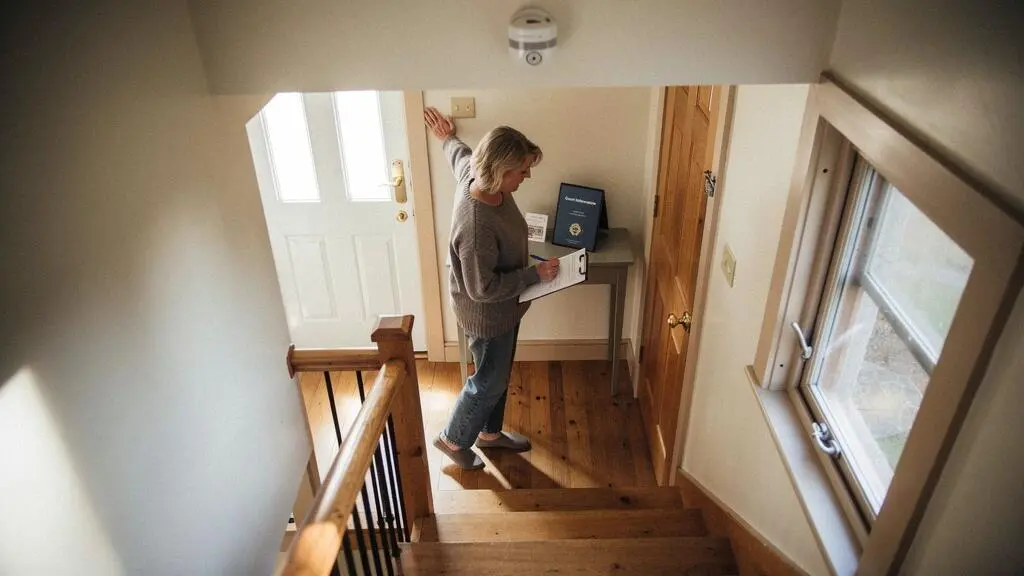
Before accepting guests, holiday rental owners should verify that their accommodation is safe for people unfamiliar with its layout, equipment and potential hazards. Essential checks include fire detection and escape routes, gas and electrical installations, carbon monoxide protection, water hygiene, structural safety, property maintenance and suitable liability insurance. Where licensing applies, owners must also confirm that the required inspections and documents are in place.
A property that has been comfortable for family use may not meet the expectations or legal duties associated with paid accommodation. An unfamiliar staircase, poorly explained heating appliance or inadequately maintained hot tub can present risks that regular occupants have learned to avoid.
Requirements differ across English-speaking countries and, sometimes, between regions or local authorities. Scotland, for example, has a specific short-term let licensing framework, while other jurisdictions impose different obligations. The safest preparation combines applicable legal requirements, a property-specific risk assessment, professional inspections and documented routine checks.
Holiday rental safety: the essentials
- Assess the property from a guest’s perspective, checking fire escape routes, alarms, stairs, windows and unfamiliar equipment.
- Arrange required professional gas, electrical and heating inspections, and maintain documented water hygiene controls where hot tubs are provided.
- Keep inspection certificates, maintenance records and appropriate insurance together, then review them whenever the property changes or a new risk appears.
- Why Can a Safe Family Home Still Fall Short of Holiday Rental Safety Requirements?
- How Can You Check Fire Escape Routes and Smoke Alarms in a Two-Storey Holiday Let?
- Gas Boiler or Wood-Burning Stove: What Safety Checks Matter in a Holiday Cottage?
- The Hot Tub Safety Oversight That Can Expose Holiday Guests to Avoidable Harm
- When Should You Review Guest Safety After Renovating a Holiday Rental?
- How Can You Prepare Documents for a Scottish Short-Term Let Licence Application?
- How Can You Record Small Property Defects Before They Become Expensive Repairs?
- How Can You Secure Appropriate Liability Insurance for a Holiday Rental Property?
Why Can a Safe Family Home Still Fall Short of Holiday Rental Safety Requirements?
A family home can fall short of holiday rental safety requirements because its usual occupants understand hazards that paying guests cannot anticipate. Familiarity with difficult stairs, unusual locks or heating controls does not make those features safe for visitors. Once accommodation is offered commercially, additional legal duties, risk assessments and insurance conditions may apply.
Consider a cottage where the owners know that the third stair tread is uneven, the upstairs window needs a particular movement to open or the wood-burning stove requires careful adjustment. Family members may navigate these features without difficulty. A guest arriving after dark has no such experience.
The distinction becomes more important when accommodating children, older visitors or people with reduced mobility. Owners should evaluate whether guests can use the property safely without relying on instructions that may be forgotten or misunderstood.
Domestic building compliance is not necessarily sufficient for commercial accommodation. A smoke alarm arrangement, loft ladder, unguarded level change or staircase that has existed for years may require reassessment when the building’s use changes. However, none of these features is automatically unlawful in every holiday rental: the applicable building rules, fire safety assessment and accommodation type determine what is acceptable.
Likewise, an open window does not necessarily provide adequate ventilation for every room or compensate for a deficient escape arrangement. Structural safety, ventilation and fire protection require separate consideration.
Owners should conduct a simple first-visit assessment:
- Enter the building as though arriving for the first time, including after dark.
- Follow the route from each bedroom to a safe exit.
- Check stairs, handrails, floor levels, windows and door mechanisms.
- Identify equipment that needs instructions before safe operation.
- Consider how a child or an older guest might encounter each hazard.
Record any danger that a regular occupant would recognise but a visitor might miss. Distinguish hazards that can be removed immediately from those requiring professional assessment or alterations.
Insurance creates another important distinction. Ordinary household insurance may exclude commercial letting, and compliance with domestic building rules does not establish that every reasonable precaution has been taken for paying guests. Liability will depend on the applicable law, circumstances and policy terms.
Once these unfamiliar hazards have been identified, fire detection and escape arrangements deserve particular attention because guests must be able to respond safely while asleep, disorientated or unfamiliar with the building.
How Can You Check Fire Escape Routes and Smoke Alarms in a Two-Storey Holiday Let?
To check fire safety in a two-storey holiday let, trace an escape route from every sleeping room, verify that exits can be used in an emergency and test the fire detection system. Assess smoke and heat alarm placement, whether warnings will be heard upstairs, and whether guests understand the escape procedure. Both detection and escape arrangements must be effective independently.
Begin upstairs, ideally with the bedroom doors closed, and follow the route a guest would need to take if an alarm sounded overnight. Check whether furniture, stored equipment or luggage could obstruct the landing, staircase or final exit.
Verify that escape doors open readily without specialist knowledge. Where windows form part of an approved escape strategy, confirm that their opening mechanisms work and that their dimensions, accessibility and operation meet the relevant requirements. Not every window is designated or suitable as an emergency exit.
Smoke alarms and heat alarms perform different functions. Smoke detection is generally appropriate for relevant circulation and sleeping areas, while heat detection may be specified for kitchens where cooking fumes could trigger unwanted smoke alarms. The correct combination, location and number depend on the premises and applicable guidance.
Interconnected alarms provide an important advantage in multi-storey accommodation: when one interconnected unit detects danger, the other connected units sound. This helps alert someone sleeping upstairs to a fire developing downstairs. Whether interconnection is mandatory depends on the jurisdiction and property circumstances.
In Scotland, the Scottish Fire and Rescue Service guidance for short-term lets identifies fire risk assessment, appropriate detection and warning, maintained escape routes and emergency procedures as central responsibilities. Its guidance should not be treated as an identical legal standard elsewhere.
Testing is only useful when carried out correctly. Follow the manufacturer’s instructions for testing intervals, battery replacement, servicing and alarm replacement dates. A test button generally verifies a specified test function; it does not necessarily establish that every aspect of the installation is compliant.
Maintain a dated log recording which alarms were checked, their results, identified faults and any corrective action. Keep this record available to the person responsible for the property and incorporate checks into the changeover routine where appropriate.
Five fire safety checks before welcoming guests
- Walk from every bedroom to the designated exit and record the routes on a dated escape-route checklist.
- Open the relevant escape doors and windows, recording any defective or unsuitable mechanism in an inspection note.
- Test the smoke and heat alarms according to manufacturer instructions and enter the results in an alarm test log.
- Check alarm replacement dates and the condition of the detection system, producing a maintenance or replacement list.
- Confirm that clear emergency instructions are available to guests and retain an updated copy in the property safety file.
An operational alarm does not compensate for an unusable exit. A blocked staircase or unsuitable escape window remains a serious concern even when the detection system works correctly. Significant deficiencies should be assessed and corrected before hosting.
Once the escape arrangements are satisfactory, attention should turn to heating systems and combustion appliances, which can present hazards even when they appear to operate normally.
Gas Boiler or Wood-Burning Stove: What Safety Checks Matter in a Holiday Cottage?
Holiday cottage owners should arrange appropriate professional inspections of gas equipment, maintain wood-burning stoves and flues, and verify carbon monoxide protection. In the UK, landlord gas safety duties cover rented holiday accommodation, including relevant annual checks by a Gas Safe registered engineer. Solid-fuel appliances require a different maintenance approach, with particular attention to flues, safe operation and guest instructions.
Gas boilers, gas fires and LPG appliances can create risks through defective combustion, leaks, unsafe ventilation or damaged flues. Their condition cannot be established reliably by observing whether they produce heat.
The UK Health and Safety Executive confirms in its guidance on domestic gas safety responsibilities that landlord duties extend to rented holiday accommodation, including cottages, chalets and flats.
Under the relevant UK landlord gas safety regulations, applicable gas appliances and flues must receive safety checks every 12 months by a Gas Safe registered engineer. Landlords must retain the required gas safety records and make them available as legally required.
A boiler service and a gas safety check are not interchangeable. Servicing focuses on maintaining the appliance, while the statutory safety check examines prescribed safety matters. Owners should confirm that the engineer has completed both where appropriate rather than assuming that an annual service covers the legal inspection.
Wood-burning stoves require different controls. Arrange chimney and flue sweeping at intervals appropriate to the appliance, fuel, use and professional advice. Have a competent person examine concerns involving the flue liner, stove seals, firebox, ventilation or signs of overheating.
Review the hearth, suitable guards where needed, nearby combustible materials and fuel storage. Guests should receive straightforward instructions explaining how to light and operate the stove, which fuel to use, how to manage airflow and what to do if the appliance behaves unexpectedly.
Carbon monoxide deserves particular attention because it is invisible and odourless. Exposure can occur while guests are sleeping. Suitable CO alarms are an additional safeguard, not a substitute for competent maintenance. Install them where required and in accordance with applicable standards and manufacturer instructions, then check their operation and expiry dates.
In jurisdictions where CO alarms are mandatory near particular appliances or in specified rooms, owners must follow those requirements. The rules can differ between gas, oil and solid-fuel installations and between countries.
Keep gas safety records, servicing reports, sweeping certificates and any appliance repair documentation together. Where an inspection reveals an unsafe appliance, it must not be made available for guest use until the identified danger has been resolved.
Neglected heating equipment can also interrupt bookings. Whether an insurer would decline a particular claim depends on the policy terms, the circumstances of the loss and applicable law; missing records do not establish an automatic outcome.
Heating inspections address combustion hazards, but properties offering leisure facilities introduce additional risks. Hot tubs, in particular, require a separate system of water hygiene and equipment management.
The Hot Tub Safety Oversight That Can Expose Holiday Guests to Avoidable Harm
The most easily overlooked hot tub hazard is inadequate water hygiene between guest stays. Water can appear clean while inappropriate disinfectant levels, unsuitable pH or poor maintenance allow harmful microorganisms to proliferate. Holiday rental owners need a documented water-treatment programme alongside electrical, access and child-safety precautions, rather than relying on the tub’s appearance or occasional cleaning.
Hot tubs combine warm water, multiple users, recirculation systems and potentially prolonged periods without supervision. These conditions can increase the importance of controlling bacteria associated with skin infections and respiratory illnesses, including Legionella.
The UK Health and Safety Executive addresses these hazards in its technical guidance on hot tub and spa-pool safety, known as HSG282. This guidance covers domestic-type hot tubs operated as part of a business, including holiday accommodation, and discusses water monitoring, maintenance and infectious-agent control.
Hot tub operators should establish a water-treatment regime suitable for their specific equipment and operating circumstances. This includes checking disinfectant concentrations and pH with an appropriate testing method, recording the results and correcting readings outside the applicable operating limits.
Water testing must be accompanied by corrective action. A completed test log offers little protection if unsuitable readings are ignored or guests continue using water that cannot be maintained within safe operating conditions.
Between bookings, inspect the tub and follow the appropriate cleaning, disinfection, filtration and water-replacement procedures. These should reflect the manufacturer’s instructions, the equipment’s design and relevant commercial spa-pool guidance. Draining the tub after every booking is not a universally applicable requirement, and adding sanitiser without testing is not a sufficient maintenance strategy.
Periods of non-use require attention too. Water that remains in the system may need continued treatment and circulation. Owners should establish what checks are necessary before reopening the tub after it has been idle.
Electrical safety must be assessed separately from water hygiene. Have the installation checked by a suitably qualified professional, including appropriate residual current device (RCD) protection, outdoor connections and suitability for the wet environment. Exact requirements depend on the installation and local electrical standards.
Inspect the cover, locking mechanism, access steps, surrounding surface and lighting. Consider how unsupervised children could reach the water, and implement suitable supervision and access precautions.
Guest instructions should explain safe operation, supervision requirements, hygiene precautions and when the hot tub must not be used. Keep a record of maintenance, water readings, faults and professional work.
Finally, disclose the hot tub to the insurer and confirm whether incidents involving its use fall within the policy. Some insurers impose additional conditions or require specific cover, but there is no universal endorsement requirement across all jurisdictions.
These controls should be reconsidered whenever the property or its facilities change. Renovations can alter risks that were previously assessed, even when the work appears to improve the accommodation.
When Should You Review Guest Safety After Renovating a Holiday Rental?
Holiday rental owners should review guest safety before renovation work begins, whenever plans change and again before reopening the property to guests. New walls, doors, windows, bathrooms, loft conversions or appliances can affect escape arrangements, ventilation, alarm placement and structural safety. A completed building project does not automatically establish that the accommodation remains suitable for short-term letting.
A renovation can change how guests move through a building. Converting a loft into a bedroom, for example, may create a new sleeping area with different fire protection and escape requirements. Moving a doorway can make an existing escape route less direct, while installing new windows can change ventilation or emergency-opening arrangements.
The appropriate response is a post-renovation safety reassessment that examines the finished accommodation rather than relying on the original risk assessment.
Start by walking every bedroom-to-exit route and checking whether new walls, furniture, locks or doors have altered access. Review smoke, heat and carbon monoxide detection against the new room layout and the relevant installation standards.
Inspect new electrical installations, heating equipment and ventilation systems through the applicable competent-person certification or inspection process. A newly installed bathroom may require checks covering electrical safety, ventilation, water temperature controls and slip hazards.
Structural changes deserve particular attention. A converted loft, new staircase, balcony or raised deck may require building approval, structural design evidence and suitable guarding. Owners should verify that required approvals and completion documentation have been obtained rather than assuming that a contractor’s invoice proves regulatory compliance.
Keep a renovation evidence file containing relevant:
- Building approvals and completion certificates.
- Electrical, gas and other installation records.
- Equipment documentation, maintenance instructions and warranties.
- Updated fire safety assessments and escape information.
- Inspection findings and records of corrected defects.
These documents can support future inspections, insurance discussions and licence applications. They also help distinguish new defects from problems that existed before the work.
Not every renovation changes a property’s licensing status. However, significant alterations or a change in use may trigger additional building, planning, fire safety or licensing requirements. The owner should confirm the position with the relevant authority where necessary.
Notify the insurer of material changes, particularly alterations affecting occupancy, construction, heating equipment or leisure facilities. Some policies require notification before work starts as well as confirmation when the property returns to use.
Do not accept a booking for accommodation containing unresolved safety-critical construction defects. Where work changes escape arrangements or introduces unfamiliar systems, update the guest instructions before the first arrival.
For owners operating under a licensing scheme, the resulting certificates and risk assessments may also form part of the documentation needed to demonstrate continued compliance.
How Can You Prepare Documents for a Scottish Short-Term Let Licence Application?
To prepare a Scottish short-term let licence application, first obtain the relevant local authority’s checklist, then assemble the required property information, safety evidence, insurance documentation and any applicable planning records. Scotland has mandatory licensing conditions for short-term lets, but authorities may request different supporting documents or impose additional conditions. Organising the evidence before submission reduces the risk of an incomplete application.
Scotland’s licensing system covers short-term letting arrangements within its statutory scope, including holiday accommodation. The Scottish Government explains the mandatory conditions and preparation process in its Scottish Government guidance on short-term let licensing requirements.
These conditions address fire safety, gas and electrical safety, water safety, property condition, occupancy, insurance and other operating requirements. Applicants must also check any additional conditions set by their licensing authority.
The most efficient approach is to build a consolidated property safety file. Each document should be named clearly, dated and linked to the applicable licence condition.
The following comparison identifies useful categories without replacing the local authority’s application instructions.
| Evidence category | What to prepare | What to verify |
|---|---|---|
| Fire safety | Fire risk assessment, fire precautions and relevant inspection or maintenance records | Assessment remains suitable, escape measures are maintained and local submission requirements are met |
| Gas safety | Current gas safety documentation where a gas supply is present | Applicable inspections cover the relevant installation and identified defects are resolved |
| Electrical safety | Electrical Installation Condition Report and applicable portable appliance testing evidence | Reports are current and required remedial work has been completed |
| Water safety | Legionella risk assessment and relevant water management records | Risks have been assessed and appropriate controls implemented |
| Insurance | Evidence of suitable buildings and public liability insurance | Cover applies to the short-term letting activity and remains valid |
| Property and planning | Property details, occupancy information and relevant planning evidence | Required permissions and local licensing conditions have been addressed |
Scottish short-term let guidance specifies electrical installation inspections at least every five years, subject to any shorter interval identified by the competent person. Relevant portable electrical appliances accessible to guests also require appropriate inspection and testing evidence under the licensing conditions.
A Legionella risk assessment is required, including for properties supplied by the public water network. It should not be confused with the more detailed operating regime necessary for a hot tub.
Gas installations covered by the licensing conditions require appropriate annual safety checks. Owners should also maintain their fire risk assessment and associated records as the property’s circumstances evolve.
Application requirements can include declarations, supporting documents, property plans or other information determined by the authority. Planning permission or evidence of planning status may also be relevant, particularly where a material change of use is involved.
Allow time for the licensing decision before planning to operate. An incomplete application can result in requests for further evidence or delays. Operating without a required licence can lead to enforcement action, and submitting an application does not automatically authorise letting.
Keep an accessible copy of the documents after approval. Licensing is an ongoing responsibility, so inspections, insurance and maintenance evidence must remain current throughout the operating period.
Outside Scotland, owners should identify their own jurisdiction’s registration, licensing or permitting framework rather than adopting Scottish documentation rules as universal requirements. In every location, keeping an up-to-date record of defects supports continued safety management.
How Can You Record Small Property Defects Before They Become Expensive Repairs?
Holiday rental owners can control developing maintenance problems by recording each defect as soon as it is discovered, with its location, date, severity, supporting photograph and corrective action. A structured defect log distinguishes minor cosmetic issues from hazards requiring immediate attention and creates a maintenance history that supports safer guest accommodation, inspections and insurance enquiries.
A small defect can become more serious when visitors do not recognise it. A loose stair tread may create a fall hazard, a cracked window seal may permit moisture damage, and an initially minor damp patch may indicate a concealed leak.
Not every blemish requires urgent intervention. The important distinction is between cosmetic deterioration and defects that could compromise safe use, structural integrity, hygiene or essential services.
A practical defect log can be maintained in a spreadsheet, property management system or written register. Consistent information matters more than the technology used.
| Defect | Initial classification | Action and record |
|---|---|---|
| Small paint scuff in hallway | Cosmetic | Photograph, date and schedule redecorating |
| Loose stair tread | Potential guest injury hazard | Restrict unsafe access where necessary, arrange repair and record completion |
| Damp patch beside a window | Possible water ingress | Investigate the cause, document findings and monitor after repair |
| Intermittent smoke alarm fault | Safety-critical | Arrange immediate correction and verify the required protection before hosting |
These classifications are illustrative rather than a prescribed legal grading system. A defect’s urgency depends on the circumstances, potential consequences and likelihood of exposure.
Integrate the log into each guest turnover. During the post-departure inspection, look at floors, stairs, handrails, windows, bathroom fittings, heating controls and other frequently used equipment. Photograph new damage and compare it with previous records.
Each entry should identify who is responsible for the corrective work and its current status. After repairs, attach supporting evidence such as a completion photograph, contractor report or inspection certificate.
A recorded hazard is not a resolved hazard. Where a defect presents an immediate risk, the owner should remove the danger, prevent access to the affected feature or suspend use of the accommodation as appropriate. Routine scheduling is not sufficient for a safety-critical issue.
A defect log also provides operational benefits. Repeated leaks, deteriorating seals or recurring appliance faults become easier to identify when observations are recorded consistently instead of being handled as unrelated incidents.
For insurers and licensing authorities, maintenance records can help demonstrate the actions taken, although keeping a log does not guarantee regulatory compliance or insurance payment.
Once these records are organised, the owner can use them to review the accuracy of insurance declarations and demonstrate the maintenance controls supporting the property’s risk profile.
Key points before arranging insurance
- Verify that the property is insured for its actual short-term letting use, not merely as a private residence.
- Disclose features that change the risk, including hot tubs, solid-fuel heating, renovations and periods when the property is unoccupied.
- Retain current inspection and maintenance evidence so that policy conditions can be checked against the property’s real operating arrangements.
How Can You Secure Appropriate Liability Insurance for a Holiday Rental Property?
To secure appropriate holiday rental liability insurance, owners should choose a policy that explicitly covers paying guests and the property’s actual commercial use. Compare public liability limits, exclusions, inspection conditions, specialist facilities and cover during vacant periods. Confirm that the insurer understands how the property operates, and retain the documents needed to demonstrate compliance with relevant policy requirements.
Standard home insurance is designed around the use specified in the policy. It may exclude or restrict commercial holiday letting, even when the owner occasionally stays at the property personally.
Dedicated holiday let insurance may offer a combination of buildings protection, contents cover, public liability insurance and optional loss-of-income protection. Availability and the precise scope differ between insurers, countries and policies.
Public liability cover is particularly relevant where a guest or other third party suffers injury or property damage and alleges that the owner is legally responsible. It is not a guarantee that every accident will be compensated: the circumstances, legal liability, exclusions and policy conditions all matter.
Owners should examine the following features when comparing quotations:
- Liability limit: the maximum amount available under the applicable liability section and any relevant conditions.
- Guest injury cover: whether claims associated with guest occupancy fall within the insured activities.
- Special facilities: whether hot tubs, swimming pools, wood-burning stoves or other declared amenities are covered.
- Unoccupied periods: whether cover changes when the property is empty between bookings or closed for maintenance.
- Loss of income: whether eligible insured damage can trigger protection against interrupted letting income.
- Inspection conditions: whether the insurer requires specific checks, maintenance procedures or supporting records.
- Alterations and occupancy: whether renovations, increased guest numbers or changes in use require notification or approval.
Safety records are closely connected to this assessment. Gas safety documentation, electrical inspection reports, alarm maintenance records, hot tub testing logs and completed repair records can all be relevant when demonstrating how the property has been managed.
However, owners should not assume that the presence of documentation guarantees acceptance of a claim, or that any missing document automatically invalidates cover. The insurer must apply the policy terms and relevant law to the individual circumstances.
Check whether the policy describes the intended activity accurately. A cottage let to holidaymakers, a room offered through home sharing and a large property used for group accommodation may present different underwriting considerations.
In Scotland, appropriate buildings and public liability insurance are mandatory conditions of the short-term let licensing framework. Buildings insurance must cover short-term letting, and public liability insurance must remain valid throughout each short-term let agreement. Owners should check what evidence their licensing authority requires.
Elsewhere, the legal requirement to hold particular insurance may differ, even though suitable cover remains an important financial safeguard.
Before purchasing or renewing a policy, provide accurate information about occupancy, facilities, property condition and relevant previous incidents. Ask the insurer or broker to clarify exclusions and conditions in writing where the wording is uncertain.
Keep the policy schedule, current certificate, relevant correspondence and evidence of completed inspections in the same property safety file. Review the cover whenever the property is renovated, a new amenity is installed or its operating arrangements change.
The practical next step is to complete a room-by-room safety inspection, resolve outstanding hazards, arrange the necessary professional checks and compare the results against local requirements and proposed insurance conditions. Only welcome guests once the accommodation is suitably safe, the required authorisations are in place and the insurance accurately covers its use.
Is a professional safety assessment always required before listing a holiday rental?
Not universally. Some jurisdictions require particular inspections or formal risk assessments, while others place greater emphasis on the owner’s general safety responsibilities. A competent person may be able to undertake certain assessments, but specialist systems and legally regulated work may require appropriately qualified professionals. Owners should establish the rules applying to their property before accepting bookings.
Do holiday rental owners need to keep copies of every safety inspection?
Record-keeping duties vary by inspection type and jurisdiction. Some reports and certificates have specific legal retention or availability requirements. Even when a particular log is not mandatory, keeping dated records of inspections, testing and corrective action provides useful evidence of maintenance. Owners should follow the applicable retention rules and any additional licensing or insurance conditions.
Can guests stay in a holiday rental while a safety defect is awaiting repair?
That depends on the severity of the defect and applicable requirements. Minor cosmetic damage may not prevent occupation, but an unsafe gas appliance, inadequate required fire protection or compromised escape route can make accommodation unsuitable for guests. Safety-critical hazards should be addressed before the affected accommodation or equipment is used. Temporary restrictions must provide effective protection and comply with applicable duties.
Should holiday rental safety instructions be provided before guests arrive?
Providing essential instructions before arrival can help guests understand access arrangements, unfamiliar equipment and relevant restrictions. The property should also contain clear emergency information, including how to leave the building and contact emergency assistance. Instructions should be easy to locate and understand, but they cannot replace physical safety measures or required inspections.
How often should a holiday rental safety assessment be updated?
There is no single universal interval covering every holiday rental and every type of assessment. Follow statutory inspection schedules, professional recommendations and applicable licence conditions. Review the property’s risks whenever renovations, equipment changes, incidents, new hazards or changes in occupancy could affect safety. Routine turnover inspections help identify problems between formal reviews.