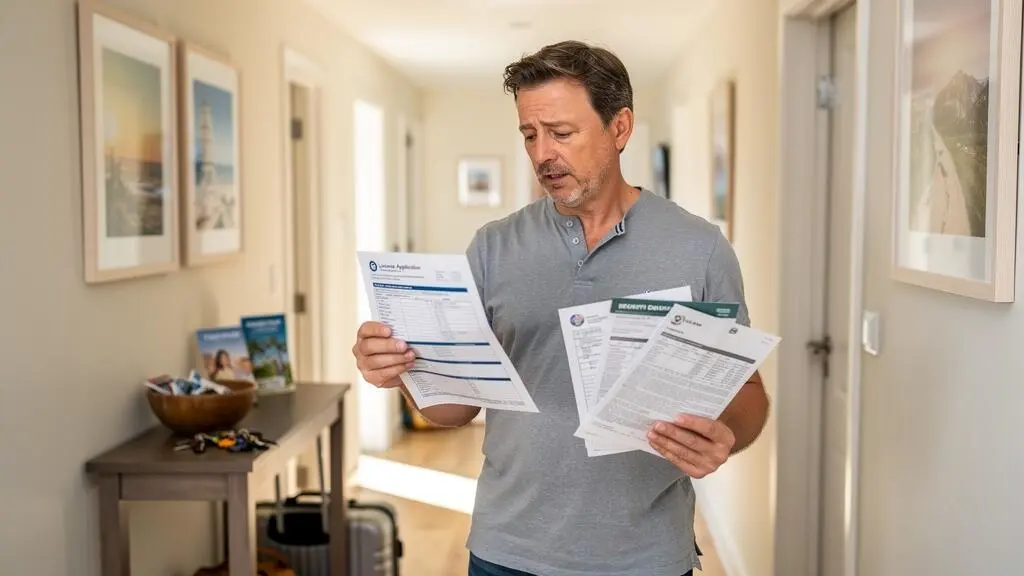
Before accepting bookings for a holiday rental, establish whether the property needs planning permission, a short-term letting licence, a registration certificate or another form of local approval. These requirements are separate, and satisfying one does not necessarily authorise the others.
The answer depends on where the accommodation is located, whether it is your principal residence, whether guests occupy the entire property and how the accommodation will be used. A spare bedroom, an occasionally rented family home and a dedicated holiday flat can fall into different regulatory categories.
There is no single holiday rental permit covering all English-speaking countries. Scotland provides a useful example of a comprehensive licensing system, but its requirements cannot be applied automatically to England, Wales, Northern Ireland, Ireland, the United States, Canada, Australia or New Zealand.
The reliable approach is to identify the property’s regulatory category, consult the authorities responsible for each approval, obtain the necessary documents and confirm when accepting bookings becomes lawful.
Holiday rental permit checks: the essentials
- Check separate permissions: tax compliance, planning approval and licensing or registration address different legal obligations.
- Classify the accommodation: your principal residence, your presence during stays and the property’s physical layout can change the requirements.
- Confirm approval before committing to guests: establish when bookings are legally permitted, retain written evidence and maintain safety compliance throughout operation.
- Why Doesn’t Registering a Holiday Let Always Mean You Have Permission to Operate?
- How Can You Prepare Documents for a Scottish Short-Term Let Licence Application?
- Hosted Accommodation or Separate Holiday Flat: How Can Licensing Requirements Differ?
- The Premature Booking Mistake That Can Put an Unlicensed Holiday Rental at Risk
- When Should You Start Preparing to Renew a Holiday Rental Licence?
- How Can You Verify Short-Term Letting Rules Through Official Council Websites?
- The Restrictive Covenant That Can Block Holiday Letting Despite Local Planning Permission
- Which Health and Safety Requirements Should Holiday Rental Owners Verify Before Hosting?
Why Doesn’t Registering a Holiday Let Always Mean You Have Permission to Operate?
Registering a holiday rental for tax purposes does not automatically authorise you to accommodate paying guests. Tax registration, planning consent and short-term letting licences serve different legal purposes. A property can satisfy one requirement while failing another, so each applicable approval must be checked independently before the first booking is accepted.
The confusion arises because several administrative procedures use similar terms, including registration, certification, approval and licensing. However, the authority accepting an income declaration is not necessarily responsible for deciding whether the property can lawfully operate as visitor accommodation.
Three separate layers should be investigated:
- Tax registration and reporting: establishing how rental income must be declared, whether a relevant tax regime applies and what records must be maintained. These obligations do not determine whether the property may be used for holiday accommodation.
- Planning permission or change of use: establishing whether the intended letting activity is permitted under planning controls. The answer can depend on the building, its existing use and local planning rules.
- Licensing or operational registration: establishing whether a mandatory permit, licence, registration number or safety approval is required before taking guests.
In Scotland, the licensing authority considers the suitability of the applicant, the premises and compliance with mandatory and local conditions. The planning authority separately assesses whether the proposed letting involves a material change of use. The Scottish Government guidance on preparing a short-term let licence application explains why planning status should be investigated before the licensing application is submitted.
Consider a hypothetical owner who registers rental income correctly, lists an entire investment flat and accepts reservations. The owner later discovers that the property requires a short-term letting licence and potentially planning consent. The tax registration remains valid for its own purpose, but it never supplied the missing permission to operate.
The appropriate checks should have occurred before entering into booking agreements: first identify the accommodation and applicable jurisdiction, then establish planning status, licensing obligations and private ownership restrictions.
The distinction between renting a room in your principal home and operating a separate apartment is particularly important. Some jurisdictions differentiate between hosted accommodation, occasional whole-home letting and commercial visitor accommodation. Even where one category is subject to lighter requirements, that does not mean it is exempt from every form of approval.
Once the different approval layers are understood, the next task is assembling the evidence required by the relevant licensing authority. Scotland illustrates how that process works in practice.
How Can You Prepare Documents for a Scottish Short-Term Let Licence Application?
To prepare a Scottish short-term let licence application, identify the correct licence category, check the property’s planning status and follow the relevant council’s application checklist. Assemble ownership or landlord permission, property details, applicable safety certificates, insurance information and any required planning evidence before submitting the application. The council may request additional documents.
Scotland operates a mandatory licensing scheme for accommodation falling within its statutory definition of short-term lets, subject to exclusions. The licensing authority is generally the local council responsible for the premises.
Before gathering certificates, confirm how the proposed accommodation will operate. Scotland recognises four categories: home sharing, home letting, combined home sharing and home letting, and secondary letting.
Choose the category according to whether the property is your principal home and whether you will be present during guest stays. Do not describe a permanently rented investment apartment as home letting merely because you own it.
Next, ask the planning authority whether permission is required. In designated short-term let control areas, secondary letting of a dwellinghouse can trigger specific planning requirements. Elsewhere, whether a material change of use has occurred depends on the circumstances.
Planning uncertainty should be resolved early because it can affect whether the licensing authority considers the application and what planning evidence must accompany it.
The application file should cover the following evidence, subject to the council’s precise requirements:
- Ownership or right to let: property ownership details or the owner’s specific permission if the applicant does not own the premises.
- Property description: address, accommodation type, room layout and proposed maximum guest occupancy.
- Floor plan: room dimensions, access arrangements and escape routes where requested.
- Planning evidence: relevant permission, application details or clarification of the property’s planning status, as required.
- Safety evidence: applicable gas safety documentation, an Electrical Installation Condition Report, a Portable Appliance Testing Report and relevant fire safety records.
- Insurance: buildings insurance and public liability insurance meeting the applicable conditions.
- Energy performance: a valid Energy Performance Certificate where required.
Declared guest capacity also needs careful consideration. In Scotland, the maximum permitted occupancy is determined through the licensing process with input from the council and Scottish Fire and Rescue Service. The number of bedrooms alone is not proof of the permitted guest capacity.
Missing or inadequate evidence can prevent an application from demonstrating compliance, leading to requests for clarification, delay or refusal. Certificates should therefore be obtained from appropriately qualified professionals before submission rather than treated as paperwork to resolve after guests arrive.
Use the council’s own checklist as the definitive application document list. It may include specific forms, declarations, supporting plans and procedural requirements that are not identical across Scottish authorities.
The documents required also depend on the accommodation model. A room offered while the host is present is not necessarily regulated in the same way as a separate holiday flat.
Hosted Accommodation or Separate Holiday Flat: How Can Licensing Requirements Differ?
Hosted accommodation and separate holiday flats can fall into different licensing and planning categories because regulators consider where the host normally lives, whether the host is present and how independently the accommodation operates. In Scotland, these distinctions determine the relevant short-term let licence type, although mandatory safety requirements remain important across the categories.
The physical description of the property is not enough to determine its licence category. An owner-occupied house rented occasionally during holidays is different from a second property permanently available for visitors, even if both are advertised as entire homes.
The following decision grid explains the main Scottish classifications and their practical implications.
| Letting arrangement | Likely Scottish category | Key checks |
|---|---|---|
| Guests stay in the host’s principal home while the host is present. | Home sharing | Confirm shared facilities, appropriate safety measures and the council’s licence conditions. |
| Guests use all or part of the host’s principal home while the host is absent. | Home letting | Confirm permission for unhosted stays, occupancy and planning status. |
| The host alternates between staying with guests and leaving the principal home to them. | Home sharing and home letting | Ensure the licence covers both operating arrangements. |
| Guests occupy a property that is not the host’s principal home. | Secondary letting | Check planning requirements, relevant control areas and property-specific licensing conditions. |
These categories follow the Scottish Government definitions of short-term let licence categories. They are Scottish legal classifications, not universal terminology for holiday rental permissions in other countries.
Separate flats in shared buildings deserve additional attention. Guest access through communal stairways, shared escape routes and the potential effect on neighbours can raise building-specific planning, fire safety and management questions. A separate flat is not automatically subject to a particular additional licence condition solely because it shares an entrance, but its characteristics can affect the authority’s assessment.
Changes in the way accommodation is used can also alter the required classification. A host who initially accommodates guests while remaining at home may need different licence coverage before offering the entire property during periods of absence.
Use these questions as a preliminary self-assessment:
- Is the accommodation your principal home?
- Will you remain present during every guest stay?
- Will guests occupy an independent property or share your living space?
- Does access involve communal stairways, entrances or shared facilities?
- Will the property be let occasionally, seasonally or regularly?
The answers help describe the intended operation to the council. They do not replace the council’s legal classification, and letting frequency alone does not determine the Scottish licence type.
After confirming the correct operating category, the next critical decision is when reservations may legally be accepted.
The Premature Booking Mistake That Can Put an Unlicensed Holiday Rental at Risk
The critical mistake is accepting a binding booking before the required authorisation exists. In Scotland, advertising a short-term let does not itself require a licence, but entering into a booking agreement does. Other jurisdictions may impose different advertising restrictions, so operators must establish the precise legal boundary before activating online reservations or collecting deposits.
A listing going live and a booking being accepted are different events. Scotland’s official licensing guidance expressly distinguishes advertising accommodation from making an agreement with a guest. Consequently, simply publishing a listing before approval is not automatically a Scottish licensing offence. The risk arises when the operator accepts bookings without the necessary licence or a legally applicable exception.
This distinction matters because booking platforms may automatically confirm reservations. A host can enter into agreements without manually reviewing each enquiry if instant booking is enabled.
Consider a hypothetical owner awaiting licensing approval who activates an online calendar. A guest books and pays a deposit for a future stay. The owner then discovers the licence is required before accepting that agreement, rather than merely before the arrival date.
Even if the property is later approved, the earlier agreement may already have created a compliance problem. Possible practical consequences include:
- Having to cancel reservations that cannot lawfully be fulfilled.
- Refund disputes and potential claims arising from contractual commitments.
- Platform restrictions or listing removal under applicable platform policies.
- Additional questions from authorities about previous or current letting activity.
- Reputational damage from cancellations close to the guest’s arrival date.
These outcomes are not automatic penalties under one universal law. They depend on the applicable regulations, platform terms and contractual circumstances.
Non-refundable booking conditions do not necessarily remove an owner’s legal obligations when accommodation cannot lawfully be provided. Likewise, holding a deposit rather than collecting full payment does not by itself prevent a booking agreement from arising.
A safer sequence is to classify the property, establish the relevant approval requirements, complete the application process and obtain confirmation that accepting reservations is authorised.
Where local rules permit advertising before licensing, an owner may be able to display information or collect expressions of interest without creating binding reservations. Any waitlist should clearly state that dates are not confirmed, payments are not being taken and operation remains subject to approval.
If enquiries arrive before authorisation, reply with factual information about the approval status rather than promising a confirmed stay. If bookings have already been accepted, stop accepting further reservations until the position is clarified and obtain appropriate advice about existing contractual obligations.
Obtaining the initial licence is only the beginning. Operators must also monitor expiry dates and changes that may affect their permission to continue hosting.
When Should You Start Preparing to Renew a Holiday Rental Licence?
Start preparing for holiday rental licence renewal well before the expiry date, ideally by maintaining an ongoing register of licence conditions, safety documents and insurance renewals. In Scotland, a renewal application must be submitted before the existing licence expires. There is no single mandatory advance preparation period established for every Scottish operator.
Licence renewal is not simply a repetition of the original application. The licensing authority must reassess whether the operator remains suitable and whether the property continues to comply with its conditions.
That includes confirming whether the original information remains accurate and whether relevant changes have occurred since the licence was issued.
A practical renewal-readiness file should contain:
- The current licence, its conditions and its expiry date.
- The original application and any subsequent variations or notifications.
- A register of gas, electrical, fire safety and other inspection records.
- Insurance policy details and relevant renewal dates.
- Evidence supporting the property’s approved occupancy and operational arrangements.
- Correspondence with the licensing and planning authorities.
Track the expiry or review date of each document separately. A gas safety certificate may operate on a different timetable from an insurance policy, an electrical inspection or the licence itself. The absence of a universal renewal interval for a particular document does not mean it can be ignored indefinitely.
Operators should also review changes during the licence period. Increasing guest capacity, altering the property or changing management arrangements may require notification or prior approval.
Under the Scottish Government guidance on short-term let licence renewal, an application submitted before expiry can allow the operator to continue letting while that renewal application is determined, even if the original licence expires in the meantime. If the licence lapses before the renewal application is made, the subsequent application is treated as a new application.
That continuation provision should not be interpreted as permission to disregard existing safety conditions. Compliance must be maintained throughout the period of operation.
An internal reminder several months before expiry is a sensible management practice, but the appropriate lead time depends on the council’s procedures and the documents requiring renewal. It is not a universal statutory deadline.
Accurate renewal planning depends on knowing which local conditions apply. The most dependable starting point is the responsible authority’s official guidance.
How Can You Verify Short-Term Letting Rules Through Official Council Websites?
Verify short-term letting rules by locating the official website of the authority responsible for the property’s address, then checking licensing, planning and any applicable registration requirements separately. Record the guidance consulted, its publication or update date and the specific rule affecting your property. When the guidance does not clearly cover your circumstances, seek written clarification.
The first task is identifying the right level of government. Rules may be established nationally, regionally or locally, while different departments administer permissions.
For example, Scottish national guidance explains the licensing framework, but the relevant council manages applications and may impose additional local conditions. Its planning department addresses whether the proposed use requires planning consent.
Elsewhere, the responsible authority might be a municipality, local government district, county, province or state agency. Do not assume the organisation responsible for collecting local taxes is also the licensing authority.
Search the official authority’s website for terms such as “short-term let licence”, “holiday accommodation registration”, “planning change of use” and “visitor accommodation”. Navigate from the authority’s main website rather than relying solely on an isolated search result.
Read official pages carefully. A legal requirement, an application instruction, a recommended practice and a discretionary council policy are not interchangeable. Words such as “must”, “may” and “should” can signal different levels of obligation, but their meaning must be assessed in context.
Check whether the page applies to new applicants or existing licence holders, hosted rooms or entire properties, and the specific geographic area in which the accommodation is located.
Retain a record of the information relied upon. A dated copy of an official page can help show the steps taken to investigate the rules, although it does not replace a legally required approval or guarantee protection if the interpretation was incorrect.
Five actions to verify your holiday rental’s permission requirements
- Identify the council or other competent authority for the property address. Save the authority name and official website address in a property compliance record.
- Locate the relevant licensing or registration guidance. Record the applicable scheme, official page address and date checked.
- Check the planning department’s requirements for the intended use. Save the relevant guidance or written planning response.
- Confirm the application category, documentation and point at which bookings become lawful. Create a completed requirements checklist identifying any outstanding approvals.
- Submit a written enquiry wherever the rules remain ambiguous. Retain the enquiry, the property’s factual description and any written response in the compliance file.
Written enquiries are particularly valuable where a property has unusual access arrangements, a mixture of residential and visitor use, or an uncertain planning history.
Describe the address, whether it is your principal home, the proposed letting arrangement, guest occupancy and any shared facilities. Ask the authority to identify the applicable requirement and, where possible, the supporting legal or policy provision.
Public-authority approval is not the entire legal picture. A property can satisfy planning and licensing requirements yet remain restricted by private obligations attached to its title.
The Restrictive Covenant That Can Block Holiday Letting Despite Local Planning Permission
A restrictive covenant can prevent holiday letting even when planning permission has been granted. Planning approval addresses public-law controls over land use, while a restrictive covenant may impose enforceable private obligations affecting the property. An owner therefore needs to investigate both planning status and title restrictions before assuming that visitor accommodation is permitted.
Restrictive covenants are particularly relevant to properties in shared developments, managed estates and buildings originally intended for conventional residential occupation.
A covenant might restrict business activity, prohibit particular forms of letting or limit use of the property to a private residence. Whether a particular clause actually prevents holiday accommodation depends on its wording, applicable law and enforceability.
Planning authorities do not ordinarily determine private contractual rights when deciding planning applications. Obtaining public approval therefore does not automatically release the property from an independently enforceable title restriction.
Before purchasing or converting a property, investigate:
- Title documents: registered title information, relevant deeds and historical conveyances containing property restrictions.
- Lease provisions: any restrictions applying to leasehold flats, including provisions controlling subletting or business use.
- Development arrangements: estate rules, management agreements and obligations affecting shared facilities.
- Enforcement rights: who may benefit from, enforce or consent to changes in the restriction.
In England and Wales, HM Land Registry records may provide relevant title information, but the full legal position can require examination of the underlying deeds. Other jurisdictions have different property registries and legal arrangements, so the correct search depends on where the property is located.
A neighbour’s complaint or an objection from a residents’ association may reveal a restriction that the owner did not investigate before advertising the accommodation.
Potential consequences of an enforceable breach can include legal proceedings, an injunction restricting further letting and liability for certain costs or other remedies. These outcomes depend on the legal circumstances; they should not be assumed to follow automatically from every complaint.
If a restriction appears to apply, consult a property solicitor about whether it is enforceable, whether a release or variation is possible, and whether any specialist insurance would be appropriate.
Indemnity insurance may address defined financial risks under a particular policy, but it does not turn prohibited use into permitted use. Seeking consent or contacting a potential beneficiary may also affect the availability of some insurance arrangements, so specialist advice should come before approaching third parties.
Neither a planning application nor a holiday rental licence application should be treated as a substitute for resolving a private title restriction.
Once the property’s public permissions and private restrictions have been checked, the remaining essential task is demonstrating that the accommodation itself is safe and suitable for guests.
Key takeaways before checking property safety
- A valid licence does not eliminate the need to comply with separate planning controls or private property restrictions.
- Compliance evidence must reflect the actual accommodation, guest capacity and operating arrangements rather than a generic holiday rental checklist.
- Safety inspections, maintenance records and guest instructions should be maintained throughout operation, including between licence applications.
Which Health and Safety Requirements Should Holiday Rental Owners Verify Before Hosting?
Holiday rental owners should verify fire precautions, gas and electrical safety, carbon monoxide detection, furniture safety, safe access and other property-specific risks before hosting. The applicable inspection documents and renewal intervals vary by jurisdiction. In Scotland, mandatory short-term let licence conditions also require relevant insurance, energy performance compliance and ongoing safety evidence.
A property being suitable for ordinary residential occupation does not automatically establish that it meets every requirement applicable to paying holiday guests. Some safety obligations overlap with residential housing law, while licensing schemes may impose additional conditions or require particular documentary evidence.
Scotland provides specific examples through the Scottish Government requirements for short-term let safety and insurance.
Use the following categories to organise your verification.
| Safety category | What to verify | Evidence or ongoing action |
|---|---|---|
| Gas safety | Safe installation and inspection of relevant gas appliances. | Applicable gas safety certificate; in Scotland, the required certificate must be dated within the previous 12 months. |
| Electrical installations | Condition of fixed wiring, installations and electrical equipment. | Electrical Installation Condition Report and applicable Portable Appliance Testing Report; review or inspection intervals depend on the relevant requirements. |
| Fire detection | Appropriate smoke and heat alarms, escape arrangements and fire precautions. | Relevant fire risk assessment, inspection records and documented alarm testing. |
| Carbon monoxide | Appropriate detection in locations required by applicable regulations and the property’s fuel-burning appliances. | Installation details, testing records and replacement information. |
| Furniture safety | Compliance of supplied furniture and furnishings with applicable fire safety requirements. | Labels, receipts, photographs or other suitable evidence. |
| Energy performance | Whether an Energy Performance Certificate is required. | In Scotland, an entire house or flat requires an EPC dated within the preceding 10 years. |
| Water and hygiene | Legionella risk and any special water-supply requirements. | Appropriate risk assessment and relevant maintenance records. |
| Access and occupancy | Safe stairs, entrances, emergency exits and approved guest capacity. | Property inspection records and occupancy information consistent with the licence. |
Do not apply the Scottish certificate periods automatically to other jurisdictions. Similarly, the existence of an inspection report does not mean every associated defect has been corrected or that the installation remains safe indefinitely.
Insurance also requires attention. Scottish short-term let conditions include buildings insurance valid for the licence period and public liability insurance valid throughout each short-term let agreement. Operators should check the actual policy coverage, not merely the existence of an insurance certificate.
Guest-facing information is another important operational requirement. In Scotland, specified safety information must be accessible to guests, including relevant safety reports, emergency contact details and instructions relating to carbon monoxide alarms.
For effective ongoing management, maintain a property safety log documenting inspection dates, reported defects, professional visits, alarm tests and corrective action. Records should identify what was checked, when it was checked and how any problems were resolved.
Safety obligations continue after the licence is issued. If damage, building work or equipment failure makes accommodation unsafe, the affected area may need to be withdrawn from use until compliance is restored.
Where the property is in a shared building, also establish which safety responsibilities belong to the individual host and which belong to the building owner or manager. Responsibility for common areas should not simply be assumed.
Before opening the booking calendar, compile a property-specific compliance file containing the required permissions, valid safety evidence, insurance details and written confirmation of any unresolved regulatory questions. Accept confirmed reservations only when the applicable rules permit it, then maintain the file as an ongoing record throughout the property’s operation.
Can a holiday rental licence be transferred automatically when a property is sold?
Not necessarily. In Scotland, a short-term let licence is associated with the licence holder and the premises. The licensing framework provides a transfer application process, but approval is not automatic. Buyers should verify whether an existing licence can be transferred under the applicable rules rather than assuming that purchasing a licensed property authorises them to continue accepting bookings.
Does using a booking platform remove the need to obtain a holiday rental permit?
No. A booking platform does not replace any licence, registration or planning approval required of the accommodation operator. Some platforms may request licence details or impose their own listing requirements, but compliance with platform procedures does not establish that every local legal obligation has been met.
Can a holiday rental be exempt from licensing but still require planning permission?
Yes. Licensing and planning are separate regulatory systems. A property may fall outside a particular licensing scheme yet remain subject to planning controls or other relevant restrictions. The extent of any exemption must be checked against the specific legislation and circumstances, rather than inferred from the absence of a licensing requirement.
What should an owner do if the council has not answered a permit enquiry?
Keep a copy of the enquiry, confirm it reached the appropriate department and follow up with the property’s address and a precise description of the intended letting activity. Unless the applicable law expressly provides otherwise, administrative silence should not be treated as permission. Avoid accepting bookings that require prior authorisation until the legal position has been established.
Do occasional or seasonal holiday rentals always qualify for an exemption?
No. An occasional letting arrangement does not automatically escape licensing or registration requirements. Some jurisdictions differentiate between occasional home letting and dedicated holiday accommodation, but any applicable exemption may depend on the property’s use, the host’s residence status and specific statutory conditions. Verify the relevant rules before relying on an exemption.