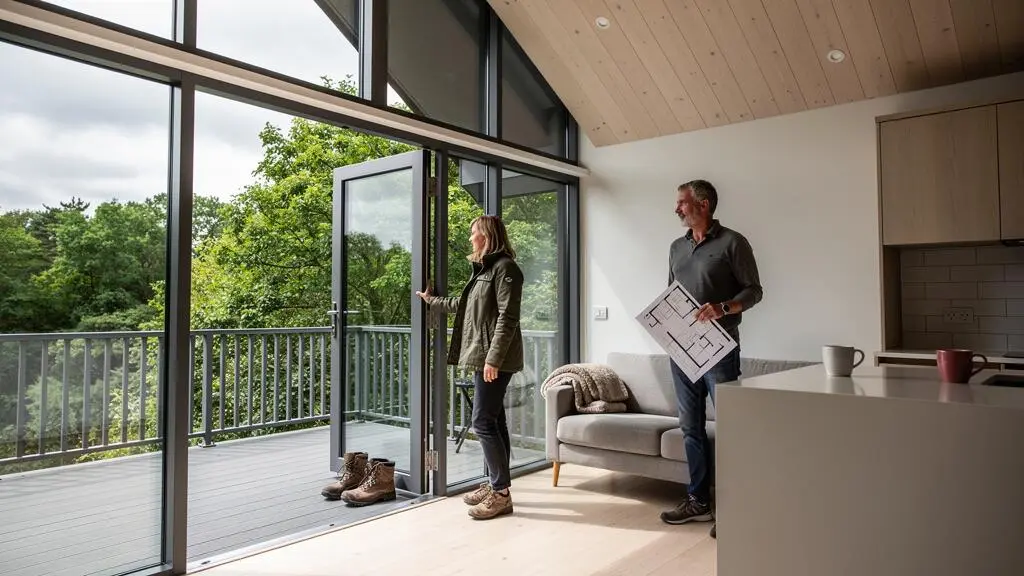
Choosing a holiday property involves more than deciding how many bedrooms are needed or how much interior space the budget can buy. The right format depends on how the property will be used, who will stay there, how often visits are planned and whether occasional holiday letting is part of the ownership strategy.
A compact holiday lodge, a traditional cottage, a resort apartment and a converted barn can all provide attractive holiday accommodation, but they offer different combinations of privacy, maintenance, outdoor space, flexibility and ownership responsibilities. Their suitability also depends on location, construction quality, site rules and the legal arrangements governing occupation.
For prospective buyers, the most useful approach is to start with the intended ownership experience rather than the appearance of a property. A couple seeking convenient weekend escapes may value a different layout from a family planning extended summer stays or an owner hoping to combine personal visits with rental activity. Understanding these distinctions makes it easier to shortlist properties that remain practical after the initial excitement of a viewing has passed.
Choosing a Holiday Property: The Essentials
- Match the property format to the intended balance between personal holidays, family accommodation and potential rental activity.
- Assess usable space, outdoor living, privacy, seasonal comfort and ongoing maintenance rather than relying on floor area alone.
- Check ownership arrangements, occupation restrictions, site charges, planning conditions and rental requirements before making a financial commitment.
- Why Can a Smaller Holiday Home Feel More Spacious Than a Larger Property?
- How Can You Check Whether a Holiday Lodge Is Suitable for Winter Stays?
- Holiday Cottage or Resort Apartment: Which Offers More Privacy for Family Breaks?
- The Occupancy Restriction That Can Prevent Year-Round Living in a Holiday Lodge
- When Should You Seek Specialist Advice Before Buying a Converted Barn for Holidays?
- How Can First-Time Second-Home Buyers Rank Their Priorities Before Viewing Properties?
- Why Do Holiday Home Buyers Sometimes Prefer a Terrace to an Extra Bedroom?
- How Can You Assess a Holiday Property Before Making a Financial Commitment?
Why Can a Smaller Holiday Home Feel More Spacious Than a Larger Property?
A smaller holiday home can feel more spacious than a larger property when its layout, ceiling height, natural light and outdoor connections make better use of the available floor area. Open-plan living, fewer internal divisions and generous glazing can create a stronger sense of volume than a larger but compartmentalised cottage. The distinction is between registered floor area and genuinely usable living space.
Floor area remains important, but it does not explain how comfortably people can move through a property. A lodge with a high ceiling, an open kitchen and living area, and wide windows may feel airy even when its footprint is modest. By comparison, a larger cottage with narrow corridors, small windows and several separate rooms can feel less generous during everyday holiday use.
Buyers should therefore consider useful volume rather than floor area alone. The position of furniture, circulation space, ceiling proportions and the relationship between communal and private areas all influence how a property functions. Storage also matters: a compact layout can become uncomfortable when suitcases, outdoor equipment and seasonal belongings occupy the available living space.
The difference between a short holiday and an extended stay is particularly important. A layout that comfortably accommodates two people for a week may become restrictive when several family members spend longer periods together. Before buying, consider where luggage, coats, cleaning equipment and additional bedding will be stored. For properties intended for letting, turnover supplies and practical housekeeping space also need consideration.
Outdoor space can change the calculation considerably. A covered deck, veranda or usable garden can extend the living area during suitable weather. In a mild climate, this may make a smaller interior perfectly practical for much of the holiday season. In colder or wetter destinations, however, an outdoor area may provide less dependable additional living space.
For buyers prioritising personal weekend use, a smaller, well-designed lodge may allow more of the budget to be allocated to location or construction quality. Owners targeting larger family bookings may instead need additional bedrooms, bathrooms and storage capacity. The best balance depends on the intended guests and the realistic length of their stays.
Before comparing floor plans, assess how the property will accommodate everyday activities, not simply how impressive it looks when empty. This makes it easier to distinguish an efficient compact home from one that only appears spacious during a viewing.
Ultimately, a smaller holiday property can deliver a more comfortable experience when its design supports the owner’s actual habits. The objective is not to buy the smallest possible building, but to avoid paying for unused rooms while overlooking the space needed for comfortable stays.
How Can You Check Whether a Holiday Lodge Is Suitable for Winter Stays?
A holiday lodge is suitable for winter stays only when its construction, insulation, heating, plumbing and site arrangements support comfortable occupation in cold conditions. A holiday park being open throughout the year does not automatically mean that every lodge is designed for winter use. Buyers should verify the specifications of the individual property and the operating arrangements of the site separately.
The first step is to examine the building specification. Ask for information about the lodge’s insulation performance, thermal construction standard, glazing and heating system. Double glazing alone does not establish that a building will remain comfortable during prolonged cold weather. The quality of the floor, roof and wall insulation also affects heat retention and running costs.
Heating should be assessed in relation to the lodge’s size, layout and insulation. A system that warms the living area quickly may not distribute heat effectively to bedrooms or bathrooms. Ask whether the installation has been designed for the property’s intended winter use and request information about servicing and operating costs where available.
Plumbing requires particular attention. Exposed external pipes, vulnerable connections and water systems that are not adequately protected can be susceptible to freezing. Buyers should establish how the property is protected during cold periods, especially if it will remain unoccupied between visits. Pipe insulation, drainage arrangements and winter maintenance procedures deserve specific attention.
There is also an important difference between a property that is physically capable of winter occupation and one that is authorised for year-round use. Some holiday parks have seasonal operating arrangements or restrictions that limit when owners can occupy their accommodation. The operator should confirm the actual permitted occupation period in writing rather than relying on a general statement that the park is open all year.
Intermittent occupation creates additional maintenance considerations. When a lodge remains empty between visits, inadequate ventilation or insufficient background heating may contribute to condensation and mould. Roofs, gutters, external connections and vulnerable pipework may also require attention after periods of severe weather.
A useful assessment combines documentary checks with a practical inspection. Where possible, visit the lodge during colder weather and ask existing owners about heating performance, condensation, access and winter maintenance. Their experiences can help identify issues that a summer viewing or sales brochure may not reveal.
Winter suitability is ultimately a combination of building quality and permitted use. A well-insulated lodge on a site with restrictive seasonal arrangements may not meet the intended ownership goal, just as an unrestricted park cannot compensate for a poorly constructed property.
Holiday Cottage or Resort Apartment: Which Offers More Privacy for Family Breaks?
A holiday cottage often provides greater separation from neighbouring accommodation, while a resort apartment can offer convenient shared facilities at the expense of closer contact with other guests. Neither format guarantees privacy. The deciding factors are sound insulation, neighbouring occupancy, outdoor visibility, property layout and proximity to communal areas.
For families, privacy has several distinct dimensions. Acoustic privacy concerns noise travelling through walls, floors and windows. Visual privacy relates to whether neighbouring properties, public paths or shared facilities overlook gardens, balconies and terraces. Spatial privacy concerns how much of the accommodation is reserved for the family rather than shared with other holidaymakers.
A detached or well-separated cottage may provide a quieter setting and more independent outdoor space. However, a cottage in a compact holiday village may have neighbouring terraces close by, shared access paths or gardens visible from public areas. A detached building should not automatically be assumed to offer complete seclusion.
Resort apartments present a different balance. They may place families within easy reach of swimming pools, restaurants, reception services and organised activities. Yet proximity to lifts, corridors, communal terraces and entertainment areas can increase exposure to noise and movement. Apartments with bedrooms facing away from busy facilities may provide a more comfortable experience than those directly overlooking them.
Occupancy patterns also influence the experience. An apartment in a resort with frequent guest turnover may have different neighbours from one week to the next. A cottage in a residential-style development may benefit from a more stable surrounding environment, although this is not guaranteed. Buyers should establish whether the property sits within a predominantly owner-occupied, mixed-use or short-term rental community.
The intended rental audience can influence the purchase decision. Families booking accommodation may value private gardens, separate sleeping areas and a quiet environment. Other guests may prioritise access to pools, entertainment and restaurants. The most suitable format depends on which features are important to the property’s likely audience, rather than an assumption that one category always attracts more bookings.
During a viewing, examine the position of bedrooms, windows, balconies and outdoor seating areas. Consider visiting when shared facilities are in use, if possible, and ask about the site’s guest turnover and noise management arrangements.
The strongest choice is the property that provides the level of separation the family expects without sacrificing facilities or convenience that genuinely matter. Privacy is a characteristic of the individual location and layout, not simply a label attached to a property type.
The Occupancy Restriction That Can Prevent Year-Round Living in a Holiday Lodge
A holiday lodge can be owned without being legally suitable for permanent residential occupation. In some locations, planning conditions restrict a holiday park to tourism use or limit the periods during which accommodation may be occupied. Living permanently on a site authorised exclusively for holidays may breach its planning conditions, even when the owner has purchased the lodge itself.
This distinction is fundamental because ownership of the physical accommodation does not necessarily provide an unrestricted right to occupy the land throughout the year. The legal arrangement may involve ownership of a mobile home or lodge combined with a separate agreement governing its position on a park. The site operator’s contractual conditions and the planning status of the land can both affect how the accommodation may be used.
In England, local planning authorities can impose conditions limiting holiday parks to tourism use. Some permissions specify a restricted occupation period, which may include an annual closure requirement or a limit on continuous occupation. An example discussed in the parliamentary guidance is an 11 months occupation restriction, but this is not a universal rule applying to every holiday lodge.
House of Commons Library briefing on residential and holiday mobile home owners explains the distinction between residential and holiday mobile homes in England, including the implications of planning conditions and site arrangements. It also highlights that the precise position depends on the relevant permissions, licences and contractual rights.
Buyers should investigate several documents before committing:
- Planning permission: establishes the authorised use of the site and any conditions relating to occupation.
- Site licence: may contain requirements governing the operation and use of the park.
- Ownership or occupation agreement: sets out the contractual relationship with the park operator.
- Title documents: may contain relevant restrictions or rights affecting the property and its occupation.
- Park rules: explain operational requirements, including any seasonal arrangements and owner responsibilities.
The distinction matters even when permanent residence is not currently planned. Buyers who expect to spend extended periods at the property, use it as a future retirement home or receive correspondence there should understand the limitations before purchase. Restrictions may also affect mortgage availability, insurance arrangements and the range of potential future buyers.
In England, the legal position should be assessed against the actual planning permission and relevant agreements, rather than relying on verbal assurances from a seller or park operator. A solicitor experienced in mobile homes and holiday park transactions can identify conditions that may otherwise be overlooked.
These rules should not be generalised across all English-speaking countries. Scotland, Wales, Northern Ireland and other jurisdictions may have different legal frameworks and terminology. Even within one jurisdiction, the conditions attached to individual sites can differ.
For buyers whose priority is unrestricted residential use, a conventional residential property may be more appropriate than holiday accommodation. A lodge should be assessed according to the rights it actually provides, not the lifestyle possibilities suggested by its appearance.
When Should You Seek Specialist Advice Before Buying a Converted Barn for Holidays?
Specialist advice is particularly important before buying a converted barn when the building is historic, its change of use is unclear, its structural condition is uncertain or its permissions contain unusual conditions. Agricultural buildings can have construction characteristics and legal histories that differ significantly from conventional residential properties. An attractive conversion should therefore undergo both technical and legal assessment before the buyer makes a financial commitment.
One important consideration is the building’s original construction. Traditional barns may have thick masonry walls, exposed timber frames, large roof structures and floors designed for agricultural rather than residential use. Their conversion may introduce insulation, ventilation and moisture-management requirements that need careful evaluation.
For example, insulating a traditional stone wall without considering how moisture moves through the original materials can create technical problems. A conventional modern insulation approach may not be appropriate for every historic structure. Roof condition, timber integrity, drainage, foundations and previous alterations should also be examined rather than assuming that visible renovation work demonstrates structural soundness.
In England, Historic England guidance on building regulations and historic buildings explains that requirements can apply to existing buildings in particular circumstances, including certain changes of use and renovation works. Historic buildings may also require specialist approaches to energy efficiency, ventilation and moisture management. A building’s age does not automatically exempt it from applicable requirements.
Three types of professional advice can be particularly valuable, ideally at different stages of the transaction.
- Building surveyor or structural specialist: assesses the condition of the roof, walls, floors, structural elements, damp risks and quality of previous conversion work. This assessment should take place before an offer becomes financially binding.
- Property solicitor: investigates ownership, planning history, building control documentation, restrictive conditions, access rights and any limitations affecting holiday occupation or future resale.
- Holiday letting specialist: can assess whether the layout, location, facilities and operating arrangements are suitable for the intended rental model. This is particularly relevant where income generation forms part of the purchase rationale.
Access and infrastructure deserve separate consideration. Older rural properties may depend on private roads, shared access arrangements, independent drainage or services that are not managed by a conventional residential authority. Buyers should establish who maintains these facilities and whether the relevant rights and responsibilities are documented.
Another potential complication is a planning condition connected to the original conversion. Some permissions may include requirements relating to agricultural occupancy, permitted use or other restrictions. Buyers should not assume that a building converted into attractive accommodation can automatically be occupied or let without limitation. The planning history and current authorised use must be checked.
Documentation is particularly important when the conversion took place many years ago. The buyer should establish whether the available records correspond to the property as it currently stands and whether later alterations received the necessary permissions and approvals. A previous owner’s long-term occupation does not, by itself, establish that every aspect of the property’s use is authorised.
Converted barns can offer distinctive architecture, generous living spaces and attractive rural settings, but their appeal should be supported by evidence of structural condition and legal suitability. Professional advice is most valuable before problems become the buyer’s responsibility.
How Can First-Time Second-Home Buyers Rank Their Priorities Before Viewing Properties?
First-time second-home buyers can rank their priorities more effectively by identifying their main ownership objective before deciding which property features matter most. The starting point should be whether the property is primarily for personal holidays, rental activity, a combination of both or a possible future residential move. This distinction helps turn a broad property search into a manageable set of practical requirements.
The first stage is to define the intended use. Buyers planning regular family holidays may prioritise location, comfortable communal space and bedroom arrangements. Those seeking rental activity may place greater importance on guest capacity, access to attractions, maintenance arrangements and the property’s suitability for the local visitor market. A mixed-use purchase needs to accommodate both objectives without allowing one to undermine the other.
The second stage is to identify three non-negotiable requirements. These should represent genuine conditions that a property must meet, rather than preferences that can change after an attractive viewing. Examples might include an acceptable travel distance, a legally suitable ownership arrangement and enough sleeping space for the intended family group.
Other features can be classified as negotiable. A second bathroom, a larger terrace, additional storage or a particular interior style may improve the experience but may not be essential. Separating these categories helps prevent buyers from abandoning important requirements because a property looks appealing in photographs.
Second-home purchases are particularly vulnerable to holiday-related decision-making. A property viewed during a sunny summer break may appear ideal, but the same location could feel very different in winter. Restaurants, transport connections and attractions may operate seasonally, while access roads and outdoor spaces can become less convenient.
Buyers should therefore consider a second visit outside the main holiday season where practical. They should also calculate the number of nights they are realistically likely to spend at the property. An optimistic estimate of future visits can make an expensive purchase appear more attractive than it will be in everyday ownership.
The financial assessment should extend beyond the purchase price. A realistic ownership budget should include relevant site or management charges, insurance, maintenance, utilities, travel expenses and applicable property taxes. If the property is leasehold or located within a managed development, the contractual basis and potential variation of recurring charges deserve particular attention.
Rental potential should be treated as a separate objective rather than an automatic justification for a purchase. A property that looks attractive on a rental projection may not provide the privacy, layout or location the owner wants for personal holidays. Equally, a property chosen entirely for personal enjoyment may not be well suited to commercial letting.
A useful way to compare shortlisted properties is to score each one against the same requirements. The scores are not a substitute for due diligence, but they make differences between options more visible and reduce the influence of viewing-day enthusiasm.
Once these priorities are established, viewings become more productive. Instead of asking whether a property feels attractive, buyers can determine whether it meets the conditions that made the purchase worthwhile in the first place.
Why Do Holiday Home Buyers Sometimes Prefer a Terrace to an Extra Bedroom?
Holiday home buyers sometimes prefer a terrace to an extra bedroom because holidays often involve spending more time together in shared living areas and outdoors than in individual sleeping spaces. A well-designed terrace can extend the property’s usable living environment, provide space for dining and relaxation, and improve the experience of spending time at the accommodation. However, an additional bedroom may be more valuable for larger families or rental-focused owners.
The decision depends on how the property will actually be occupied. Couples and smaller families may spend much of the day using the kitchen, lounge and outdoor seating area. For these buyers, a spacious covered terrace can make a compact property feel more versatile without the additional construction and maintenance associated with another bedroom.
A family with several children or buyers expecting to accommodate multiple generations may reach a different conclusion. An additional bedroom provides sleeping capacity and can improve privacy when several people share the property. For rental accommodation, this may also expand the range of groups the property can accommodate, subject to local demand, permitted occupancy and appropriate facilities.
There are two different forms of value to consider: personal enjoyment and potential rental appeal. A terrace may improve the quality of an owner’s stay, while a bedroom can increase the number of guests who can be accommodated. Neither automatically produces better financial results. The effect depends on the property, its location, the likely guest profile and the costs associated with the additional space.
Climate and seasonality are particularly important. A covered terrace in a mild destination may remain useful for much of the year. In a location with frequent rainfall, cold temperatures or strong winds, an exposed outdoor area may be practical only during a limited part of the year. Its orientation, shelter, privacy and access from the main living area also influence its usefulness.
Buyers should check whether terrace improvements or extensions are permitted. In managed developments and holiday parks, exterior alterations may require operator approval or be subject to planning and other restrictions. Maintenance is another consideration, especially where decking, balustrades, drainage and exposed surfaces require regular attention.
The future resale audience should also be considered. A property designed around an unusually large outdoor area and limited sleeping capacity may appeal strongly to couples but be less suitable for buyers prioritising family accommodation. Conversely, a property with additional bedrooms but little outdoor space may not satisfy buyers seeking an outdoor lifestyle.
Before deciding, compare the expected use of each feature over a typical stay. Consider who will sleep in the additional bedroom, how frequently the terrace will be used and whether the surrounding climate supports outdoor living.
For personal-use buyers, the terrace may be the feature that makes every visit more enjoyable. For owners expecting frequent larger family bookings, an additional bedroom may provide greater practical value. The decision should reflect the intended guests and the property’s long-term role.
Key Considerations Before Assessing a Holiday Property
- A property must be suitable for its intended use, including any restrictions on occupation, letting or seasonal access.
- Physical condition, ownership structure and recurring costs can have as much influence on suitability as location and layout.
- Potential rental activity should be evaluated separately from personal enjoyment, with realistic assumptions about demand, operating requirements and availability.
How Can You Assess a Holiday Property Before Making a Financial Commitment?
A holiday property should be assessed through a structured process that begins with documentary checks, continues with an independent physical inspection and concludes with legal due diligence before any binding financial commitment. This approach helps buyers identify restrictions, maintenance liabilities and ownership costs while there is still an opportunity to reconsider the purchase.
The first stage is a preliminary documentary assessment. Buyers should establish the nature of the ownership, the property’s permitted use, any applicable occupation restrictions and the arrangements governing the land. For a lodge on a holiday park, this means understanding the relationship between the accommodation and the site operator. For a cottage or apartment, title arrangements, lease provisions and management responsibilities may be more relevant.
Recurring costs should be investigated at the same time. Depending on the property, these may include service charges, site fees, ground rent, insurance, maintenance contributions, utilities and communal facility costs. Buyers should ask for supporting documentation rather than relying exclusively on an estimated monthly figure provided during a viewing.
Where a managed development or park is involved, historical charges and relevant records of planned or completed maintenance work can help reveal future financial exposure. A low initial purchase price may be less attractive if the property carries substantial recurring costs or significant maintenance obligations.
The second stage is an independent physical assessment. A mortgage valuation, where applicable, should not be confused with a full building survey. A surveyor can examine the property’s condition, identify defects and highlight repairs or further investigations that may be required. The inspection should reflect the building type, especially where the property is a converted barn, older cottage or specialist holiday lodge.
GOV.UK guide to buying a home explains the importance of independent surveys, legal checks and considering the ongoing costs of ownership in England and Wales. It also distinguishes a mortgage valuation from a home survey and highlights the need for specific advice when buying park homes or mobile homes.
Holiday properties require some additional considerations beyond those normally associated with a conventional residential purchase. These include:
- Whether the site or building can be occupied during the intended holiday periods.
- Whether the property can legally be used for the proposed letting arrangement.
- Whether insurance is available for the intended pattern of personal use and guest occupation.
- Whether maintenance and management can be organised when the owner is elsewhere.
- Whether the property remains practical and accessible outside the main visitor season.
For buyers intending to let the accommodation in England, regulatory responsibilities should be considered before assuming that rental income will be straightforward. UK government guidance on letting out a self-catering holiday home in England covers relevant considerations including planning permission, fire safety, gas and electrical requirements, insurance and tax. The applicable requirements depend on the property and its circumstances.
The third stage is legal due diligence. The buyer’s solicitor should investigate the title, restrictions, permissions, contractual arrangements and any liabilities that could affect ownership or future use. This is particularly important where the property is situated on leased or managed land, or where a holiday park controls access and occupation under a separate agreement.
Future resale should also form part of the assessment. Consider whether the ownership structure, occupation restrictions, recurring charges and property condition could narrow the pool of potential purchasers. A property that suits one specific holiday lifestyle may have a more limited resale audience than a conventional residential home.
Rental assumptions should be examined separately from the purchase decision. Buyers should not treat an illustrative rental projection as guaranteed income. Actual performance depends on factors such as local demand, seasonal availability, operating expenses, booking arrangements and the property’s suitability for the intended guests. Where rental activity is important to the purchase, specialist financial and tax advice may be appropriate.
A Five-Step Holiday Property Assessment Checklist
- Verify the ownership structure. Obtain the title or relevant ownership documents, together with the lease, site agreement or other contractual arrangements. Deliverable: a written summary of ownership rights and responsibilities.
- Confirm permitted occupation and use. Request the relevant planning permissions, occupation conditions, park rules and any letting restrictions. Deliverable: documented confirmation of the intended personal and rental use.
- Review the complete ownership costs. Obtain available service charge statements, site fees, maintenance information, insurance requirements and utility estimates. Deliverable: a total annual ownership budget.
- Arrange an independent property inspection. Instruct a suitably qualified surveyor or relevant specialist to assess the building, identify defects and recommend further investigations. Deliverable: an independent written survey report.
- Complete legal and financial due diligence. Ask the solicitor to investigate title, permissions, restrictions and contractual liabilities, and review the purchase against the buyer’s agreed budget and exit criteria. Deliverable: a written record of outstanding issues and advice before contractual commitment.
These checks should be completed before the buyer becomes legally committed under the applicable transaction process. In England and Wales, the exchange of contracts is a significant point at which the purchase becomes legally binding, so outstanding issues should be resolved beforehand. Other jurisdictions may have different transaction procedures and legal milestones.
For prospective buyers, the most useful next step is to turn the intended holiday and ownership goals into a shortlist of properties that satisfy clear practical, legal and financial requirements. Comparing suitable formats on this basis helps distinguish an attractive holiday accommodation option from a property that genuinely supports the intended ownership experience.
Which type of holiday property is best for personal use and occasional rental?
A cottage, lodge or resort apartment can support both personal holidays and occasional rental, provided its location, layout and ownership arrangements suit both purposes. Buyers should prioritise comfortable personal accommodation while checking that planning conditions, site rules, insurance and applicable rental requirements permit the intended letting activity.
Can a holiday lodge be used as a permanent residence?
Not necessarily. Some holiday parks are subject to planning conditions that restrict occupation to tourism or impose seasonal limitations. The precise position depends on the site’s permissions, contractual arrangements and relevant local law. Buyers should obtain independent legal advice before assuming that a lodge can be used as a permanent home.
Are converted barns suitable for holiday letting?
Converted barns can provide distinctive holiday accommodation, but suitability depends on structural condition, building compliance, permitted use, access, facilities and the intended letting arrangement. Buyers should investigate the original conversion documentation, any planning conditions and the building’s maintenance requirements before relying on potential rental activity.
Should a holiday home have more bedrooms or a larger outdoor area?
The decision depends on the intended occupants. Couples and smaller families may value a spacious terrace for dining and relaxation, while larger families and group bookings may benefit more from additional sleeping capacity. Climate, seasonal use, privacy, maintenance and future resale flexibility should also influence the decision.
What should buyers check before purchasing a holiday property abroad?
Buyers should establish the local ownership framework, permitted property use, occupation restrictions, tax responsibilities, rental regulations, insurance requirements and recurring management costs. They should also arrange an independent building inspection and instruct a solicitor or property lawyer familiar with the destination’s legal system. Rules applicable in England or Wales should not be assumed to apply in another country.