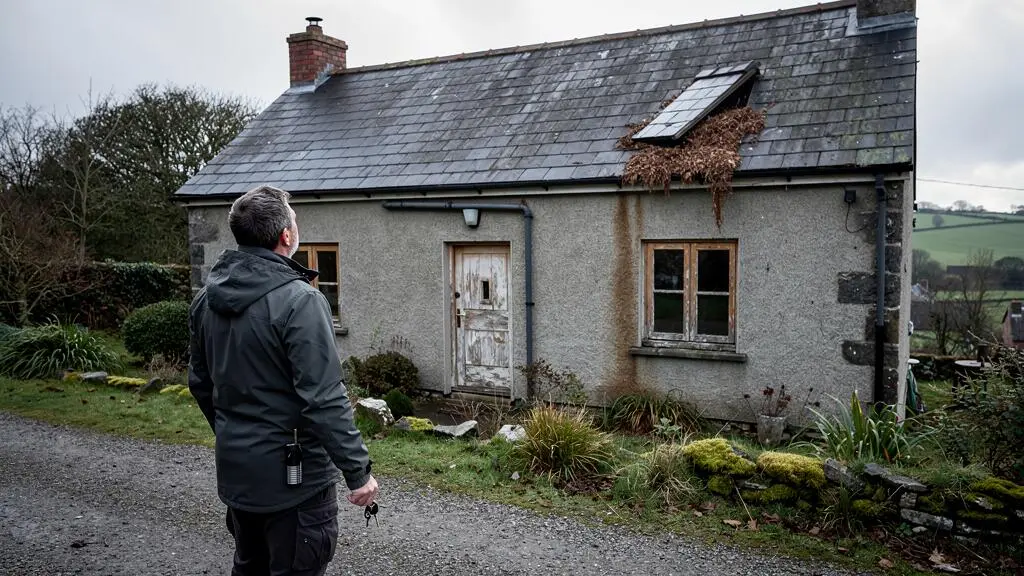
A holiday property needs a maintenance budget even when nobody is staying there. Roof coverings deteriorate, heating systems require servicing, external finishes weather, and unexpected faults can develop during months of absence. The financial challenge is not simply paying for routine upkeep but ensuring that major repairs do not disrupt household finances or undermine an investment.
A practical annual budget should combine three elements: predictable maintenance expenditure, contributions towards future component replacements, and a readily accessible emergency reserve. The appropriate amount depends on the property’s physical condition, construction, exposure, location and frequency of occupation—not just its purchase price.
For a £250,000 holiday home, applying a generic percentage may provide a preliminary comparison, but it cannot establish the amount an owner actually needs. A component-based forecast, supported by inspections and realistic local quotations, produces a more useful figure. This approach also identifies when maintenance spending is manageable, when replacement should be brought forward and when ownership is becoming financially stretched.
Holiday property maintenance budgeting: the essentials
- Build an annual reserve from expected maintenance, major replacement costs and an emergency allowance rather than relying solely on property value.
- Account for vacancy-related risks, environmental exposure, insurance conditions and delayed fault detection.
- Keep maintenance funds separate, document property defects and test whether your finances could withstand a major repair during a low-income year.
- Why Do Empty Holiday Homes Still Generate Unexpected Maintenance Bills?
- How Can You Calculate a Repair Reserve for a £250,000 Holiday Property?
- Seaside Cottage or Alpine Chalet: Which Faces Higher Long-Term Maintenance Costs?
- The Deferred-Maintenance Mistake That Can Turn a Small Roof Leak into a Major Repair
- When Should You Replace an Old Boiler in a Holiday Home Used Mainly in Winter?
- How Can You Record Small Property Defects Before They Become Expensive Repairs?
- 35.7: Why Can a Minor Plumbing Issue Become Expensive When Your Holiday Home Is Overseas?
- How Can You Build a Realistic Holiday Property Investment Strategy Without Overstretching?
Why Do Empty Holiday Homes Still Generate Unexpected Maintenance Bills?
Empty holiday homes generate unexpected maintenance bills because building systems continue ageing while faults remain undetected. Intermittent occupation can introduce water stagnation, temperature fluctuations and delayed discovery of damage. Owners must therefore budget for both predictable standing expenses and potentially substantial repairs arising between visits, even when the property appears to receive little use.
A continuously occupied home benefits from everyday observation. A dripping tap, unusual boiler noise or damp patch may be noticed quickly. In a holiday property, similar warning signs can develop without intervention until the next visit or scheduled inspection.
Some systems also behave differently during prolonged inactivity. Water left standing in pipework presents water-hygiene considerations, while certain seals and traps may deteriorate or dry out depending on their design and conditions. Heating systems that remain off during cold weather may leave vulnerable pipework exposed to freezing.
The UK Health and Safety Executive‘s guidance on Legionella and landlords’ responsibilities recommends using hot and cold water outlets at least weekly as a general principle for managing stagnation in properties left vacant for extended periods. The appropriate flushing, draining or other control arrangements depend on the water system. The legal responsibilities discussed specifically concern landlords in Great Britain.
The annual budget also needs to distinguish costs that exist regardless of damage from costs triggered by unexpected events.
| Budget category | Typical expenses | Financial treatment |
|---|---|---|
| Standing costs | Insurance, security, grounds maintenance, inspections and applicable safety checks | Include as recurring annual expenditure |
| Planned upkeep | Gutter clearing, servicing, minor repairs and external maintenance | Schedule and allocate funds in advance |
| Unexpected repairs | Storm damage, sudden plumbing failures, heating breakdowns and emergency attendance | Maintain an accessible contingency reserve |
Insurance requires particular attention. According to the Financial Ombudsman guidance on unoccupied properties, UK home insurance policies commonly restrict certain types of cover after 30 or 60 consecutive days of non-occupancy. These periods are not universal, and cover depends on the policy wording and circumstances.
An owner who assumes a vacant property remains fully insured could face an unexpectedly large personal repair bill. Holiday-home insurance should be reviewed against actual occupancy patterns, inspection requirements and precautions against water damage.
Because a property may incur costs without producing either personal enjoyment or rental income, its financial performance should be assessed over the full calendar year rather than only across occupied nights. The next step is converting those risks into a property-specific maintenance reserve.
How Can You Calculate a Repair Reserve for a £250,000 Holiday Property?
Calculate a repair reserve for a £250,000 holiday property by estimating the cost and remaining useful life of its major building components, allocating an annual amount towards their replacement, and adding routine maintenance and an emergency buffer. The purchase price provides financial context, but the building’s condition and exposure determine the amount needed.
A percentage-of-value rule can offer a quick preliminary benchmark, but it does not distinguish a recently refurbished property from an ageing cottage requiring substantial work. Both might have the same market value yet face different repair liabilities.
The more disciplined approach follows the principles of the RICS planned preventative maintenance professional standard, which provides an internationally applicable framework for property inspections, maintenance schedules, condition reporting and cost planning. It does not prescribe a universal holiday-home reserve percentage.
Begin with a building-condition assessment, then prepare a worksheet covering major components and their estimated remaining service lives.
For each component, record the current replacement quotation, estimated remaining years of service and any work already required. Dividing the estimated future expenditure, expressed in today’s prices, by the remaining years creates an initial annual funding allowance. This is a budgeting approximation rather than an exact prediction of replacement timing or future prices.
Hypothetical example: a £250,000 holiday home
Suppose an owner has obtained illustrative replacement estimates and condition assessments for a property valued at £250,000. The following figures are invented solely to demonstrate the calculation. They are not current market quotations or recommended component lifespans.
| Component | Hypothetical cost | Remaining life | Annual allocation |
|---|---|---|---|
| Roof works | £12,000 | 12 years | £1,000 |
| Boiler replacement | £3,000 | 6 years | £500 |
| Gutters and rainwater goods | £1,200 | 8 years | £150 |
| Exterior painting | £4,000 | 5 years | £800 |
| Window replacements | £6,000 | 15 years | £400 |
| Total replacement allocation | £2,850 |
If routine maintenance is hypothetically budgeted at £900 and an additional £750 is allocated towards unexpected repairs, the example produces an annual provision of £4,500, equivalent to 1.8% of the assumed property value.
This illustrative total is not an industry average or universal recommendation. Actual component costs, urgent repair backlogs, inflation, taxes and exposure-related risks could materially change the required amount.
Importantly, annualising future replacement costs does not mean the money will be available when a component fails. If the boiler may need replacing next year, an owner cannot safely rely on six years of future contributions. The opening reserve balance must cover near-term obligations, while future contributions replenish it.
Coastal corrosion, heavy snowfall, tree debris, listed-building restrictions and specialist construction materials can alter both replacement costs and remaining service life. Local contractor quotations should therefore be refreshed periodically.
Build a maintenance reserve worksheet in five actions
- Inspect the property and list its major components. Deliverable: a dated building-component inventory.
- Record each component’s condition and estimated remaining life. Deliverable: a condition schedule with inspection notes.
- Request relevant local repair or replacement estimates. Deliverable: a quotation register showing amounts and dates.
- Calculate annual component allocations and add routine upkeep plus a separate emergency allowance. Deliverable: an itemised annual maintenance budget.
- Compare the required opening balance with available cash and schedule transfers into a dedicated account. Deliverable: a funded reserve plan with a review date.
Holding the reserve in a separate, accessible savings account can help prevent maintenance funds being absorbed by ordinary spending. Where the property produces rental income, transfers can be funded from receipts, but the reserve should remain available even when bookings decline. Access restrictions, deposit protection and account suitability depend on the country and provider.
Review the worksheet annually and whenever an inspection changes the expected life of a major component. Properties with similar values but different climates may require substantially different allocations, particularly in exposed seaside and mountain locations.
Seaside Cottage or Alpine Chalet: Which Faces Higher Long-Term Maintenance Costs?
Neither a seaside cottage nor an alpine chalet is automatically more expensive to maintain. Coastal homes face corrosion and wind-driven moisture, whereas alpine properties face snow loads, freezing temperatures and demanding heating requirements. Long-term costs depend on the construction materials, building condition, access to contractors and the expense of replacing components exposed to those particular risks.
A coastal property’s most vulnerable elements may include metal roof fixings, external hardware, window fittings and exposed heating equipment. Salt-laden air can accelerate corrosion, especially where materials lack suitable protection. Wind-driven rain may also exploit weaknesses around roof coverings, flashings and window seals.
An alpine property faces a different pattern. Snow accumulation can place additional demands on roofs designed for local conditions, while repeated freezing and thawing may affect vulnerable masonry and external finishes. Frozen pipes and heating breakdowns can become particularly disruptive during winter occupation.
Construction type complicates the comparison. A traditional stone cottage with an ageing roof may require specialist masonry and roofing work, while a timber chalet may depend more heavily on the condition of its cladding, weatherproofing details and protective finishes.
Location also affects practical repair costs. Contractors serving remote mountain resorts may face difficult access and narrow seasonal working opportunities. Coastal properties may offer easier year-round access in some areas, but marine-grade components or heritage-compatible repairs can require specialist suppliers.
| Assessment factor | Seaside cottage | Alpine chalet |
|---|---|---|
| Dominant environmental risk | Salt exposure, strong winds and driving rain | Snow loading, freezing and thawing |
| Components to prioritise | Fixings, windows, cladding, gutters and roof junctions | Roof structure, heating, pipework and external finishes |
| Weather-related inspection | Check after severe coastal storms | Check after heavy snow and freeze-thaw periods |
| Potential access problem | Specialist coastal materials or heritage contractors | Snow-restricted access and seasonal contractor availability |
| Budget implication | Allow for corrosion-resistant components and moisture protection | Allow for winter protection, heating resilience and suitable roof maintenance |
A useful way to assess an individual property is to rate salt exposure, freezing risk, nearby vegetation, roof complexity and material vulnerability as low, moderate or high. This is a qualitative planning tool, not a validated cost-scoring system.
High-risk items should receive earlier inspections and more conservative remaining-life assumptions. For example, severe salt exposure might justify closer monitoring of external fixings without automatically assuming the entire roof requires early replacement.
Local building requirements and weather patterns must inform any decision. Coastal and alpine conditions vary considerably between the UK, North America, Australia, New Zealand and other English-speaking markets.
The useful question is not which destination is universally cheaper but which specific defects would be most expensive to overlook. That distinction becomes critical when a small roof problem is allowed to progress through several seasons.
The Deferred-Maintenance Mistake That Can Turn a Small Roof Leak into a Major Repair
A small roof leak can become a major repair when water continues entering a building before anyone detects or fixes the defect. Moisture may reach insulation, timber and internal finishes, expanding the work beyond the original roof repair. Intermittent occupation increases the risk because damage can develop unnoticed between visits, leaving owners with fewer opportunities for planned intervention.
Consider a slipped roof tile discovered during a routine inspection. If repaired promptly, the work might be limited to accessing the roof, replacing the damaged covering and checking the surrounding weatherproofing.
If the defect remains open through prolonged wet weather, moisture may penetrate the roof underlay and reach structural timbers or insulation. Depending on severity and duration, additional work could involve drying, replacing affected materials, treating mould and redecorating damaged ceilings.
The final cost may substantially exceed that of the original repair, although the increase depends on the extent of water penetration and the building’s construction. No reliable universal multiplier can be assigned to an individual leak.
The economic problem extends beyond material damage. Delaying a known repair reduces the time available to obtain quotations, coordinate trades and allow affected areas to dry before the next occupancy period. A planned job may become an emergency call-out with disruption to holiday use or rental bookings.
Deferral should therefore be a documented decision based on severity rather than a consequence of the property being used only occasionally.
| Priority | Example defect | Appropriate response |
|---|---|---|
| Monitor | Minor cosmetic wear with no evidence of water penetration or safety risk | Photograph and reassess at a scheduled inspection |
| Address this season | Deteriorating exterior sealant or gutter obstruction without active internal damage | Arrange suitable work before predictable severe weather |
| Act immediately | Active roof leak, unsafe roof material or signs of significant structural deterioration | Arrange urgent professional assessment and necessary protective measures |
These categories support prioritisation but do not replace professional assessment. A suspected structural or electrical hazard requires particular caution, and owners should not undertake unsafe roof access themselves.
Routine inspections by an owner or local caretaker reduce the chance that a defect remains undiscovered. A dated report after severe weather can be especially useful. Insurers may distinguish sudden insured events from gradual deterioration or poor maintenance, so photographs and repair records are valuable evidence but do not guarantee a successful claim.
Planned intervention preserves flexibility and can protect the emergency reserve for genuinely unexpected failures. The same principle applies to heating equipment, where postponing replacement may expose a winter holiday home to more than the cost of a breakdown.
When Should You Replace an Old Boiler in a Holiday Home Used Mainly in Winter?
Replace an ageing boiler when its reliability, repair history, condition and parts availability make the consequences of another failure unacceptable. For a holiday home used mainly in winter, the decision should account for freezing risk, remote access and the need for dependable heating on arrival. Boiler age alone is not sufficient to determine replacement timing.
A heating system in a winter holiday home may face concentrated demand during the coldest months, followed by long periods of reduced use. Actual wear depends on the boiler type, installation, maintenance and operating conditions, rather than occupancy pattern alone.
The consequences of failure are often more important than the immediate repair quotation. A breakdown during a winter booking may interrupt heating and hot water, require urgent contractor attendance and create risks for vulnerable plumbing if temperatures fall sufficiently.
In a remote property, access restrictions and limited availability of qualified heating engineers can add complexity. The owner may also have to coordinate entry, payment and repairs without being present.
A practical replacement decision should consider several factors together.
| Condition | Repair may be appropriate | Replacement deserves priority |
|---|---|---|
| Service history | Reliable operation and manageable isolated faults | Recurring breakdowns or unresolved defects |
| Parts availability | Required components remain readily obtainable | Essential parts are obsolete or difficult to source |
| Safety and condition | Qualified professional confirms safe, serviceable operation | Significant defects or a professional recommendation to replace |
| Failure consequences | Alternative arrangements limit disruption and freeze exposure | Heating loss could threaten plumbing or prevent occupation |
| Financial comparison | Repair offers a credible period of continued service | Repeated repair expense approaches the value of planned replacement |
The table is a decision aid, not a substitute for an assessment by an appropriately qualified heating professional. Gas safety requirements, installer qualifications and permitted heating technologies vary by jurisdiction.
Energy efficiency should also enter the calculation. An older boiler may consume more fuel than an appropriate modern system, but potential savings depend on the existing appliance, heating demand, energy tariffs and installation costs.
Where replacement is justified, scheduling work before the main winter season can reduce the risk of an inconvenient failure. Owners should also confirm appropriate frost-protection arrangements and avoid assuming that switching off the heating entirely is safe for every building.
The reserve should reflect both the likely replacement obligation and the consequences of failure. Tracking early signs of deterioration provides the evidence needed to make these decisions before an emergency develops.
How Can You Record Small Property Defects Before They Become Expensive Repairs?
Record small property defects in a dated, photograph-supported log that identifies the location, visible symptoms, severity and next review date. Comparing observations across visits makes gradual deterioration easier to detect. For owners who attend only occasionally, a consistent inspection record can also improve contractor communication, maintenance budgeting and evidence of the property’s condition.
A useful defect log does not require specialist software. A shared spreadsheet or organised digital folder may be sufficient, provided photographs and written observations can be retrieved and compared over time.
Record the same checkpoints on arrival and departure: ceilings, roof areas visible from safe ground level, windows, external drainage, plumbing connections and areas previously affected by dampness. Note unusual smells, slow-draining fixtures, new cracks or discolouration.
The purpose is to establish whether something is new, stable or worsening. A single photograph may show a small stain; a sequence of photographs taken from the same position can reveal whether its extent has changed.
Each entry should contain enough information for a local contractor or caretaker to understand the concern without lengthy correspondence.
| Field | Information to record | Purpose |
|---|---|---|
| Date and location | Inspection date, room or external elevation | Establish a consistent record |
| Observed defect | Visible symptoms without assuming the cause | Describe the issue accurately |
| Photographic evidence | Overview and close-up images | Enable comparisons between inspections |
| Priority | Watch, act this season or act now | Support appropriate escalation |
| Responsibility and review | Named contact, proposed action and review date | Prevent unresolved items being forgotten |
| Financial record | Quotation, invoice or reserve allocation | Connect observations to expenditure |
Owners should distinguish observed facts from suspected causes. For example, recording “new ceiling stain below upstairs bathroom” is more defensible than diagnosing a defective pipe before an inspection.
Photographs and maintenance records may support insurance discussions or contractor disputes by establishing a timeline. They may also help demonstrate past upkeep during a future sale, although they cannot replace a buyer’s survey or establish that a property is defect-free.
Remote owners can delegate a standardised inspection to a caretaker or managing agent. Quarterly checks can be a practical starting arrangement for some properties, with additional inspections after relevant severe weather and any checks specifically required by insurance terms. Frequency should reflect actual exposure and contractual obligations.
Ask the same person, where practical, to photograph fixed reference points and identify changes since the previous report. Escalate urgent defects immediately rather than waiting for the next scheduled review.
Once each defect has a responsible contact, priority and estimated financial impact, the owner can make earlier decisions about funding repairs. This becomes particularly valuable for overseas properties, where even minor plumbing problems can be difficult to manage remotely.
35.7: Why Can a Minor Plumbing Issue Become Expensive When Your Holiday Home Is Overseas?
A minor plumbing issue can become expensive in an overseas holiday home because damage may continue for an extended period before anyone detects it. The final bill can include water remediation, repairs, emergency access and remote coordination. Distance also complicates finding contractors, obtaining parts and satisfying insurance requirements, so early detection is often more important than the original fault’s size.
A small leak beneath a sink may be straightforward to repair when discovered immediately. In an unoccupied overseas property, water could continue reaching flooring, walls or adjoining rooms until a caretaker, guest or neighbour notices evidence of damage.
Where water reaches electrical installations or structural elements, additional specialist assessment may be necessary. The extent of damage depends on the water flow, duration, building materials and protective measures already in place.
Distance can add several practical cost layers. Emergency contractors may be difficult to schedule during busy tourist periods. Replacement parts may not be locally available, while currency conversion, payment arrangements and language differences can slow coordination.
These factors do not impose a predictable price multiplier, but they should influence how much accessible contingency funding an overseas owner maintains.
Prevention should follow a hierarchy that reduces the potential consequences of water escaping while the property is empty.
- Water isolation: establish a departure procedure for shutting off the supply where compatible with the property’s plumbing and heating arrangements.
- Early detection: consider suitable leak sensors near vulnerable appliances, plumbing joints and other locations identified through a property assessment.
- Local response: appoint a trusted contact who has authorised access and clear instructions for emergencies.
- Documented precautions: keep records of inspections, system preparation, repairs and any measures required by the insurer.
Remote-alert leak detectors can reduce detection delays, but their effectiveness depends on power, connectivity, sensor placement and someone responding to alerts. They are not a substitute for suitable pipe protection or a properly configured shut-off arrangement.
Insurance conditions deserve separate attention. Policies may require periodic property checks, minimum heating precautions or specific plumbing arrangements during extended absence. Requirements vary between insurers and countries; compliance with UK guidance cannot establish coverage for a home insured elsewhere.
Owners should obtain written clarification of relevant terms and maintain evidence of compliance. Where a property is rented, local licensing, safety and management obligations may introduce additional requirements.
A reliable local contact and clearly funded emergency arrangements can limit disruption, but they also carry ongoing costs. Those costs belong in the wider investment assessment, alongside all other obligations of owning the property.
Key considerations before committing more capital
- Separate routine operating expenses, planned replacement funding and emergency liquidity when evaluating ownership affordability.
- Consider how quickly the property can be inspected, accessed and repaired when something goes wrong.
- Test whether a difficult financial year would force borrowing, deferred repairs or an unwanted sale.
How Can You Build a Realistic Holiday Property Investment Strategy Without Overstretching?
Build a realistic holiday property investment strategy by assessing the full annual cost of ownership, funding a property-specific maintenance reserve and testing whether your finances can withstand unexpected repairs and weaker rental income. The property should remain affordable under adverse conditions, not only when bookings, personal finances and maintenance expenses follow the most favourable assumptions.
Maintenance is a recurring capital commitment rather than an optional expense. A property can appear affordable when mortgage payments, insurance and utilities are considered individually, yet become financially demanding once substantial roof work, heating replacement and emergency repairs are included.
An ownership budget should therefore distinguish immediate cash expenditure from future obligations. The annual replacement allocation helps build savings, while the available reserve balance determines whether urgent work can actually be paid for.
For an investment property, gross rental receipts should not be mistaken for disposable income. Booking-platform charges, cleaning, management, financing, applicable taxes, insurance, utilities and maintenance all affect the net outcome. Tax treatment and rental restrictions differ by jurisdiction and should be verified locally.
A useful stress test is to model a year in which a major building component fails while rental income falls below expectations.
Hypothetical investment resilience test
Assume a holiday property generates £15,000 in annual rental income under an owner’s normal forecast, while annual cash operating and financing expenses excluding major replacements total £12,000. The expected cash surplus is £3,000 before major replacement expenditure and applicable tax adjustments.
Now suppose rental receipts fall to £10,000 during a weaker season and an unexpected £5,000 repair becomes necessary. With the same £12,000 of operating and financing expenses, the illustrative annual cash shortfall becomes £7,000.
The decision is whether the owner has sufficient accessible funds to absorb that shortfall without missing payments, taking on unaffordable debt or postponing essential repairs. These invented figures demonstrate stress testing, not typical rental returns or industry repair costs.
Different ownership arrangements change how these obligations are distributed.
| Ownership arrangement | Maintenance responsibility | Financial consideration |
|---|---|---|
| Full private ownership | Owner generally organises and funds maintenance, directly or through an agent | Maximum direct exposure to unexpected property expenses |
| Co-ownership or fractional arrangement | Responsibilities depend on contracts, management rules and shared funding arrangements | Potential cost sharing, but also collective decisions, special assessments and payment disputes |
| Ownership with holiday rental income | Owner remains responsible for applicable obligations, with tasks possibly delegated | Rental receipts can support maintenance funding but introduce occupancy-related costs and income uncertainty |
Sharing ownership does not automatically eliminate exposure to major repairs. Buyers should examine reserve contributions, voting arrangements, unexpected assessments and exit restrictions before committing.
A sustainable strategy also needs a review horizon. Owners can establish personal warning thresholds, such as repeated reserve overruns, an expanding essential-repair backlog, falling personal usage or persistent cash shortfalls. These are individual decision criteria, not universal financial ratios.
At each review, compare the realistic cost of retaining the property with alternatives such as reducing its scale, changing management arrangements or selling. A professionally assessed repair backlog may be more informative than the property’s original purchase price.
Before the next ownership or investment decision, update the component inventory, obtain quotations for significant outstanding work and test your finances against an unfavourable year. The objective is a holiday property that remains enjoyable and financially manageable without depending on every season going to plan.
Should holiday property maintenance be included in annual running costs?
Yes. Routine maintenance belongs in annual operating expenditure, while anticipated major replacements should have their own savings allocation. Keeping these categories separate avoids confusing current cash expenditure with future financial obligations and helps owners evaluate the property’s real affordability.
Is a percentage of property value enough to estimate maintenance costs?
No. A percentage can be used as an initial sense check, but it cannot account reliably for component condition, remaining life, environmental exposure or local contractor prices. An itemised maintenance forecast provides a more defensible figure, especially for older or unusually exposed properties.
Can a holiday property maintenance reserve cover improvements as well as repairs?
It can, but essential repairs and expected replacements should be funded before optional upgrades. Maintaining separate categories for necessary work and discretionary improvements makes it easier to avoid spending emergency funds on projects that can safely wait.
How frequently should a holiday home maintenance budget be updated?
An annual review is a practical starting point, with additional updates after major inspections, significant damage, substantial repair quotations or changes in occupancy. The review should reassess remaining component lifespans, local prices, available savings and upcoming obligations.
Should the emergency repair fund be kept separate from rental income?
Yes, separating funds is generally useful for financial discipline. Rental receipts may replenish the reserve, but the money needed for urgent repairs should remain accessible even if bookings decline. Owners should also distinguish emergency liquidity from longer-term replacement savings and funds needed for tax or financing obligations.