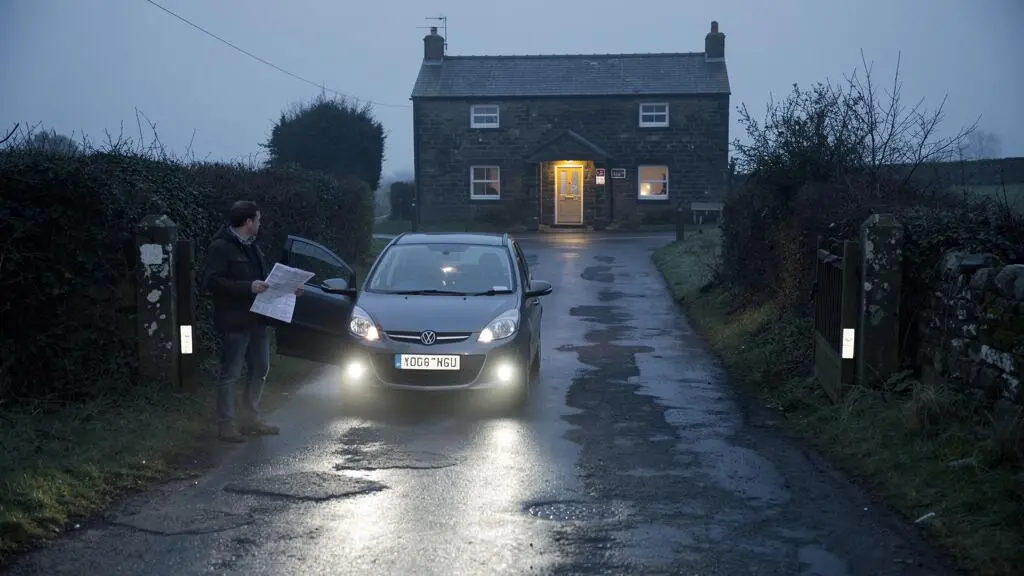
Successful holiday rental check-in begins before guests reach the front door. A correct address, working access code and friendly welcome message are useful, but none guarantees a straightforward arrival. International travellers may have limited mobile data, rural visitors may encounter misleading navigation routes, and late-night guests may struggle with unfamiliar locks or poorly lit entrances.
Effective holiday rental arrival instructions connect the entire journey: finding the correct entrance, identifying safe parking, accessing the property, operating essential facilities and contacting someone when the expected procedure fails. Each step should make sense to a guest who has never visited the area and cannot immediately reach the host.
The most reliable approach combines tested directions, concise written steps, appropriate photographs and a practical backup for access problems. Information should arrive when guests need it, remain available offline and reflect the property’s actual conditions. The objective is not to create a longer welcome document, but to remove uncertainty at the moments when guests need clear answers.
Holiday Rental Arrival Instructions: The Essentials
- Verify the final approach: Test navigation routes and describe the actual entrance using recognisable landmarks, not just a postal address.
- Make access failure-proof in practice: Explain the complete check-in procedure and provide a tested alternative if the primary method fails.
- Send information in stages: Share travel logistics early, access details close to arrival and a short offline-accessible reminder before the journey.
- Why Do Guests Get Lost Even When a Holiday Rental Has the Correct Address?
- How Can You Give Clear Night-Time Driving Directions to a Remote Holiday Cottage?
- Self-Check-in or Meet-and-Greet: Which Needs More Detailed Arrival Information?
- The Door-Code Instruction Mistake That Can Leave Guests Locked Out at Midnight
- When Should You Send Directions and Access Details Before a Holiday Rental Stay?
- Smart Lock, Key Safe or Local Keyholder: Which Is Safest for an Empty Holiday Home?
- Pictures or Written Instructions: Which Help Guests Use a Holiday Home More Easily?
- Which Holiday Rental Guest Questions Should Owners Answer Before They Are Asked?
Why Do Guests Get Lost Even When a Holiday Rental Has the Correct Address?
Guests can get lost despite having the correct holiday rental address because postal identification and vehicle navigation serve different purposes. A postcode may identify a broader area, several properties may share an access lane, or navigation software may direct drivers towards an inaccessible entrance. Reliable instructions therefore identify the usable arrival point, not simply the property’s official address.
This distinction matters particularly for rural cottages, converted farm buildings and properties reached through private drives. The destination pin may appear beside the correct building while the calculated route approaches from a road without vehicle access.
Google‘s Google Maps Routes API documentation on location specification explains that text addresses can produce differing geocoding results and coordinates may be associated with a nearby road rather than the intended access point. This technical limitation is a reason to verify the arrival route independently.
Test the property address in Google Maps, Apple Maps and, where practical, an in-car navigation system. Start the route from several likely approaches, including the nearest motorway exit or main road. Check where each system places the final turn, which side of the property it approaches and whether the suggested route is passable.
Build directions around a sequence of recognisable reference points. For example, in a hypothetical rural setting: “Turn right immediately after the stone church. Continue past the red post box and use the second farm entrance on the left.” This is more actionable than “Follow the road until you reach the cottage.”
Landmarks should be distinctive, permanent and visible from the driver’s direction of travel. Combine them with approximate distances, road names or junction counts where useful. A landmark alone is insufficient if several similar features appear along the route.
Apply the stranger test: ask someone unfamiliar with the property to follow the instructions without verbal assistance. Record every hesitation, wrong turn or question. Rewrite those points and repeat the test until the directions work independently.
A precise map pin can provide additional reassurance. Google Maps also supports Plus Codes for identifying specific locations, including particular entrances, as explained in Google Maps Help on finding and sharing Plus Codes. However, guests still need to verify that their chosen navigation application supports the location format and routes to the correct entrance.
Poor directions are more than an inconvenience. A guest who arrives frustrated, late or tired may struggle with door codes, miss an agreed handover or contact the host urgently. Preventing navigation errors therefore protects the entire check-in experience.
Once the route works in daylight, it needs a second examination under the conditions that make unfamiliar destinations harder to recognise: darkness, rain and limited visibility.
How Can You Give Clear Night-Time Driving Directions to a Remote Holiday Cottage?
Clear night-time driving directions rely on visible junctions, reflective markers, measurable distances and instructions that remain usable without mobile reception. Hosts should test the final approach after dark, remove landmarks that disappear at night and explain how guests can recognise a missed turning. A reliable fallback matters as much as the route itself.
Directions written during a sunny afternoon frequently depend on scenery that disappears after sunset. Descriptions such as “turn where the valley opens” or “look for the field behind the cottage” provide little help when visibility is poor.
Replace these cues with features that drivers can identify safely in darkness: numbered road signs, reflective gate posts, a clearly visible property number or a porch light switched on before arrival. Verify that each marker is visible from the relevant direction without requiring the driver to stop dangerously or leave the vehicle.
For example, a hypothetical instruction might read:
- At the village church, turn left onto the single-track lane.
- Continue for approximately 1.5 miles, passing two entrances on your right.
- After the second entrance, look for reflective markers on the next gate to your left.
- Turn into that driveway and continue to the illuminated porch.
- If you reach the stone bridge, you have passed the entrance. Find a safe place to turn around.
This numbered, chronological structure is easier to follow than a long descriptive paragraph. Distances provide orientation, while counted entrances and visible landmarks help guests detect mistakes before travelling too far.
Mobile connectivity is another important consideration. If the final stretch has unreliable reception, identify the last location where service has been consistently available during testing. Do not promise coverage at any particular point, because networks, devices and conditions differ.
Advise travellers to download their route and destination area before leaving reliable internet access. Google Maps Help on downloading maps for offline navigation explains that driving guidance can remain available when the complete route lies within a downloaded area. Offline navigation does not provide every connected feature, including live traffic information and alternative routes, and availability varies by region.
Guests arriving after international flights may also be unfamiliar with local road layouts, driving sides or narrow country lanes. Use miles or kilometres appropriate to the destination, state the measurement clearly and avoid complicated abbreviations.
Finally, drive the route after dark using only the guest instructions. Confirm that lights work, vegetation does not hide signs and the specified entrance is easy to distinguish. Update directions when roadworks, seasonal conditions or physical landmarks change.
Once guests can find the property reliably, the next decision is how they will enter it and which instructions that arrival arrangement requires.
Self-Check-in or Meet-and-Greet: Which Needs More Detailed Arrival Information?
Self-check-in generally requires more explicit step-by-step access instructions because guests must complete the process independently. Meet-and-greet arrivals can use shorter entry guidance, but they still need dependable written arrangements for delays, missed connections and host unavailability. The important distinction is not document length; it is how each method handles failure.
A self-check-in guest needs to find the entrance, locate the access device, unlock the property and secure it afterwards without immediate assistance. Instructions must anticipate these tasks in the correct order.
A hosted arrival transfers some of that responsibility to the person welcoming the guest. However, relying entirely on a host or keyholder creates another vulnerability: a delayed flight, unexpected illness, traffic disruption or missed message may prevent the handover.
Both arrangements therefore need a written recovery procedure, even when the planned experience is personal and straightforward.
The following comparison identifies operational weaknesses rather than assuming one arrangement is universally preferable.
| Situation | Self-check-in | Meet-and-greet |
|---|---|---|
| Guest arrives two hours late | Access may remain available, provided codes and devices are valid. | Host availability must be reconfirmed or an alternative handover arranged. |
| Guests arrive in separate cars | Both parties need clear access permissions and parking instructions. | The host needs an agreed procedure for staggered arrivals. |
| Technology or access fails | Instructions must explain the tested backup and emergency contact. | A spare key or independent access arrangement is needed if the host cannot attend. |
| No mobile reception | Codes and access steps must already be available offline. | A fixed meeting point, agreed time and no-signal contingency are essential. |
| Guest cannot identify the entrance | Photographs and precise written directions guide them independently. | The meeting location must be unambiguous, even if different from the front door. |
Self-check-in problems can remain invisible until the guest reports them. Meet-and-greet problems can become personal when someone is waiting or fails to appear. These different failure patterns require different preparation.
For self-check-in, prioritise precise sequences, labelled images, troubleshooting steps and a contact who can actually resolve a problem. For meet-and-greet, prioritise arrival windows, meeting points, luggage arrangements, parking and the procedure if either party is delayed.
Hosts should also consider who is arriving. Families carrying luggage, guests with accessibility requirements and international travellers unfamiliar with local telephone conventions may need different practical details.
For independent arrivals, the smallest missing instruction can cause the biggest disruption. Door-code procedures deserve particular attention because a code that is technically correct may still fail to open the door.
The Door-Code Instruction Mistake That Can Leave Guests Locked Out at Midnight
The critical door-code instruction mistake is providing the digits without explaining the full unlocking sequence. Guests may need to wake a keypad, confirm the entry with a specific button, operate the handle or wait for a signal. Even a correct code becomes unusable when the procedure is incomplete, outdated or incompatible with the lock’s current settings.
Electronic locks and keypads operate differently. Some require a confirmation key; others unlock automatically. Certain mechanisms need the handle lifted or turned in a particular direction. Hosts should describe the actual installed device rather than copying generic instructions from another property.
Common preventable problems include confusing similar characters such as 0 and O, entering digits too quickly or too slowly for the device, using a programming code instead of the guest code, or sending a code that has subsequently been changed.
Instructions should therefore identify the device’s location, the correct guest credential, the exact operating sequence and the signal indicating successful unlocking.
For a hypothetical keypad that requires confirmation with the hash key, a complete instruction could read: “Touch the keypad to wake it. Enter your booking-specific code, press #, wait for the unlock signal and turn the handle down. If the door does not open, stop and follow the backup instructions below.”
The hash-key step is only an example. The real procedure must match the manufacturer’s instructions and the installed lock’s configuration. Guests should never be encouraged to force a mechanism or repeatedly enter codes after a warning or lockout indication.
A fallback must address more than forgotten credentials. Battery depletion, mechanical faults, connectivity problems or an incorrectly programmed access window may require a physical override or another authorised entry method.
Where a manufacturer provides an emergency manual override, explain how the designated authorised person can use it. Keep backup keys secure and do not disclose sensitive master credentials or hidden-key locations unnecessarily.
Before each booking, compare the code in the outgoing message against the active guest credential and test its operation at the door. Where supported, confirm the code’s activation and expiry times, taking account of the property’s local time zone.
Airbnb‘s Resource Center recommends a unique access code for each booking and explains the importance of showing guests where the access device is located and how it works. Its guidance also describes self-check-in instructions being made available 24–48 hours before arrival on the platform. These are platform-specific practices, not universal security standards.
Sending permanent codes weeks in advance can increase the likelihood of messages being misplaced or forwarded. A booking-specific code issued close to arrival, alongside clear retrieval instructions, reduces unnecessary exposure. Revoke or rotate credentials after departure according to the device’s capabilities and booking schedule.
Five Checks Before Sending a Guest’s Door Code
- Verify the credential: Compare the guest message with the active lock setting and record a completed code check against the booking.
- Test the entry sequence: Operate the door as a first-time guest would and produce a numbered instruction that matches the actual mechanism.
- Confirm access timing: Check activation, expiry and property time-zone settings, leaving a recorded confirmation for the arrival.
- Test the backup: Check the spare-key or authorised override procedure and document who can provide assistance.
- Confirm emergency contact: Verify the overnight contact number, availability and escalation procedure, then include them in the guest’s arrival message.
Even thoroughly tested instructions can fail if guests cannot find them when needed. Delivery timing and message organisation are therefore part of access reliability, not merely administrative details.
When Should You Send Directions and Access Details Before a Holiday Rental Stay?
Holiday rental directions should be shared early enough for travel planning, while sensitive access credentials should normally be delivered closer to arrival. A staged schedule works better than one large information message: collect travel requirements after booking, provide the route before departure and send the final access procedure when guests are preparing to travel.
Sending every instruction immediately after a booking can bury important access information inside an old conversation. Sending everything on arrival day creates the opposite problem: guests may already be travelling without internet access or time to prepare.
A practical communication schedule separates decisions that require advance planning from information needed at the front door.
| Stage | Information to share | Required guest action |
|---|---|---|
| Shortly after booking | Arrival window, transport options, parking suitability and questions about travel plans. | Confirm expected arrival time and any relevant requirements. |
| Once travel plans are known | Verified directions, correct entrance, airport or station connections where relevant, and offline navigation advice. | Check the route and save the essential information. |
| Approximately 24–48 hours before arrival, where appropriate | Final access procedure, booking-specific credentials when active, parking location and support contacts. | Acknowledge receipt and confirm that instructions are accessible. |
| On arrival day | Short reminder of essential directions, check-in arrangements and emergency contact. | Use the saved instructions without searching through previous messages. |
This is an operational example rather than a fixed industry requirement. Actual timing should reflect the booking platform, property security arrangements and the guest’s travel needs.
International travellers may need destination details earlier to arrange airport transfers, rental cars or overnight transport. They may also need an explanation of local address formats, driving conventions and mobile coverage limitations.
Last-minute bookings require a compressed version of the same process. Guests booking months ahead should receive planning information early but should not have to rely on outdated access instructions when their stay begins.
Repeat guests may need shorter messages, although changed lock codes, parking arrangements or property procedures must be communicated explicitly. Familiarity with the accommodation should never be treated as proof that current instructions are known.
Accessibility also matters. A printable PDF and plain-text message can complement booking-platform instructions, allowing guests to save essential details without installing another application or signing into a new service. Any offline copy containing sensitive credentials should be shared securely and updated when credentials change.
Ask guests to confirm that they have received the final information, identified the route and know how to contact assistance. A simple acknowledgement helps expose missing messages before they become arrival problems.
Delivery is only one part of reliability. Hosts also need to choose an access method that suits the property’s location, connectivity and available support.
Smart Lock, Key Safe or Local Keyholder: Which Is Safest for an Empty Holiday Home?
No single access method is safest for every empty holiday home. Smart locks offer controlled credentials but depend on their design and maintenance; key safes provide relatively simple physical access but require secure installation and code management; local keyholders offer practical recovery but depend on human availability. The safest workable arrangement combines suitable primary access with a tested backup.
For a remote property, the decision should begin with its operating conditions. Check electricity reliability, mobile and internet coverage, distance from the owner’s residence and whether a trusted person can attend when something goes wrong.
Some smart locks can operate locally without an active internet connection once credentials are provisioned, while others rely on connectivity for particular functions. Battery-powered models also require maintenance. Owners must verify their specific model rather than assume all smart locks behave alike.
A mechanical key safe avoids many electronic dependencies, but its security depends on physical construction, mounting, exposure, key control and code discipline. A prominently positioned box may also reveal that guest access is managed remotely.
A local keyholder can provide on-site troubleshooting, identify a mechanical problem and assist guests who cannot enter. However, availability, travel distance and agreed response arrangements need to be realistic.
| Decision criterion | Smart lock | Key safe | Local keyholder |
|---|---|---|---|
| Guest loses access information | Authorised credentials may be reissued or managed, depending on the system. | The current combination must be recovered through an authorised contact. | The keyholder may assist directly if available. |
| Primary method fails | A power, battery, electronic or mechanical issue may require an override. | A jammed or damaged box may require another key-access arrangement. | Absence, delay or misplaced keys can prevent entry. |
| Owner is several hours away | Remote administration may help, but cannot resolve every physical fault. | Independent access is possible while the box and code work. | Local attendance can provide practical recovery. |
| Security and insurance considerations | Device suitability, credential control and insurer requirements should be checked. | Installation, visibility, key storage and policy conditions need review. | Key custody, authorisation and responsibilities need clear agreement. |
A hybrid arrangement is often more resilient than a single method. For example, a compatible smart lock could serve as the normal entrance method, an appropriately secured key safe could hold an emergency key, and an authorised local keyholder could provide another escalation route.
Such an arrangement is useful only if every element works. Test the emergency key in the correct door, confirm that the keyholder knows the procedure and verify that assistance remains available during expected arrival hours.
Security requirements may differ between properties and insurance policies. Before installing a device or storing keys outside, ask the insurer whether the arrangement affects theft or damage cover, required security standards or claims conditions. Do not assume that a particular device is approved merely because it is marketed for holiday rentals.
Whichever method is selected, guests still need instructions that show both where equipment is located and how to use it correctly.
Pictures or Written Instructions: Which Help Guests Use a Holiday Home More Easily?
Pictures and written instructions work best together because they solve different problems. Photographs help guests recognise locations, objects and controls, while written steps explain actions and sequences. A picture of a lock or heating control can remove uncertainty, but it rarely replaces clear operating instructions, especially when guests are tired or unfamiliar with the equipment.
A photograph can immediately answer “Which door?”, “Where is the thermostat?” or “Which key opens the storage room?” Written instructions are better suited to explaining the order of operations, expected responses and what to do when a device does not behave as anticipated.
For example, a photograph of an electronic heating control may help a guest locate it. A caption could identify it as the living-room thermostat, while the accompanying text explains how to change the temperature without altering the programmed schedule.
For equipment such as alarms, boilers and electrical controls, follow the manufacturer’s instructions and applicable safety guidance. Guests should not be directed to dismantle equipment, reset unfamiliar safety devices or attempt repairs that require a qualified professional.
Every arrival-related instruction should answer three questions:
- Where is it? Identify the location precisely, using room names or nearby fixtures.
- What does it look like? Provide a recognisable image or concise description.
- What should the guest do? Explain the required action in the correct sequence.
Apply this test to the front-door lock, lighting, heating, hot water and Wi-Fi access. For Wi-Fi, for example, identify the network name and guest password, then explain who to contact if the connection fails.
Accessibility should influence presentation. Photographs of small controls may be difficult to interpret on older phones, while dim lighting can make physical details harder to recognise. Written descriptions support guests who use screen readers, and clearly formatted printed instructions help those who prefer not to rely on mobile devices.
Use labelled photographs with text captions, sufficient contrast and readable type. Avoid embedding essential instructions solely as text inside images. When appropriate, provide simple alternatives for guests who cannot see or manipulate a particular control.
Keep the printed information sheet near the entrance or another easy-to-find location. It should contain essential first-night information without exposing property-wide administrative credentials or sensitive security details.
Finally, update photographs whenever locks, appliances, furniture layouts or controls change. An outdated picture can be more confusing than no picture because guests may assume they have reached the wrong location.
Once the instructions are easy to understand, the final improvement is deciding which questions they should answer before guests need to ask them.
Key Takeaways Before Preparing Your Guest Messages
- Use previous guest difficulties to identify missing information rather than creating a generic list of every possible question.
- Place each answer at the point in the guest journey when it becomes useful: booking, travel preparation or arrival.
- Give urgent access and safety information priority over optional property details, and revise instructions after receiving guest feedback.
Which Holiday Rental Guest Questions Should Owners Answer Before They Are Asked?
Holiday rental owners should proactively answer questions that affect booking decisions, travel planning, property access and first-night comfort. The most useful questions are identified through previous guest messages, repeated misunderstandings and review feedback. Answers should then be delivered at the appropriate stage, rather than collected into one lengthy document that guests may struggle to navigate.
Begin by reviewing previous enquiries, check-in conversations, guest reviews and reported problems. Look for patterns: repeated requests for parking directions, confusion over arrival times, difficulty operating heating or uncertainty about whom to contact overnight.
Sort these questions into three stages of the guest journey.
| Guest journey stage | Questions to answer proactively | Best delivery context |
|---|---|---|
| Before booking | Is parking available? Can the property accommodate larger vehicles? Are there steps or access limitations? Is late arrival possible? | Property listing and pre-booking responses. |
| Before travelling | Which route reaches the correct entrance? What should guests bring? Is mobile reception reliable? What is the arrival procedure? | Pre-arrival message and downloadable directions. |
| On arrival | Where should guests park? How does the door open? Where are the lights and heating controls? How can they connect to Wi-Fi? Who can help? | Short arrival message and clearly organised property guide. |
The first-night message should focus on information needed immediately. Parking, entry, essential facilities and assistance contacts deserve prominent placement. Detailed appliance manuals, departure requirements and local recommendations can sit in separate sections of the house guide.
Some questions are rarely asked in advance but still require accessible answers. Guests should know how to report a Wi-Fi outage, loss of heating or water problem, and whom to contact overnight. They should also be able to locate relevant emergency information, including the property’s address and applicable local emergency numbers.
Where appropriate, clearly identify the fuse box and main water stopcock. However, distinguish between locating safety equipment and authorising guests to operate it. Instructions should not encourage unsafe electrical work, plumbing repairs or actions beyond a guest’s competence.
International guests may benefit from additional practical clarification, such as local telephone dialling conventions, how to contact the host without mobile data and the property’s address in a format suitable for transport providers.
The aim is question prevention through information sequencing, not information overload. A concise answer delivered before it becomes urgent can be more effective than a comprehensive manual that is difficult to search.
After each arrival, ask one simple question: “Was anything unclear on your way here or when entering the property?” Record the answer, identify which instruction should change and update the relevant message or image.
Over time, this creates a property-specific feedback loop. Repeated guest difficulties reveal the weakest points in the arrival process, while successful revisions reduce the need for individual explanations.
Before the next booking, review one recent arrival from the guest’s perspective: follow the route, open the door using the supplied instructions, locate essential facilities and test the support arrangements. Correct any uncertainty, then send the revised information at the appropriate stage of the next guest’s journey.
Should holiday rental instructions be translated for international guests?
Where language differences could affect arrival, provide instructions in a language the guest understands whenever practical. Prioritise directions, access steps, safety notices and emergency contacts. Check translated text carefully, particularly numbers, road directions and device instructions. Labelled photographs can support understanding but should not replace clear written guidance.
What should guests do if they arrive before the agreed check-in time?
Explain the property’s early-arrival policy before travel. State whether luggage storage, parking or an earlier handover is available and whether advance approval is required. Guests should not assume that receiving a door code means the accommodation is ready for occupation. Where access codes are time-restricted, communicate their activation time clearly.
How can guests contact a holiday rental host without mobile reception?
Guests should save the host’s contact details and the complete access procedure before travelling. For areas with unreliable signal, provide a verified alternative such as an agreed meeting point, an authorised local keyholder or another property-specific contact method. An internet-dependent messaging application should not be the only emergency communication option.
Should holiday rental access codes be included in printed guest guides?
A printed guide left inside the property should generally avoid displaying active entry credentials intended to control access from outside. Booking-specific codes can instead be delivered securely to authorised guests. Explain how to lock the door and obtain assistance, while keeping master codes, administrative credentials and sensitive override information appropriately protected.
How often should holiday rental arrival instructions be updated?
Check essential access details before each arrival and review the complete guidance whenever a route, entrance, parking arrangement, lock, contact number or appliance changes. Seasonal conditions may also require updates. Guest feedback provides an additional reason to revise individual steps, especially when several visitors report confusion at the same location or with the same procedure.