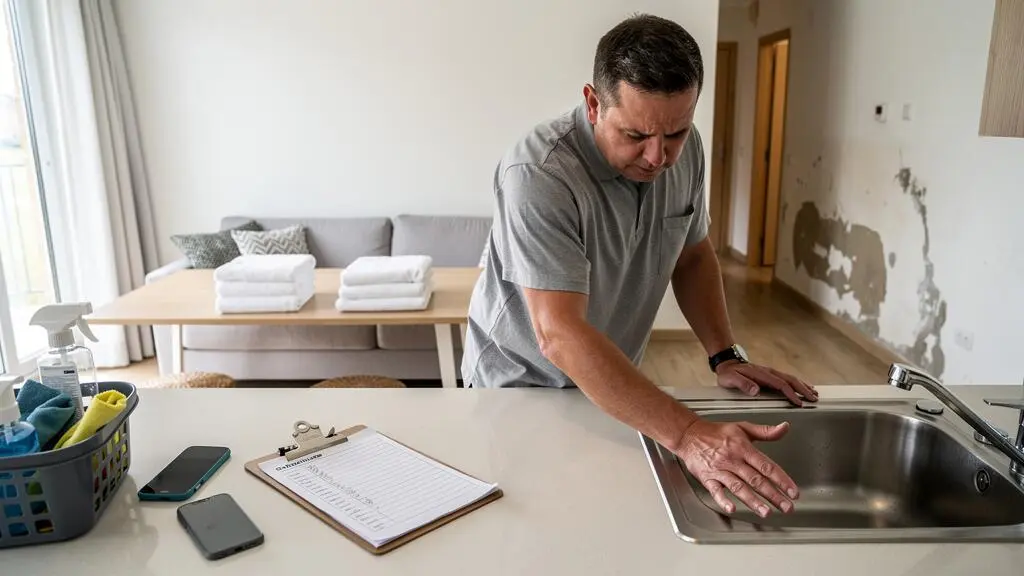
Frequent guest turnover creates a maintenance challenge that goes beyond ordinary household wear. A holiday rental may accommodate numerous different households throughout a year, each using its kitchen, bathroom, furniture and appliances according to different habits. Small defects can accumulate between bookings, while the pressure to prepare the property quickly makes deterioration easier to overlook.
Preserving accommodation quality therefore requires a consistent system rather than occasional cosmetic improvements. Owners need to identify high-wear areas, record defects, distinguish repairable items from those approaching the end of their useful life and ensure that cleaning methods do not damage surfaces. The condition of the property should also be reflected in its annual maintenance budget.
The most effective approach combines changeover inspections with seasonal reviews and planned replacement reserves. This protects guest comfort, limits avoidable repair costs and helps maintain the presentation expected from a professionally managed holiday let.
Holiday Rental Quality: Key Points
- Inspect kitchens, bathrooms and other high-use areas regularly, paying particular attention to seals, fittings, ventilation and appliances.
- Record defects with dated photographs and prioritise repairs according to their severity and potential consequences.
- Protect long-term property condition through suitable cleaning products, durable fixtures, planned redecoration and a dedicated maintenance reserve.
- Why Do Holiday Rental Kitchens and Bathrooms Wear Out Faster Than Expected?
- How Can You Record Small Property Defects Before They Become Expensive Repairs?
- Repair or Replace: Which Makes Sense for Worn Holiday Rental Fixtures?
- The Cleaning Product Mistake That Can Permanently Damage Holiday Rental Surfaces
- When Should You Repaint a Frequently Booked Holiday Apartment?
- How Can You Build a Room-by-Room Quality Checklist for a Two-Bedroom Holiday Let?
- How Can You Calculate a Repair Reserve for a £250,000 Holiday Property?
- How Much Should You Budget for Holiday Property Maintenance Each Year?
Why Do Holiday Rental Kitchens and Bathrooms Wear Out Faster Than Expected?
Holiday rental kitchens and bathrooms wear out faster than those in many owner-occupied homes because different households repeatedly use the same fixtures, appliances and surfaces, often at high intensity. A kitchen may experience several rounds of intensive cooking within a short period, while bathrooms face repeated showers, moisture exposure and cleaning. This concentrated use makes routine inspection essential.
In kitchens, the first signs of deterioration often appear around worktop edges, cupboard hinges, drawer runners and appliance controls. Guests may open and close storage repeatedly, use appliances at full capacity and spill food or liquids without immediately noticing the consequences. Over time, loose fittings, chipped edges and worn finishes become increasingly visible.
Bathrooms experience a different combination of stresses. Silicone seals and grout lines are particularly vulnerable to repeated moisture exposure and cleaning. If seals deteriorate, water can penetrate behind fittings and contribute to concealed damage. Poor ventilation compounds the problem by allowing moisture to remain on walls, ceilings and fixtures.
Water hardness adds another maintenance consideration. The Drinking Water Inspectorate explains that hard water contains dissolved calcium and magnesium, which can form scale on heating elements and reduce appliance efficiency. Its classification identifies hard water at 200–300 mg/l CaCO3 and very hard water above 300 mg/l CaCO3. Local conditions should be checked rather than assumed from regional averages. See the Drinking Water Inspectorate guidance on water hardness.
Frequent cleaning also contributes to cumulative wear. Repeated scrubbing, unsuitable cloths and abrasive methods can gradually dull finishes, particularly when cleaning teams work under changeover deadlines.
It is useful to distinguish two categories of deterioration:
- Cosmetic wear: scuffed paint, dull worktops, faded furnishings and minor surface marks that affect presentation and potentially guest reviews.
- Functional or structural wear: leaking seals, loose fittings, failing ventilation and damaged plumbing that can develop into more expensive problems.
Cosmetic issues should be reviewed against guest expectations and listing photographs. Functional defects require more urgent attention because their consequences may extend beyond the original component.
The key is to monitor cosmetic presentation and functional condition separately. A property can look attractive while concealing a developing leak, just as a fully functional kitchen can still appear tired enough to affect guest satisfaction.
How Can You Record Small Property Defects Before They Become Expensive Repairs?
The most reliable way to identify small defects before they become expensive repairs is to create a dated, photograph-based inspection record after each changeover. Owners should use consistent camera positions, record the location and severity of each issue and compare new observations with previous inspections. This makes gradual deterioration visible even when the owner manages the property remotely.
Memory alone is an unreliable maintenance tool. A small stain on a bedroom ceiling, a hairline grout crack or a slightly loose cupboard handle may appear insignificant during an individual visit. However, comparing photographs taken over several months can reveal whether the defect is stable, spreading or becoming more serious.
A practical defect log should include:
- The date and property location.
- A photograph showing the defect and its surrounding area.
- A short description of the problem.
- A severity classification.
- The person responsible for the next action and its expected completion date.
For remote owners, the same process can be incorporated into the cleaner’s changeover report. A cleaner does not need to diagnose a plumbing problem or assess structural damage. The important requirement is to report visible changes consistently and provide enough information for the owner or maintenance contractor to investigate.
Guest feedback provides another valuable source of early-warning information. Comments such as a shower losing pressure, a wobbly dining table or a room feeling tired can indicate developing maintenance problems. One isolated comment may not establish a fault, but repeated observations about the same component deserve investigation.
Cleaner reports and guest reviews should therefore feed into the same maintenance record. This prevents information from becoming scattered across emails, booking platforms and informal conversations.
A simple three-level classification makes the system manageable:
- Monitor now: minor cosmetic changes or stable defects that need recording and observation.
- Fix at next changeover: issues that should be corrected before another guest arrives but do not currently require an emergency response.
- Fix before next booking: defects affecting safety, essential facilities, hygiene or the prevention of further property damage.
Owners should avoid allowing the lowest category to become a permanent backlog. A monitored defect needs a review date and a clear escalation condition.
Documentation also has a practical administrative benefit. Dated photographs, contractor invoices and inspection records can help substantiate an insurance claim or provide evidence when a deposit dispute concerns property condition. They do not guarantee a successful claim, but they establish a clearer maintenance history.
Once defects are documented, the next decision is whether to repair the existing component or replace it. A consistent record makes that decision easier because it reveals how often the same item has already required attention.
Repair or Replace: Which Makes Sense for Worn Holiday Rental Fixtures?
Repairing a holiday rental fixture makes sense when the underlying component remains reliable, the intervention is affordable and the work can be completed without significant disruption. Replacement is generally more appropriate when an item is approaching the end of its useful life, repeatedly fails or creates booking downtime that outweighs the cost of installing a durable alternative.
The decision should consider more than the contractor’s quoted price. A repair that appears inexpensive may become costly if the same problem returns during several busy periods. Equally, replacing a functional item simply because it looks slightly worn may be unnecessary if a professional repair restores its appearance and performance.
Three criteria provide a useful decision framework:
| Criterion | Repair is more suitable when | Replacement is more suitable when |
|---|---|---|
| Remaining lifespan | The main component remains structurally sound and reliable. | The item is near the end of its useful life or repeatedly fails. |
| Booking disruption | The work can be completed during a short changeover. | Repeated repairs would require several periods of restricted availability. |
| Guest perception | The repair restores function and acceptable presentation. | A new fixture meaningfully improves comfort, appearance or usability. |
Booking disruption is particularly important in short-term accommodation. If a repair requires the property to remain unavailable for several nights, the potential lost revenue should be considered alongside labour and materials. The relevant comparison is the total cost of each option, including the financial effect of downtime.
Guest-critical items deserve particular attention. A worn mattress, unreliable shower or uncomfortable sofa can affect the experience far more than a slightly marked door handle. Replacing these items with inexpensive alternatives may be a false economy if comfort and durability deteriorate quickly.
Other components are easier to manage through straightforward repairs or budget replacements. Door handles, blinds, crockery and small appliances may not justify premium specifications when suitable, reliable alternatives are available.
Repeated repairs are another warning sign. If a fixture needs attention more than once per season, owners should compare the cumulative repair expenditure with the cost of a more durable replacement. Where possible, specifications should favour components suitable for frequent use rather than products selected solely on initial purchase price.
For example, a repeatedly leaking tap may justify replacement with an equivalent durable model, while a loose cupboard hinge may only require adjustment or a replacement fitting.
The best maintenance decision is not necessarily the cheapest immediate intervention. It is the option that restores reliable service, protects booking income and avoids unnecessary repeat work.
The Cleaning Product Mistake That Can Permanently Damage Holiday Rental Surfaces
One of the most damaging cleaning mistakes in a holiday rental is repeatedly using an aggressive or chemically unsuitable product on a surface that requires specialist care. Acidic descalers, abrasive creams and incorrectly selected disinfectants can dull, etch or discolour certain materials. The risk increases when cleaning takes place after every booking and products are selected under time pressure rather than according to surface compatibility.
Natural stone is a particularly important example. Marble and other calcareous stones contain minerals that can react with acidic substances. The Natural Stone Institute explains that products containing vinegar, lemon or other acids may etch or dull these materials. The resulting surface damage is different from ordinary dirt and may not disappear through additional cleaning. Its Natural Stone Institute guidance on natural stone care and cleaning recommends identifying the stone composition before choosing an appropriate maintenance method.
Other materials also require suitable cleaning products. Chrome finishes can become dull or marked through inappropriate treatment, sealed wood floors may be affected by excessive moisture or unsuitable chemicals, and acrylic baths can be scratched by abrasive cleaning tools. The correct product depends on the actual material, finish and manufacturer’s instructions.
Holiday lets are especially exposed to this problem because cleaning occurs repeatedly, often within a narrow changeover window. A cleaner who finds several bottles of mixed products in a cupboard may choose the strongest available option, assuming it will remove limescale or stubborn marks more effectively.
The solution is a written product-by-surface guide that removes this uncertainty. It should identify each important surface, specify the approved cleaning product and explain any relevant restrictions. Products should be clearly labelled and stored so that cleaners can identify them quickly.
Cleaning instructions should also explain what must never be mixed. Transport Canada, through its CANUTEC safety guidance, warns that mixing bleach with acidic products such as vinegar and limescale removers can release toxic chlorine gas. This is a serious safety risk, particularly in enclosed bathrooms where ventilation may be limited. Its Transport Canada guidance on hazardous cleaning-product mixtures explains the chemical danger and the importance of preventing incompatible products from being combined.
Separate products should never be mixed unless their manufacturers explicitly confirm compatibility. Staff should follow product labels, safety instructions and applicable workplace procedures. If an accidental mixture produces fumes, people should leave the affected area and follow appropriate emergency guidance rather than attempting to continue cleaning.
A practical cleaning control system should include:
- One approved product for each relevant surface type.
- Clear labels and accessible manufacturer instructions.
- Written restrictions on incompatible chemical combinations.
- Consistent guidance shared with every cleaner and replacement team member.
Cleaning quality should be measured by the condition of the surface after treatment, not by the strength of the product used. A controlled approach reduces avoidable damage while helping the property retain its original finish for longer.
When Should You Repaint a Frequently Booked Holiday Apartment?
A frequently booked holiday apartment should be repainted when its walls no longer meet the presentation expected by guests, even if the paint remains physically intact. Booking volume, traffic patterns and listing photography often determine the right timing more accurately than a fixed number of years. Targeted touch-ups can extend the interval between full repaints while limiting disruption to bookings.
Walls in holiday accommodation experience repeated contact from luggage, furniture, shoes and everyday guest activity. Hallways, entrance corners and areas around light switches often show wear earlier than less frequently used rooms. These high-impact zones should therefore be included in routine seasonal inspections.
Waiting until paint begins peeling or deteriorating visibly is not always the best strategy. A property may remain structurally sound while its walls develop enough scuffs and marks to look tired in listing photographs. Since online presentation influences a guest’s first impression, cosmetic condition deserves attention before the damage becomes extensive.
A tiered repainting strategy offers better control over costs:
- Between seasons: touch up hallway corners, areas behind doors, marks around switches and other obvious problem spots.
- During quieter periods: repaint individual rooms where local repairs no longer produce a consistent finish.
- During major refurbishment gaps: complete a full repaint when several rooms show widespread deterioration or when the existing finish cannot be matched reliably.
Paint selection also affects long-term maintenance. Washable, scrubbable finishes are useful in high-traffic rooms because they can tolerate routine cleaning better than more delicate alternatives. Mid-tone colours may also disguise minor marks more effectively than pure white, although the best choice depends on the apartment’s lighting, interior design and target market.
Owners should keep a record of paint brands, colours, product references and finishes. This makes future touch-ups more consistent and avoids the problem of applying a slightly different shade to an otherwise uniform wall.
Booking calendars should determine when major work takes place. A full repaint may require furniture movement, drying time, ventilation and a final cleaning before guests arrive. Scheduling this work during a low-season gap reduces the risk of sacrificing valuable bookings or rushing the finish.
For properties with high booking intensity, repainting should be considered alongside other planned improvements rather than treated as an isolated cosmetic task.
Consistent paint maintenance helps preserve the visual standard of the accommodation. The next step is to turn these individual observations into a structured inspection system that covers every room.
What Owners Should Consider Before Building a Quality Checklist
- Different rooms have different maintenance risks: kitchens are exposed to intensive use, bedrooms influence comfort, and bathrooms require close attention to moisture.
- Inspection frequency should reflect component vulnerability and booking intensity rather than relying on one annual property review.
- The checklist should connect owner inspections, cleaning reports and seasonal maintenance planning so that recurring problems lead to practical changes.
How Can You Build a Room-by-Room Quality Checklist for a Two-Bedroom Holiday Let?
A useful room-by-room quality checklist for a two-bedroom holiday let should divide the property into distinct inspection zones, each with specific condition checks and an appropriate review frequency. The living and kitchen area requires attention to high-use fittings, bedrooms need comfort checks, and the bathroom needs moisture and leak monitoring. This makes inspections repeatable without creating an unnecessarily long list.
For a typical two-bedroom property, four inspection zones provide a manageable starting point.
Living room and kitchen: high-wear zone
- Check cupboard hinges, drawer runners, worktop edges and visible surface damage.
- Test essential appliances and inspect their visible condition.
- Check dining furniture, seating, handles and other frequently used fittings.
- Look for marks, loose fixtures and deterioration around high-traffic areas.
Bedroom one: primary comfort zone
- Inspect mattress condition and bed-frame stability.
- Check wardrobe doors, drawer runners and bedside fittings.
- Review bedding, curtains and other guest-facing textiles.
Bedroom two: secondary comfort zone
- Check the bed, mattress and visible furniture condition.
- Inspect window coverings, storage and lighting.
- Look for wall marks, loose fittings and signs of damp.
Bathroom: water-damage-critical zone
- Inspect silicone seals, grout lines and visible joints around fittings.
- Check taps, shower operation, drainage and water pressure.
- Look for persistent moisture, mould and ventilation problems.
- Inspect visible plumbing connections for signs of leakage.
The checklist should distinguish between checks required at every changeover and more detailed inspections completed periodically. Cleaners can verify visible cleanliness, obvious damage and basic presentation during each departure inspection. More technical checks, including ventilation performance, plumbing condition and appliance maintenance, may require an appropriately qualified contractor.
Frequency should reflect the risk associated with each component. Kitchen appliances and bathroom seals can be reviewed regularly, including monthly or seasonal checks where appropriate. Textiles and furnishings should receive a more detailed seasonal review. Roofs, gutters and external areas should be included in an annual maintenance programme, with additional checks when weather exposure or visible problems justify them.
The checklist also provides a shared briefing document for cleaners, housekeepers, letting agents and maintenance contractors. Each person should understand which observations they are responsible for recording and which defects require escalation to the owner.
Five Actions to Create a Practical Holiday Let Quality Checklist
- Divide the accommodation into four inspection zones and produce a room-by-room list of checkpoints. Deliverable: a named inspection checklist covering the living/kitchen area, both bedrooms and bathroom.
- Photograph the existing condition of important fixtures and surfaces from consistent positions. Deliverable: a dated baseline photo record for each zone.
- Assign a monitoring frequency to every checkpoint according to its function and exposure. Deliverable: a maintenance calendar distinguishing changeover, monthly, seasonal and annual reviews.
- Give cleaners and contractors written responsibilities for reporting and escalating defects. Deliverable: a shared inspection and reporting procedure.
- Review the checklist after each holiday season and add recurring problems or guest complaint themes. Deliverable: an updated checklist with a record of changes and outstanding actions.
After each season, the owner should examine which items failed, which repairs were repeated and which guest complaints identified previously overlooked problems. A checklist that evolves with the property is more useful than a static document that no longer reflects its actual maintenance needs.
Once inspection findings are consistent, they can also support financial planning. Recorded defects and expected component lifespans provide a more reliable foundation for calculating the money needed for future repairs and replacements.
How Can You Calculate a Repair Reserve for a £250,000 Holiday Property?
A repair reserve for a £250,000 holiday property should be calculated from the expected replacement needs of its individual components rather than from an assumed percentage of property value. Owners should identify major assets, estimate their remaining useful lives, calculate their likely replacement costs and build an annual savings plan. The £250,000 figure is a worked example, not a universal maintenance benchmark.
Property value alone does not reveal how much money will be required to maintain a holiday let. Two properties with the same market value may have very different maintenance requirements because of their age, construction quality, booking intensity, location and existing condition.
A more useful approach starts with a component inventory. This should include major systems and items such as:
- Boiler and heating equipment.
- Kitchen appliances and laundry equipment.
- Bathroom fittings, showers and plumbing.
- Flooring, wall finishes and decoration.
- Beds, mattresses, sofas and other substantial furnishings.
For each item, record its current condition, approximate age, expected remaining lifespan and estimated replacement cost. The annual contribution can then be estimated by dividing the anticipated replacement cost by the remaining useful life, provided the estimate reflects the actual replacement timing and any relevant inflation or price uncertainty.
Illustrative Repair Reserve for a £250,000 Holiday Property
Consider a hypothetical £250,000 holiday property with a boiler, kitchen appliances, two bathrooms, flooring and guest furnishings. The owner creates a separate inventory and records the estimated replacement cost and remaining useful life of each component.
For illustration, if an appliance is expected to cost £1,200 to replace and has an estimated remaining useful life of six years, a simple straight-line provision would be £200 per year. This is a planning calculation, not a quotation or a guarantee that replacement will occur exactly six years later.
The same calculation can be repeated for other components, then adjusted for their condition, replacement priorities and uncertainty. No single annual reserve amount can be established without the property’s actual inventory and cost estimates.
Several factors can significantly change the reserve requirement:
- Property age and build quality: older components or poorly installed fittings may require earlier replacement.
- Booking intensity: more frequent guest use increases exposure to wear and operational failures.
- Water conditions: hard water can contribute to scale formation on heating elements and appliances.
- Climate exposure: coastal salt air can accelerate corrosion on exposed metal components.
- Asset ownership: the calculation should include furniture and white goods only where the owner is responsible for their replacement.
Two different reserves should also be distinguished. An emergency buffer is intended for unpredictable events such as a sudden boiler breakdown or storm damage. A planned replacement fund covers foreseeable end-of-life expenditure on appliances, flooring, furnishings and other components.
These funds serve different purposes and should not automatically be treated as interchangeable. Insurance or home emergency cover may contribute towards some unexpected failures, subject to policy terms, exclusions and conditions. The owner should not assume that every breakdown or deterioration-related repair is insured.
A separate savings account can make the process easier to manage. Regular monthly contributions, particularly when cash flow is stronger during the high-earning season, help build funds before the quieter months when repairs and replacements may become necessary.
Once predictable replacement expenditure is separated from emergency costs, owners can build a more realistic annual maintenance budget. That budget should also include the routine work needed to keep the property operating and presentable between bookings.
How Much Should You Budget for Holiday Property Maintenance Each Year?
The annual maintenance budget for a holiday property should reflect its actual operating costs, condition, age and booking intensity rather than relying on a universal percentage of property value. Owners should distinguish routine upkeep and operational maintenance from major capital replacements, then use inspection records and previous expenditure to set a realistic annual allowance.
One of the most common budgeting mistakes is underestimating what maintenance includes. A holiday let requires more than occasional repairs and a fresh coat of paint. Its operating requirements may involve:
- Routine repairs and upkeep of fixtures, appliances and furnishings.
- Cleaning and changeover preparation, including any additional maintenance-related work.
- Garden maintenance, external cleaning and seasonal property care.
- Regular checks and servicing of heating, plumbing and ventilation systems.
- Applicable safety inspections, certification and compliance-related work.
- Minor replacements of crockery, soft furnishings, fittings and everyday equipment.
These operating expenses should be distinguished from the planned replacement fund described in the previous section. Major capital expenditure, such as replacing a boiler, renovating a bathroom or renewing substantial flooring, should be planned separately to avoid confusing recurring upkeep with long-term asset replacement.
Safety and compliance costs also require attention. For self-catering holiday accommodation in England, owners must address applicable fire, gas, carbon monoxide and electrical safety requirements. The relevant fire safety guidance depends on the accommodation’s size and complexity, and additional planning, insurance and other obligations may apply. The UK government guidance on self-catering holiday home regulations explains the requirements relevant to England. These legal requirements should not automatically be applied to Scotland, Wales, Northern Ireland or other countries, where separate rules may apply.
To establish a realistic annual budget, owners should begin with their own expenditure records. The first one to two years of ownership provide a useful starting point for identifying recurring maintenance costs, although older properties or newly acquired accommodation may require additional investigation.
A practical budgeting method is to:
- Collect invoices and receipts for repairs, cleaning, servicing and replacements.
- Group expenditure into routine maintenance, operational costs, compliance and capital replacement.
- Compare actual spending with booking volume and seasonal usage.
- Identify recurring defects and adjust allowances where the same problems appear repeatedly.
- Include a separate provision for foreseeable replacements and unexpected failures.
Maintenance spending should also be assessed against the property’s earning capacity. Under-maintained accommodation can develop poor presentation, unreliable facilities and recurring guest complaints. These problems may contribute to weaker reviews and reduced booking performance, although the relationship will depend on the property, market and other factors influencing guest decisions.
The objective is not to minimise maintenance spending at any cost. It is to identify the level of expenditure required to protect the condition, usability and presentation of the accommodation while maintaining commercially sensible operating costs.
At the end of each holiday season, owners should compare budgeted and actual expenditure. Items that repeatedly exceed their allowance may indicate an underlying defect, unsuitable product choice or an unrealistic original estimate. These findings should feed into the next year’s operating budget and the planned replacement reserve.
Preserving holiday rental quality is an ongoing management responsibility rather than a one-off refurbishment exercise. By combining regular inspections, documented defects, appropriate cleaning, timely replacement decisions and a funded maintenance plan, owners can protect guest experience while reducing the risk of avoidable deterioration. The most useful next step is to review the property’s current condition and turn the findings into a practical annual maintenance schedule.
How often should a holiday rental property be inspected?
A holiday rental should receive a basic condition check at every guest changeover, with more detailed inspections scheduled monthly, seasonally or annually according to the component and its risk. Bathrooms, plumbing and high-use kitchen fittings deserve regular attention, while roofs, gutters and external areas should form part of a planned periodic inspection programme.
What are the first signs that a holiday rental needs maintenance?
Common early warning signs include loose cupboard hinges, deteriorating silicone seals, persistent limescale, reduced shower pressure, damaged paintwork, unusual appliance performance and recurring guest complaints. Small stains, cracks or loose fittings should be photographed and monitored so that owners can identify whether deterioration is progressing.
Should holiday rental owners use commercial-grade fixtures and furnishings?
Commercial-grade products can be worthwhile for frequently used components such as taps, hinges, flooring and selected furniture, provided they are suitable for the property and represent good value over their expected lifespan. However, commercial specifications are not necessary for every item. The priority should be durability, repairability, guest comfort and the total cost of ownership.
How can remote owners maintain holiday accommodation between bookings?
Remote owners can use a shared changeover checklist, dated photographs, cleaner reports and a central defect log. Each problem should have a severity classification, an assigned person responsible for resolving it and a target completion date. Local contractors or letting agents can then report progress using the same documentation system.
Is holiday rental maintenance tax-deductible?
Tax treatment depends on the country, the nature of the expenditure and the applicable property tax rules. Routine repairs and maintenance may be treated differently from capital improvements or replacements. In the UK, the furnished holiday lettings tax regime was abolished from 6 April 2025, so owners should not assume that previous furnished holiday letting tax treatment still applies. Obtain current advice from a qualified tax professional and distinguish repair expenditure from capital work when maintaining financial records.