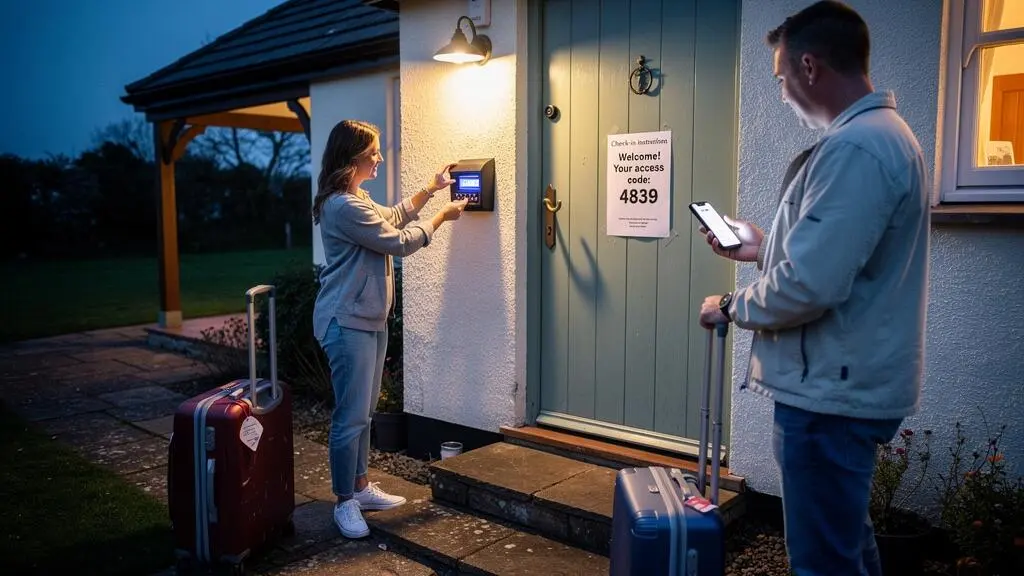
Clear guest communication prevents holiday rental misunderstandings by making expectations explicit before guests have to act on them. Exact checkout times, understandable house rules, transparent charges and step-by-step arrival instructions reduce the need for interpretation. When essential information is easy to find, guests can make informed decisions without repeatedly contacting the host.
A request to “leave the property tidy” may sound reasonable to a host but mean something different to a guest. The same problem arises when a parking space is described as “nearby”, an unfamiliar appliance has no instructions, or an extra charge appears without a clear explanation.
Effective holiday rental communication is therefore an information-design task, not simply a matter of sending more messages. Hosts need to identify what guests must know, when they need it and how to present it in language that works across different cultures and levels of familiarity with the property.
These principles apply across English-speaking destinations, although booking-platform policies and local consumer-protection requirements must be checked separately.
Clear Guest Communication: The Essentials
- Replace vague rules with specific actions, deadlines, locations and responsibilities that guests can understand without clarification.
- Disclose charges before commitment and combine short written instructions with relevant photographs and accessible mobile guidance.
- Use timely automated reminders for routine information, personal responses for individual questions and a clear escalation route for urgent problems.
- Why Does an Unclear Checkout Rule Cause Disagreements with Holiday Guests?
- How Can You Write House Rules That International Guests Understand on First Reading?
- Pictures or Written Instructions: Which Help Guests Use a Holiday Home More Easily?
- The Extra-Charge Wording Mistake That Can Trigger a Holiday Rental Complaint
- How Can You Make a Digital Guest Handbook Easier to Navigate on a Mobile Phone?
- Automated Messages or Personal Replies: Which Do Holiday Rental Guests Prefer?
- How Can You Create a Guest FAQ for Heating, Parking and Household Appliances?
- How Can You Write Holiday Rental Arrival Instructions That Prevent Check-in Problems?
Why Does an Unclear Checkout Rule Cause Disagreements with Holiday Guests?
Unclear checkout rules cause disagreements because hosts and guests may interpret the same instruction differently. A host might expect rubbish removal, washed dishes and departure at an exact time, while a guest assumes basic tidying is sufficient. Specific instructions prevent these competing expectations from becoming arguments over cleaning, keys or late departure.
The underlying problem is often an unstated assumption. A host knows what the cleaner needs and how the property should be left. A guest only knows what the booking details and instructions communicate. Different interpretations do not necessarily indicate deliberate disregard for the rules.
Three areas deserve particular attention:
- Departure time: Replace “check out by late morning” with “Check out by 10:00 am. Please leave the property and close the entrance door by this time.” State explicitly whether any grace period is available.
- Cleaning responsibilities: Replace “leave the house clean” with a defined list, such as “Put used dishes in the dishwasher, place rubbish in the outside bin and leave used towels in the bathroom.” These are illustrative instructions, not universal requirements.
- Key return: Replace “leave the keys where you found them” with “Place both keys in the lockbox beside the entrance, close its lid and scramble the combination.”
A useful distinction is whether a rule protects the property or asks guests to perform work normally handled during turnover. Hosts may reasonably describe agreed guest responsibilities, but tasks such as stripping beds, running appliances or removing rubbish should never be assumed to be obvious. Any requirements must also comply with the booking platform’s policies.
For Airbnb bookings, Airbnb’s guidance on checkout information explains that checkout instructions should match the applicable reservation details. Guests can consult departure information in their booking, making consistency especially important.
Test the instructions by imagining a guest reading them at 10 pm without access to the host. Could that person identify every required action and its deadline?
The consequences can extend beyond the immediate disagreement. A review mentioning unexpected checkout demands may leave future guests uncertain about the property’s conditions. This is a plausible reputational risk, not a quantified prediction of lost bookings.
Once departure responsibilities are unambiguous, the next challenge is writing rules that remain understandable to guests who do not share the host’s language habits or household conventions.
How Can You Write House Rules That International Guests Understand on First Reading?
International guests understand house rules more easily when instructions use plain language, observable actions and specific locations or times. Avoid idioms, unexplained local terminology and assumptions about household habits. Organise rules around arrival, daily use and departure, then test whether someone unfamiliar with the property can explain the most important instructions accurately.
The simplest rewriting method is to replace a general expectation with an action that can be verified. For example, “Please be considerate of the neighbours” expresses an intention but gives no practical boundary. “Do not play music outdoors after 10:00 pm” describes an observable restriction, assuming that timing reflects the property’s actual rules.
Other common expressions create similar problems:
| Ambiguous wording | More specific wording |
|---|---|
| Leave the place as you found it. | Wash used dishes and put rubbish in the outside bin before leaving. |
| Please respect quiet hours. | Keep television and music volume low between 10:00 pm and 8:00 am. |
| Use the air conditioning responsibly. | Switch off the air conditioning when you leave the property. |
| Recycle properly. | Put paper in the blue bin and glass in the green bin beside the driveway. |
These are hypothetical examples. Bin colours, permitted noise levels and other requirements must be adjusted to the actual property and local rules.
Cultural expectations can differ around removing shoes indoors, sorting waste, using air conditioning and acceptable noise in shared buildings. A useful warning sign is any instruction that only makes sense if the guest already shares the host’s household habits.
Group rules by the moment they apply: arrival, during the stay and departure. Within each group, use short sentences with the action first. This is easier to scan on a phone than one continuous block of restrictions.
Before publishing, give the rules to someone unfamiliar with the property, ideally someone with a different linguistic or cultural background. Ask them to explain three important requirements in their own words. Rewrite anything they interpret incorrectly.
Good wording explains what guests should do. The next decision is whether words alone are sufficient or whether a visual reference would help them identify the correct object or control.
Pictures or Written Instructions: Which Help Guests Use a Holiday Home More Easily?
Pictures are generally better for showing guests where something is or which object to use, while written instructions are better for explaining sequences, conditions and safety precautions. The most practical approach combines both: one relevant photograph beside a short caption describing the required action. This reduces unnecessary searching and avoids relying on either format alone.
The choice should depend on the type of information, not a general preference for images or text. A photograph can identify the correct thermostat, recycling bin or water shutoff valve immediately. It cannot reliably explain every step of a complex operating procedure or what to do when a device fails.
Consider a guest unfamiliar with an induction hob. A photo showing the power control helps identify the correct button. The accompanying instruction explains how to switch it on, select a cooking zone and adjust the heat, according to that appliance’s actual operating procedure.
Each instruction image should sit immediately beside its caption. A useful format is: “Kitchen hob — press the power button marked in the photograph, then select the cooking zone.” The host must verify the wording against the installed model. Separating all photographs from a long instruction document forces guests to scroll back and forth.
Visual instructions also have a maintenance risk. An image of an old appliance, relocated bin or replaced key-box can give guests confidence in information that is no longer correct. Review photographs whenever equipment or layouts change, not only during annual handbook updates.
Mobile conditions matter. Guests may be holding luggage, standing outside or using a weak connection. Compressed images, readable captions and short text blocks are easier to consult than unnecessarily large files. Provide essential access and safety information in a format that does not depend on streaming video.
Written alternatives also help guests who cannot interpret an image clearly or rely on assistive technology.
Once guests understand how to use the property, clarity must extend to financial expectations. An otherwise smooth stay can still generate complaints when additional charges were poorly explained.
The Extra-Charge Wording Mistake That Can Trigger a Holiday Rental Complaint
The most problematic extra-charge wording describes what a fee is for without explaining its amount, calculation or conditions. Expressions such as “energy contribution may apply” or “additional cleaning charged if necessary” leave guests unable to predict their costs. Effective disclosure distinguishes mandatory charges from optional services and conditional fees before the guest commits to payment.
Every charge description should answer three questions: What triggers payment? How much will it cost? When will it be collected? If the amount depends on usage, explain the relevant unit, calculation method and any applicable threshold.
For example, “extra linen available for a fee” leaves both price and payment arrangements uncertain. A hypothetical clearer version is: “An additional linen set costs £12 per set, payable through the approved booking channel when requested.” The figure is illustrative only; hosts must use their actual prices, permitted payment methods and applicable currency.
Mandatory booking fees need different treatment from optional or conditional charges. A compulsory cleaning charge cannot necessarily be presented as a later optional expense merely because it has a separate label.
In the United States, the Federal Trade Commission‘s Rule on Unfair or Deceptive Fees took effect on May 12, 2025. The FTC guidance on short-term lodging fee transparency explains that mandatory charges known and calculable in advance must be included in the displayed total price for covered transactions.
May 12, 2025
Effective date of the US federal Rule on Unfair or Deceptive Fees, which covers specified pricing practices for short-term lodging, including holiday rentals.
Federal Trade Commission, The Rule on Unfair or Deceptive Fees: Frequently Asked Questions. This is US-specific guidance, not a universal rule for English-speaking countries.
The FTC guidance distinguishes mandatory fees from certain excluded charges, including qualifying optional services, which remain subject to applicable disclosure requirements before payment. State and local requirements may impose additional obligations.
Booking platforms also apply their own policies on charge categories, collection and disclosure. Airbnb, for instance, restricts penalties for failing to complete specific cleaning or checkout tasks. A clearly written fee is not automatically a permitted or enforceable fee.
Before publishing any extra-charge description, test it against the actual checkout page. If a guest cannot determine the applicable cost before committing, the information needs attention. Hosts should also verify platform rules and the law governing the property rather than assuming that practices accepted in one country apply everywhere.
Transparent charges reduce one source of uncertainty. The same information must remain accessible throughout the stay, which makes the organisation of a digital guest handbook equally important.
How Can You Make a Digital Guest Handbook Easier to Navigate on a Mobile Phone?
A mobile-friendly digital guest handbook should put frequently needed answers first, provide a clickable contents list and keep each section short. Guests should be able to find access instructions, appliance troubleshooting and checkout details without reading the document from beginning to end. Clear headings, compact images and accessible offline essentials make the information more useful during real situations.
A paper manual can accommodate long explanations. A phone screen favours a different structure: the action or answer appears first, followed by any necessary context. For example, a heating section should begin with where to find the thermostat and what to press, rather than the history of the property’s heating system.
Prioritise three common moments when guests need information immediately: arriving at the entrance, troubleshooting an appliance and preparing to leave. These sections belong near the top or in a pinned quick-reference summary.
Format creates practical trade-offs. An emailed PDF can be convenient to save but awkward to navigate on a small screen, particularly if it resembles a long printed booklet. A web page or shared document can provide direct section links, although access may depend on connectivity and sharing permissions.
A useful compromise is a short booking-channel message containing essential details and a link to the fuller handbook. Where feasible, offer a lightweight downloadable version for offline access. Avoid placing critical access information exclusively in a resource guests may be unable to open.
Five Actions to Make Your Guest Handbook Mobile-Ready
- Identify the five most frequently requested answers from recent guest messages; produce a ranked list of priority topics.
- Create a clickable contents section linking to arrival, Wi-Fi, facilities, troubleshooting and departure; verify every link on a phone.
- Rewrite each priority section with the answer in its opening sentence; save five short, task-focused instructions.
- Pair relevant appliance or access photographs with captions and compress the files; check that each image and caption display together on a mobile screen.
- Add a visible review date, test access with a weak connection and provide a way to report inaccuracies; record the completed test and any corrections.
Handbooks also need an owner and a maintenance routine. Add a visible “Last reviewed” date and invite guests to flag incorrect details. Check reported issues against the actual property and update the relevant instructions promptly.
This turns guest feedback into a simple quality-control process rather than allowing outdated photographs, codes or appliance descriptions to accumulate.
Even an excellent handbook cannot address every question. Hosts still need an effective messaging approach that delivers routine information reliably while allowing human help when circumstances change.
Automated Messages or Personal Replies: Which Do Holiday Rental Guests Prefer?
Neither automated messages nor personal replies are universally preferable. Automation is useful for delivering accurate, timely information at predictable stages of a booking, while personal communication is better suited to individual concerns, reassurance and unexpected problems. A hybrid approach combines reliable reminders with responsive human support, provided guests know how to reach someone when necessary.
Before arrival, guests are assessing both the property and the host’s availability. A personal response to an unusual arrival request can provide reassurance that a generic template cannot. Once arrangements are confirmed, scheduled instructions can reduce the risk of forgetting essential information.
A practical scheduling framework uses three routine communication points:
- Booking confirmation: Confirm the reservation, explain when guests will receive access details and identify the main communication channel.
- The day before arrival: Provide the access time, location information, parking instructions and a concise route to the full arrival guide.
- Checkout morning: Remind guests of the agreed departure time, key-return method and previously disclosed responsibilities.
These are suggested communication timings, not universal platform requirements.
Airbnb’s hosting advice on welcoming guests describes scheduled messages and dynamic fields for reservation, guest and property information. Its guidance also recommends preparing arrival instructions and practical information about the home.
Personalisation improves relevance. A message referring to the correct guest, arrival date and property avoids the confusion of a generic template with missing details. However, inserting a name alone does not make an irrelevant automated reply helpful.
The main danger is over-automation. A guest reporting a lockout, water leak or serious maintenance issue should not receive only a generic acknowledgement that fails to explain what happens next. Provide an explicit urgent-contact route, identify a responsible person or service and make the fallback procedure clear.
Where urgent or hazardous situations arise, guidance should also direct guests to the appropriate local emergency services when necessary.
There is no reliable evidence in the supplied platform guidance that guests universally prefer one communication method. The appropriate choice depends on the message’s purpose, urgency and need for individual judgement.
Once messaging responsibilities are defined, a carefully selected FAQ can resolve predictable practical questions before guests need to contact anyone.
How Can You Create a Guest FAQ for Heating, Parking and Household Appliances?
A useful holiday rental guest FAQ answers the practical questions that become urgent when guests cannot get an immediate reply. Prioritise heating and hot water, parking restrictions and unfamiliar appliances. Build answers from previous guest enquiries, write in everyday language and include safe troubleshooting steps alongside normal operating instructions, with a clear point at which guests should contact the host.
These subjects deserve particular attention because their details vary between properties. Heating controls and hot-water schedules may be unfamiliar, parking restrictions may not be obvious from the street, and appliance problems often become noticeable only when guests try to use the equipment.
Start by reviewing guest messages from the previous season. Group repeated questions by subject, identify which caused immediate inconvenience and prioritise answers that would have helped guests act safely without waiting for a reply.
Write each question in the language guests actually use. “Why is the bedroom still cold?” is usually easier to recognise than “What is the thermostat’s programmed heating cycle?”
The following examples illustrate a practical FAQ structure. Every answer must be adjusted to the property’s actual equipment and conditions.
| Guest question | Information the answer should provide |
|---|---|
| Why is the heating not warming the bedroom? | Thermostat location, correct setting, expected warm-up behaviour and when to contact the host. |
| Where can the car be parked? | Exact authorised space, any permit requirement, restrictions and an alternative if the space is unavailable. |
| Why won’t the dishwasher start? | Correct programme selection, safe preliminary checks and instructions for reporting a persistent fault. |
| What should I do if there is no hot water? | Expected system behaviour, any safe guest-accessible checks and how to request urgent assistance. |
For appliances, explaining normal operation is only half the task. Include what to do if the equipment does not respond, which switches or user controls may be checked safely, and when to stop troubleshooting.
Any reset instruction must be verified against the manufacturer’s guidance for the installed model. Guests should not be instructed to open electrical equipment, bypass safety devices or attempt hazardous repairs.
A well-designed FAQ also identifies when self-service is inappropriate. A suspected gas leak, unsafe electrical fault or significant water leak requires a different response from an unfamiliar dishwasher programme.
Keep answers short, but never omit critical safety information merely to reduce reading time. If a question repeatedly requires a personal explanation, revise the relevant handbook entry and test it with someone unfamiliar with the property.
The FAQ addresses predictable issues after guests enter the property. The final communication challenge occurs earlier: ensuring guests can locate the correct entrance and gain access without confusion.
Key Takeaways Before Reviewing Check-in Instructions
- Arrival information must describe a physical route and a sequence of actions, not assume guests will recognise the entrance or know the building layout.
- Access instructions should include an availability time and an alternative action when a code, key-box or door does not work.
- The most reliable validation is a real-world test using only the information provided to a first-time guest.
How Can You Write Holiday Rental Arrival Instructions That Prevent Check-in Problems?
Holiday rental arrival instructions prevent check-in problems when they guide guests through a complete sequence: locating the property, parking, identifying the correct entrance, accessing the keys and entering the accommodation. State the exact check-in time, explain when access codes become valid and provide a clear contingency if entry fails. Test every step from a first-time visitor’s perspective.
Guests may arrive after a long journey, in poor light or without reliable mobile access. Directions that seem obvious to someone familiar with the building may be difficult to interpret under those conditions.
Write arrival instructions as a step-by-step route rather than a collection of unrelated facts:
- Start from an identifiable nearby landmark or access road and describe how to approach the property.
- Explain where guests may stop or park, including the correct entrance to use after parking.
- Identify the building, floor or door using visible features that remain reliable after dark.
- Describe the exact location of the key-box or access device and the order of actions needed to open it.
- Explain the first step after entering and where to find essential information.
Each step should contain only the information necessary to complete that action. “Find the box on the gate” is insufficient if the property has more than one gate. A better instruction identifies the correct gate, which side the box is on and where to go after retrieving the key.
Access timing needs particular precision. Specify the time from which the accommodation is available and whether the supplied code activates at that time. If access is not available earlier, state this rather than allowing guests to assume that receiving the code means they can enter immediately.
Every arrival guide also needs a contingency instruction. Explain how guests should report an invalid code, a missing key or an inaccessible entrance, who can assist and which alternative contact method to use if the primary channel fails. Do not promise immediate support unless that service is genuinely available.
Timing and delivery are also important. A practical approach is to send a short access summary the day before arrival and make the full instructions available through the agreed booking channel when needed. Avoid burying essential details inside a long promotional welcome message.
For security, share sensitive access details through an appropriate private channel and follow the booking platform’s communication requirements. Update or deactivate temporary codes as necessary under the property’s access-control arrangements.
Finally, test the journey. Start from the landmark used in the instructions and follow the written steps on a phone without relying on prior knowledge. Note every moment when the directions require a guess: an unclear turn, an unidentified gate, a missing floor number or an unexplained lock mechanism.
Correct these gaps before the next booking. Repeat the test whenever the entrance layout, parking arrangements or access system changes.
Before the next guest arrives, choose one recent booking scenario and complete the entire arrival route using only the instructions provided. Correct any missing steps, then check that the house rules, handbook, fee disclosures and departure messages describe the same property conditions consistently.
When should hosts send essential guest information?
Disclose booking conditions, mandatory charges and material restrictions before guests commit. Provide practical arrival details sufficiently early for journey planning, with an accessible reminder near check-in. During the stay, make operational guidance continuously available, and send departure reminders in time for guests to act on them. Follow the booking platform’s applicable communication and access-information rules.
Should hosts translate their guest handbook into several languages?
Translations may help when a property regularly welcomes guests who do not read English confidently. Start with clear, simple source text and verify translations of safety instructions, charges, restrictions and access procedures. Do not assume machine translation preserves every technical term or condition. Keep translated versions aligned whenever the original instructions change.
What should guests do when written instructions do not solve a problem?
Guests should have an identifiable contact channel and an alternative for urgent situations. Hosts should explain what information to provide, such as the affected appliance or access point, and distinguish ordinary maintenance queries from immediate safety concerns. Where personal safety is at risk, guests should follow appropriate emergency procedures rather than wait for a routine host response.
How can hosts tell whether their communication is improving?
Track repeated clarification questions, arrival assistance requests, reported handbook inaccuracies and complaints about unexpected conditions. Compare similar booking periods while accounting for changes in guest volume and property arrangements. Fewer repeated questions may indicate clearer information, but message counts alone do not establish guest satisfaction or prove that communication changes caused an improvement.
Where should essential holiday rental instructions be stored?
Keep booking-critical conditions in the listing or reservation information where required, and make practical instructions available through the agreed communication channel. A linked digital handbook can consolidate detailed guidance, while a short offline-accessible summary can help guests with limited connectivity. Avoid conflicting versions, and ensure updates reach guests whose bookings may be affected.