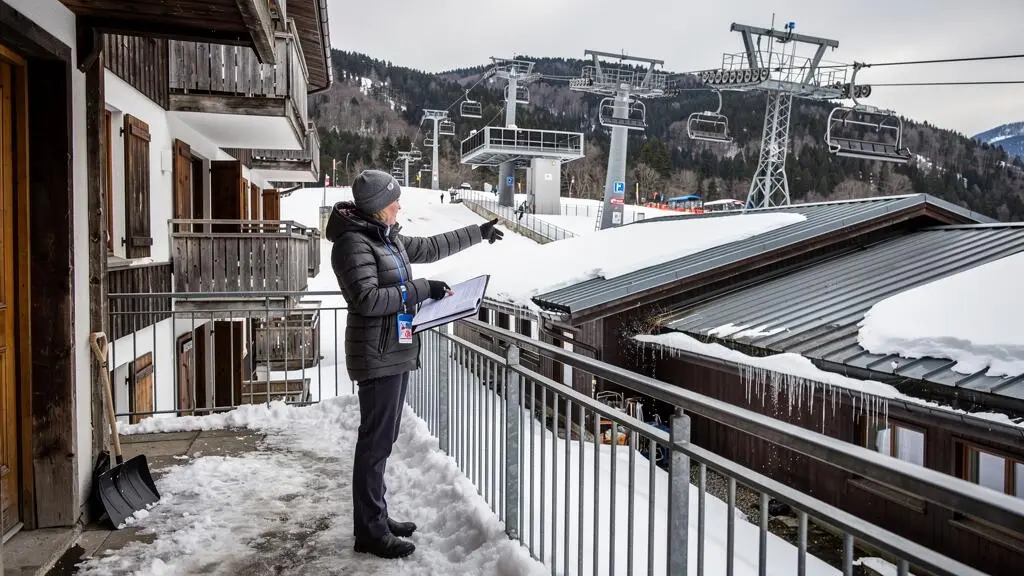
Established holiday resorts offer an apparent advantage to property buyers: transport connections already exist, visitor facilities are operational, and the destination has demonstrated its ability to attract tourists. Unlike an emerging resort, buyers can inspect functioning infrastructure, examine historical rental activity and compare completed property transactions.
Mature tourism infrastructure can reduce development uncertainty, but it does not automatically make a resort property safer. Ageing facilities, changing visitor preferences, increasing ownership costs and weakening seasonal demand can undermine an otherwise attractive location. A well-maintained ski lift or waterfront promenade says relatively little about future rental profitability or resale liquidity.
The distinction matters particularly for buyers seeking dependable holiday rental income, manageable service charges or a property suitable for personal use over many years. The most defensible purchase decisions assess three separate factors: the durability of visitor demand, the condition and financing of infrastructure, and the resilience of the local property market.
Established resort property: the essential considerations
- Existing facilities reduce some uncertainties, not all risks. Proven infrastructure provides information unavailable in speculative developments, but established destinations can still lose visitors.
- Infrastructure liabilities matter as much as infrastructure quality. Examine maintenance plans, ownership arrangements, reserve funds and potential major works before committing.
- Demand resilience determines long-term security. Visitor diversity, year-round services, sustainable ownership costs and resale activity are more informative than resort reputation alone.
- Why Can Established Holiday Resorts Lose Visitors Despite Excellent Facilities?
- How Can You Check the Condition of Ski Lifts and Resort Facilities Before Buying?
- Established Ski Resort or Smaller Mountain Village: Which Offers Better Everyday Convenience?
- The Ageing Resort Facility Risk That Can Increase Holiday Apartment Service Charges
- When Should Buyers Reconsider an Established Resort After a Major Lift System Upgrade?
- The Construction Disruption Buyers Overlook Near Planned Resort Developments
- Emerging Beach Resort or Established Coastal Town: Which Carries More Investment Risk?
- Why Do Holiday Property Markets Change Differently from Ordinary Housing Markets?
Why Can Established Holiday Resorts Lose Visitors Despite Excellent Facilities?
Established holiday resorts can lose visitors because infrastructure quality is only one component of destination appeal. Changing airline routes, cheaper competitors, evolving holiday preferences and dependence on particular visitor groups can reduce demand even when facilities remain operational. An established resort is therefore more resilient only when its underlying visitor markets are sufficiently diverse and adaptable.
A resort may have modern restaurants, reliable transport, swimming pools and efficient ski lifts yet experience weakening bookings. Facilities influence the visitor experience, but they cannot fully compensate for expensive travel connections, unfavourable exchange rates or shifting preferences towards different holiday formats.
Importantly, tourism performance and property-market performance are not identical. Visitors may continue arriving while apartment owners face falling rental margins because accommodation supply has expanded or operating costs have increased. Conversely, a destination with modest tourism growth may retain stable property demand from permanent residents and second-home buyers.
The tourism area life cycle provides a useful framework for interpreting these changes. Richard Butler‘s academic review of the tourism area life cycle model discusses destination development through consolidation and stagnation, followed by possible rejuvenation or decline. The framework does not predict that every mature destination will deteriorate.
For property buyers, the practical implication is that an established resort requires evidence of continued competitiveness rather than an assumption of inevitable decline.
Visitor concentration creates another vulnerability. A resort heavily dependent on one nationality, airline connection or tour operator may appear commercially successful until that source of demand weakens. Destinations attracting domestic visitors, international travellers, families and independent tourists may be better placed to absorb individual market disruptions, although diversification cannot eliminate broader downturns.
A useful resilience assessment starts with a five-to-ten-year review of available visitor figures, accommodation occupancy and seasonal activity. Look for:
- Changes in total visitors and overnight stays, where comparable records exist.
- Dependence on particular countries, travel operators or transport routes.
- Differences between peak-season occupancy and shoulder-season demand.
- Growth or contraction in accommodation capacity alongside visitor numbers.
- Completed property sale prices and transaction volumes, compared with relevant regional or national holiday-property trends.
In the United Kingdom, VisitBritain‘s annual regional inbound tourism statistics provide information on international visitor markets, regions, seasons and travel purposes. However, these figures are not resort-level occupancy statistics. Methodological changes introduced in 2024 also limit direct comparisons across the affected time series.
Use local accommodation data wherever possible, and distinguish genuine demand changes from revisions in statistical methodology.
A busy resort during school holidays demonstrates short-term appeal, not necessarily sustainable demand. The next question is whether the infrastructure supporting that appeal can remain financially and operationally viable.
How Can You Check the Condition of Ski Lifts and Resort Facilities Before Buying?
Buyers should assess ski lifts and resort facilities through maintenance records, ownership documents, operator information and planned investment programmes rather than visual inspection alone. Building association minutes, reserve-fund accounts, technical reports and municipal plans can reveal deferred works or future costs. Lift operator finances and concession arrangements also require separate scrutiny because they may affect visitor demand without creating direct apartment-owner liabilities.
A resort operating successfully during the winter season may conceal significant long-term expenditure. Ski lifts can run reliably while approaching major refurbishment requirements, and an attractive apartment residence may have ageing communal heating, waterproofing or swimming-pool systems.
The distinction between operational condition and financial sustainability is essential. Equipment can meet current safety requirements yet still require substantial replacement expenditure within the buyer’s intended ownership period.
The UK’s Health and Safety Executive guidance on ski slope safety addresses ski tow installation, operation, maintenance and appropriate safety arrangements. It is operational guidance, not a financial assessment of lift companies or a universal schedule for equipment replacement.
The first inspection should distinguish facilities legally belonging to the apartment building from those operated by independent companies, public authorities or concessionaires.
Owners may contribute directly to building pools, lifts, heating equipment and communal leisure facilities through service charges. External ski lifts, however, may belong to a private operator or operate under a municipal concession. Their financial difficulties do not automatically create a direct bill for apartment owners.
Depending on local law and funding arrangements, an operator’s difficulties might instead result in higher ski-pass prices, reduced operating services, public subsidies or changes in local taxation.
Buyers should also examine approaching concession expiry dates. A renewed concession may include investment obligations, while a contested or unresolved renewal could introduce uncertainty about future operations.
Five due-diligence checks before making an offer
- Obtain owners’ association records. Request recent meeting minutes, including the last three years where available, and produce a written list of approved, proposed and unpaid works.
- Review building finances. Collect the latest accounts, reserve-fund information and applicable maintenance plan; prepare a summary separating routine expenses from major expenditure.
- Identify infrastructure owners. Establish who owns and operates each important facility, including ski lifts and communal leisure equipment; produce an ownership and responsibility table.
- Verify refurbishment timing. Ask for the dates of major renovations, available condition assessments and planned replacements; prepare a timeline of potential works during the intended holding period.
- Calculate potential buyer exposure. Obtain the unit’s applicable cost-allocation share, check known outstanding liabilities and prepare a documented estimate of identifiable future contributions, clearly separating confirmed amounts from uncertain scenarios.
A technical specialist may be needed to interpret condition reports, while a local property lawyer can clarify which obligations transfer with ownership. Manufacturer guidance and asset-specific inspections are preferable to applying a generic replacement age to every lift or heating system.
Once the condition of infrastructure is understood, the next consideration is whether the facilities actually suit the property’s intended use throughout the year.
Established Ski Resort or Smaller Mountain Village: Which Offers Better Everyday Convenience?
An established ski resort generally offers stronger convenience for short winter holidays when lifts, restaurants and rental services are close together. A smaller mountain village may be more convenient for extended stays or retirement if it has permanent residents and year-round amenities. The better choice depends on when the property will be occupied, which services remain open and the total cost of ownership.
Convenience has different meanings for holiday tenants and regular occupants. Short-stay guests may prioritise ski-in access, equipment rental and restaurants within walking distance. Someone spending several months in the property may value medical care, supermarkets, public transport and reliable road access more highly.
The seasonality trap arises when buyers mistake facilities available during peak winter weeks for services operating throughout the calendar year. High-altitude resorts can have extensive infrastructure but limited activity between major tourist seasons.
In contrast, a smaller village with an established residential population may support essential shops and services throughout the year. This is not guaranteed: some villages have limited healthcare, weak transport and fewer commercial facilities than nearby resorts.
Costs can change the comparison considerably. Apartments in established resorts may carry significant communal facility expenses, while high-altitude conditions can increase heating, exterior maintenance and weather-related repair requirements. Some jurisdictions also impose particular taxes or charges on second homes.
Yet smaller villages may require greater dependence on a car, additional travel to ski lifts or more personal responsibility for maintaining individual buildings.
The following comparison illustrates considerations to verify locally rather than universal differences between these property types.
| Decision factor | Established ski resort | Smaller mountain village |
|---|---|---|
| Winter holiday access | Potentially direct access to lifts, equipment hire and tourist services | May require additional transport to the ski area |
| Year-round shopping | Can depend heavily on seasonal opening periods | May have permanent shops serving local residents |
| Healthcare and daily needs | Specialised visitor services may not replace permanent facilities | Depends on resident population and regional connections |
| Ownership costs | Potentially substantial shared leisure-facility expenses | May have fewer communal charges but more individual responsibilities |
| Holiday rental appeal | Convenience and proximity can support short-stay demand | May appeal to visitors seeking quieter or longer stays |
To make the comparison practical, rank the five most important amenities for the intended use. Confirm their actual opening periods and accessibility, then weight each factor by the number of weeks the property will be occupied or rented during the relevant season.
For example, year-round medical access deserves greater weight for retirement use than for a property rented exclusively during winter holidays.
Even when a resort offers the preferred amenities, their operating and renewal costs can materially alter the property’s long-term affordability.
The Ageing Resort Facility Risk That Can Increase Holiday Apartment Service Charges
Ageing communal facilities can create significant financial exposure for holiday apartment owners because replacement and refurbishment costs are distributed through the building’s legal ownership arrangements. Pools, spas, communal heating and internal lifts may require major expenditure beyond routine service charges. The risk is greatest when substantial works are approaching, reserve funds are inadequate or owners underestimate their share of future liabilities.
A resort apartment may include access to facilities that were attractive when the development was built but have become increasingly expensive to operate or modernise.
Under condominium, strata, homeowners’ association or leasehold arrangements, owners may contribute to shared expenses according to contractual or statutory allocation rules. In French copropriété structures, expenses are allocated under applicable ownership-share and charge provisions, often involving tantièmes.
These systems should not be treated as legally interchangeable. The actual documents and jurisdiction determine which facilities are shared, how expenses are allocated and what approval procedures apply.
Routine service charges and major capital works are different liabilities. A building may report manageable annual operating costs while facing a large future roof, heating or leisure-facility refurbishment.
For leasehold purchases in England and Wales, UK government guidance on buying leasehold property recommends investigating planned major works and understanding service charges and reserve or sinking funds. The guidance is jurisdiction-specific and should not be used as a substitute for legal advice elsewhere.
Mature resort buildings can face several overlapping cost pressures:
- Ageing mechanical systems requiring specialist maintenance or replacement.
- Communal leisure amenities needing refurbishment to remain commercially attractive.
- Weather-related deterioration of roofs, balconies and exposed structures.
- Energy expenditure and potential investment in more efficient equipment.
- Insufficient accumulated reserves relative to planned capital expenditure.
These pressures do not establish that mature resort charges universally increase faster than ordinary residential costs. Their significance depends on building design, management quality, funding arrangements and maintenance history.
Hypothetical example: a communal spa refurbishment
Consider a hypothetical apartment building whose owners are evaluating replacement of an ageing shared spa. The management company provides a refurbishment estimate and proposes allocating costs among eligible owners under the building’s governing documents.
Two apartments with similar purchase prices could face materially different contributions if they belong to different cost-allocation groups or buildings with different reserve balances. The buyer must therefore examine the particular unit’s liability rather than dividing the total project estimate equally among all apartments.
Request three years of available annual accounts, the current budget, reserve-fund balances and details of approved or proposed works. Separate recurring expenses from one-off levies, and compare the building with properties offering similar shared amenities.
A basic building without a pool is not a meaningful cost benchmark for a development operating a heated leisure complex.
Rising charges can also influence resale demand. Buyers assessing net rental income or retirement affordability may discount properties with substantial recurring expenses or uncertain capital commitments. The size of any resale effect must be established from local transactions, not assumed.
A major infrastructure upgrade can sometimes improve the outlook, but buyers must establish whether it creates genuine additional value or merely addresses accumulated maintenance obligations.
When Should Buyers Reconsider an Established Resort After a Major Lift System Upgrade?
Buyers should reconsider an established resort after a major ski-lift upgrade when the project materially improves reliability, accessibility or visitor capacity without creating disproportionate future costs. Completion alone is insufficient evidence of better investment prospects. The financing structure, previous infrastructure condition, projected demand and extent to which property prices already reflect the improvement all need examination.
Lift upgrades are highly visible developments, making them attractive signals for property marketing. A new gondola or replacement chairlift may reduce queues, improve access and strengthen the experience of visitors.
However, the timing of the investment matters. If a project has been publicly planned for several years, sellers may already incorporate expectations of improved access into asking prices. This does not prove that completed transaction prices have risen by the same amount.
Buying before completion may offer a different risk profile, but any apparent price advantage needs to be weighed against construction delays, uncertainty and disruption.
Buyers should first establish why the upgrade occurred. Replacing equipment to satisfy safety or operational requirements can be necessary simply to maintain existing service quality. Expanding capacity, improving a previously unreliable connection or opening a better-integrated route may have greater potential to influence visitor appeal.
Neither category guarantees higher occupancy or property values.
The project’s financing arrangements also matter. Funding may involve operator borrowing, public contributions, concession investment obligations or other mechanisms. Depending on the arrangements, repayment pressures could influence lift-pass prices, public budgets or associated charges.
There is no automatic connection between an independently operated lift upgrade and an apartment owner’s service charges.
Before treating the upgrade as a positive investment signal, verify:
- Whether the works replace existing capacity or add a meaningful service improvement.
- How the project is funded and whether future repayments are disclosed.
- Whether a concession renewal or contractual investment obligation is involved.
- Whether the broader resort has unresolved maintenance or accessibility problems.
- Whether comparable completed property sales demonstrate a price premium.
Municipal council records, planning documents and operator communications may clarify the project’s purpose and scope. When available, independently verified operating data after completion can provide stronger evidence than promotional forecasts.
A cautious buyer should also consider whether disruption coincides with intended rental seasons and whether the property can remain financially viable if projected visitor improvements do not materialise.
An infrastructure improvement is most useful when it strengthens an already viable destination. Nearby construction activity can nevertheless create a separate, temporary or prolonged risk for individual properties.
The Construction Disruption Buyers Overlook Near Planned Resort Developments
Planned resort developments can temporarily reduce a property’s usability and rental attractiveness through noise, restricted access, construction traffic and changes to surrounding views. Buyers often focus on the expected benefits of completed hotels, lifts or residential developments while underestimating the disruption beforehand. The investment outcome depends on project certainty, construction duration, proximity and whether the completed development genuinely improves the location.
The most important distinction is between an announced proposal and a development with enforceable planning permission and an established construction timetable.
A new lift station may improve future access, while a neighbouring hotel could introduce additional visitors and commercial services. Yet the period before completion may involve heavy machinery, delivery vehicles, temporary road closures and reduced privacy.
These effects are particularly relevant to short-term accommodation. Guests may be less willing to book a property overlooking major works, while owners planning personal holidays may find the property less enjoyable during the construction phase.
Expected long-term benefits should not be used to conceal near-term rental uncertainty. A project can be delayed, revised, scaled down or abandoned after preliminary approval, depending on the applicable planning system and circumstances.
Buyers should examine public planning records rather than relying exclusively on sales brochures. In France, relevant sources can include the local land-use plan, or PLU, municipal records and public enquiry notices. Elsewhere, comparable information may be available through local planning authorities, consent registers and development applications.
For each nearby project, establish:
- Its current planning status, including whether permission has been granted.
- Whether work has genuinely commenced.
- The proposed construction phases and any publicly documented completion schedule.
- The location of access roads, material storage and contractor activity.
- Potential effects on views, sunlight, noise and pedestrian access.
A site inspection should include viewpoints from the apartment itself, not only the surrounding streets. Where feasible, visit during different seasons because vegetation, snow cover and tourist activity can change how a future construction site affects the property.
For off-plan purchases, contractual documents deserve particular attention. Buyers should establish what the developer is actually obliged to deliver, what surrounding works are excluded from its commitments and which remedies, if any, apply to delays.
For resale properties, ask the seller directly about known neighbouring developments and seek independent verification. A seller’s explanation for moving may be informative, but it is not a substitute for planning records.
The same distinction between existing benefits and promised improvements becomes especially important when comparing mature coastal destinations with emerging beach resorts.
Emerging Beach Resort or Established Coastal Town: Which Carries More Investment Risk?
An emerging beach resort generally involves greater uncertainty about infrastructure delivery, visitor demand and resale liquidity, while an established coastal town offers more observable market evidence. However, established destinations can still be overpriced, exposed to environmental hazards or affected by declining tourism. The safer choice is the property whose value depends on fewer unverified assumptions and whose ownership costs and exit options are better understood.
An emerging resort may offer modern accommodation and the prospect of future capital appreciation. Its investment case often depends on planned transport connections, hospitality developments, tourism marketing and sustained visitor growth.
These expectations can become problematic when the property’s initial price reflects a developer’s commercial assumptions rather than a substantial record of independent resale transactions.
Price discovery is a particular risk in new destinations. Without comparable completed sales between independent buyers and sellers, it can be difficult to establish whether the asking price reflects an accessible secondary market.
Established coastal towns often offer different advantages. Permanent residents can sustain demand for everyday services and some long-term accommodation, while existing property transactions provide a basis for valuation.
Established towns may also attract visitors outside the principal beach season because of restaurants, cultural activities, employment centres or transport connections. The extent of that demand must be verified locally.
Planning restrictions can sometimes constrain additional housing supply and support the relative scarcity of existing properties. However, restrictions can also complicate refurbishment, redevelopment or adaptation. Limited supply does not guarantee rising prices.
Both destinations require environmental due diligence. Coastal erosion, flooding, storm exposure, insurance availability and long-term building maintenance can materially affect ownership risk regardless of the destination’s maturity.
A comparison is most useful when it separates observable conditions from future assumptions.
| Risk dimension | Emerging beach resort | Established coastal town |
|---|---|---|
| Infrastructure | May depend on promised facilities and future delivery | Existing services can be inspected and assessed |
| Property valuation | May rely heavily on developer pricing | Potentially more independent resale evidence |
| Rental demand | May depend on projected tourism growth | Existing visitor and residential activity can be measured |
| Resale liquidity | Uncertain until a secondary market develops | Historical transactions can help assess liquidity |
| Capital growth | Potential upside alongside substantial uncertainty | Depends on existing valuations, demand and supply |
| Environmental exposure | Requires location-specific assessment | Also requires location-specific assessment |
For each property, write down the assumptions required for the purchase to achieve its purpose. Separate verified facts, such as operational transport links and completed sales, from projected visitor increases or proposed amenities.
An investment relying on several unconfirmed developments may require a higher tolerance for risk, even when its advertised growth potential appears attractive.
Ultimately, neither destination category eliminates the special economic vulnerabilities of holiday property. Those vulnerabilities explain why tourism markets can behave very differently from ordinary residential housing.
Key takeaways before evaluating the wider property market
- A functioning resort is easier to inspect than a proposed development, but observable infrastructure should not be confused with guaranteed future demand.
- The strongest purchase evidence combines independently verified sales, realistic ownership costs and infrastructure funding arrangements.
- Before relying on capital appreciation or rental returns, assess how the property would perform under weaker tourism demand and a longer resale period.
Why Do Holiday Property Markets Change Differently from Ordinary Housing Markets?
Holiday property markets respond differently from ordinary housing because demand depends more heavily on discretionary travel spending, tourism accessibility and second-home purchasing decisions. Permanent housing is more closely linked to local employment, household needs and financing conditions. Consequently, resort property prices, rental occupancy and transaction activity can weaken even when the surrounding residential market remains comparatively stable.
Primary residences serve an essential housing need, while holiday homes are generally discretionary purchases. This difference affects both the timing of demand and the behaviour of owners during periods of financial pressure.
When household budgets tighten, potential buyers may postpone a second-home purchase before abandoning plans to acquire necessary accommodation. Existing owners may also consider selling a holiday property to release capital or reduce recurring expenses.
Such behaviour can contribute to weaker liquidity and greater price negotiation in certain holiday markets. However, the scale of any difference depends on local supply, buyer profiles and economic conditions; it should not be treated as a universal rule applying to every downturn.
Travel accessibility adds another source of uncertainty. Changes in airline capacity, journey costs, exchange rates or holiday preferences can affect tourism-dependent destinations without causing equivalent changes in nearby permanent housing markets.
Regulation can produce similarly uneven effects. Local restrictions on short-term rentals, tourist taxes, second-home policies and residency requirements may change an investment property’s operating economics. Specific obligations differ across countries and municipalities, and proposed changes should not be treated as enacted rules.
The distinction between asking prices and completed sales is especially important. A destination may retain ambitious listings despite limited transactions. Buyers should investigate actual sale prices, marketing periods and available evidence of negotiated discounts.
The following questions provide a useful final resilience test:
- Would the property remain affordable without holiday rental income for an extended period?
- Does the destination attract visitors through several independent sources of demand?
- Can major infrastructure costs be identified, financed and reasonably accommodated?
- Is there sufficient evidence of resale transactions for comparable properties?
- Would the property remain useful if tourism services became less extensive?
These questions return to the central investment issue. Mature infrastructure is valuable because its condition, costs and commercial contribution can be investigated. It does not, by itself, remove market volatility or ensure a profitable purchase.
Before making an offer, assemble a property-specific assessment combining visitor trends, completed sales, infrastructure responsibilities, maintenance liabilities and realistic rental assumptions. Proceed only when the available evidence supports the purchase at its actual price, including a scenario with lower occupancy, unexpected expenditure or delayed resale.
Does an established resort guarantee better rental occupancy than a new destination?
No. Existing visitor facilities and historical booking activity provide useful evidence, but they do not guarantee future occupancy. Seasonal demand, competition, rental regulations and accommodation supply all influence performance. Compare actual occupancy records for similar properties wherever available, and distinguish confirmed bookings from advertised rental projections.
Can apartment owners become responsible for an independently operated ski lift?
Not automatically. Financial responsibility depends on the legal ownership and funding structure of the lift and any specific obligations affecting the property. An independent operator’s costs may influence ski-pass prices or public funding without directly becoming condominium service charges. Check the relevant ownership documents, concession arrangements and local legislation.
Should a buyer commission an independent building inspection even in a well-maintained resort?
An independent inspection is a sensible precaution, particularly for older buildings or properties with extensive communal facilities. A qualified professional can assess visible defects and identify areas requiring further technical investigation. The inspection should complement, rather than replace, maintenance records, association accounts and legal enquiries concerning planned works.
Is it possible to assess resort investment risk without reliable historical rental data?
Yes, but uncertainty will be greater. Buyers can examine completed property transactions, accommodation supply, transport accessibility, tourism statistics and comparable operating costs. Any rental forecast should clearly identify assumptions, and the purchase should be tested against a low-occupancy scenario. Missing evidence should increase caution rather than encourage unsupported revenue estimates.
What makes an established resort property easier to resell?
Potentially helpful characteristics include competitive pricing, manageable recurring charges, sound building condition, reliable access and appeal to more than one buyer group. An active record of comparable completed sales is more informative than the number of properties advertised. Resale prospects still depend on market conditions, property characteristics and the time allowed to find a purchaser.