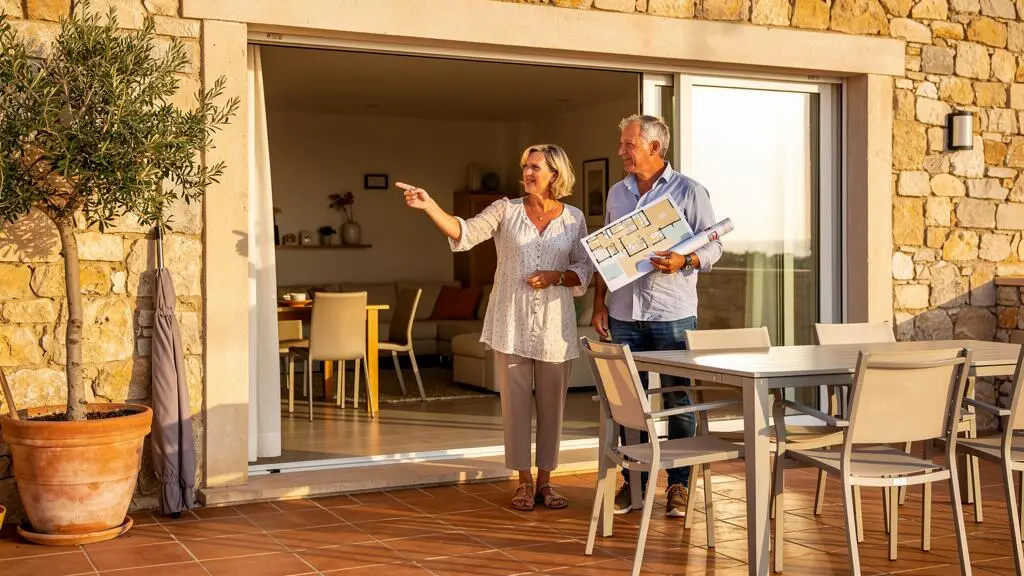
Holiday-home buyers do not all want the same property. A retired couple planning longer stays may value a manageable, single-level layout, while a young family may need additional bedrooms, outdoor play space and nearby activities. Remote workers introduce another consideration: reliable broadband and somewhere quiet to work can make a property practical beyond traditional holiday periods.
These differences matter to both purchasers and owners preparing to sell. The features that make a home desirable depend on how buyers intend to use it, how frequently they expect to visit and who will share the property. A terrace may be more attractive than an extra bedroom to one segment, while accessibility or storage may determine another buyer’s decision.
Understanding these preferences means looking beyond advertised floor area and room counts. It also means distinguishing demonstrated consumer preferences from assumptions about property transactions: survey evidence about holiday accommodation does not automatically establish what purchasers will pay or which features generate a resale premium.
What determines holiday-home appeal?
- Outdoor space, accessibility, flexible layouts and reliable connectivity appeal to different lifestyle groups and can influence property suitability.
- Age, household composition, intended occupancy and length of stay help explain why buyers prioritise different features.
- Resale appeal depends on matching the property’s strongest characteristics to realistic local demand rather than investing exclusively in personal preferences.
- Why Do Holiday Home Buyers Sometimes Prefer a Terrace to an Extra Bedroom?
- How Can You Assess Whether a Holiday Property Suits Buyers with Reduced Mobility?
- Dedicated Workspace or Extra Guest Room: Which Appeals More to Remote-Working Buyers?
- The Personal-Taste Renovation Mistake That Can Reduce a Holiday Home’s Resale Appeal
- When Should Sellers Reconsider Their Target Buyers in a Changing Resort Market?
- Why Do Retirees and Young Families Prioritise Different Features in Holiday Homes?
- Why Can a Smaller Holiday Home Feel More Spacious Than a Larger Property?
- How Can You Assess a Holiday Property Before Making a Financial Commitment?
Why Do Holiday Home Buyers Sometimes Prefer a Terrace to an Extra Bedroom?
Holiday-home buyers sometimes prefer a terrace because it expands the property’s usable living space and supports outdoor dining, relaxation and entertaining. For people who primarily visit during warmer months, an attractive outdoor area may improve everyday enjoyment more than an additional bedroom that remains unused for much of the year. The decision depends on occupancy, climate and intended use.
A bedroom and a terrace solve different problems. An additional bedroom increases sleeping capacity, provides privacy for guests and may make a property more suitable for larger households. A terrace instead creates somewhere to eat, socialise and spend time outside without increasing the number of rooms requiring furnishing and maintenance.
There is evidence that outdoor living is important to holiday-accommodation consumers. Booking.com’s 2024 Holiday Home Outlook Report, based on an August 2024 survey of 1,012 Australian adults who had booked or stayed in an Australian holiday home, found that considered outdoor living spaces important when choosing accommodation92 % 2024 considered outdoor living spaces important when choosing accommodation. The figure concerns traveller preferences, not completed property purchases or proof that terraces increase resale prices.
92%
of surveyed Australian holiday-home travellers considered outdoor living spaces important when selecting accommodation. This measures booking preferences, not purchasing decisions or the financial return on outdoor improvements.
The practical difference becomes clearer when the two features are compared against intended use.
| Decision factor | Extra bedroom | Terrace or balcony |
|---|---|---|
| Sleeping capacity | Directly increases accommodation capacity. | Does not increase the number of sleeping places. |
| Entertaining | Provides additional indoor space and guest privacy. | Creates an outdoor setting for dining and socialising. |
| Maintenance | Requires furnishing, cleaning and ongoing upkeep. | Requires weather protection, cleaning and outdoor furniture maintenance. |
| Space perception | Can make the layout more flexible but may divide the interior. | Can visually extend the living area, particularly with accessible sliding doors. |
| Potential audience | Larger families and buyers frequently hosting overnight guests. | Couples, outdoor-oriented buyers and people prioritising open-air living. |
For sellers, presentation can influence how visitors interpret the available space. A furnished terrace with a dining table, comfortable seating and a clear connection to the living room communicates a practical extension of the home. This may help buyers appreciate its functionality rather than seeing it as an incidental balcony or unused paved area.
However, outdoor space should not be treated as a substitute for essential sleeping capacity. A family regularly accommodating children or visiting relatives may still regard a third bedroom as indispensable. Orientation, privacy, weather exposure and maintenance also affect whether a terrace is genuinely useful.
The strongest choice is therefore not necessarily the property with the most rooms or the largest terrace. It is the one that makes the available space work for the people most likely to use it.
How Can You Assess Whether a Holiday Property Suits Buyers with Reduced Mobility?
Assessing whether a holiday property suits someone with reduced mobility requires examining the entire journey from arrival to everyday use. A ground-floor bedroom alone is insufficient. Buyers should check entrance steps, doorway widths, circulation space, bathroom usability, stair access, parking proximity and the terrain surrounding the property. The relevant requirements depend on the individual’s mobility and support needs.
Accessibility is not a single category of requirement. A wheelchair user may need level access, sufficient turning space and an appropriately configured bathroom. Someone with limited stamina may instead prioritise short walking distances, minimal changes in level and convenient parking. An older buyer planning ahead may favour a property that can accommodate changing mobility needs without major structural alterations.
England’s Approved Document M provides a useful technical reference for understanding dwelling accessibility. It distinguishes three categories:
- Category 1: Visitable dwellings.
- Category 2: Accessible and adaptable dwellings.
- Category 3: Wheelchair user dwellings.
These categories are not interchangeable. The government guidance explains that Categories 2 and 3 apply only where required by planning permission. It should not be assumed that an existing holiday property complies with a particular category simply because it has a ground-floor bathroom or appears relatively accessible. The guidance is specific to England and should not automatically be applied to Scotland, Wales, Northern Ireland or other countries.
The inspection should also extend beyond the building. A property may have an accessible entrance but still involve steep streets, uneven pavements or a long walk to shops and restaurants. In a resort with significant changes in elevation, the surrounding environment can influence independence just as much as the internal layout.
Buyers should assess accessibility in relation to their actual circumstances rather than relying on broad marketing descriptions. Sellers can also improve their positioning by providing accurate measurements, photographs of access routes and clear information about any adaptations. This makes it easier for prospective purchasers to determine whether the property meets their requirements.
Accessibility can widen the range of people able to consider a property, particularly where the surrounding market includes buyers planning for longer stays or changing mobility needs. However, a broader potential audience should not be confused with a guaranteed resale premium.
Dedicated Workspace or Extra Guest Room: Which Appeals More to Remote-Working Buyers?
A dedicated workspace is generally more useful to remote-working buyers who want to spend longer periods at their holiday property, whereas an extra guest room suits those who expect to host family and friends. The decision depends on whether the property needs to accommodate more working days or more overnight visitors. A flexible room can sometimes support both purposes.
Remote working has changed how some purchasers evaluate second homes. A property traditionally used for short summer breaks may become a part-time residence when it offers reliable connectivity, a suitable working environment and sufficient separation between work and leisure.
A dedicated office can make regular working easier by providing a consistent desk, appropriate lighting, power access and a quieter environment. It also helps maintain a distinction between professional commitments and relaxation. However, converting an entire bedroom into an office may reduce the property’s usefulness for visiting relatives or larger groups.
An additional guest bedroom offers a different advantage. It increases sleeping capacity and allows visitors to stay without disrupting the main living arrangements. For buyers who work remotely only occasionally, this may be more valuable than a permanent office.
The most flexible arrangement is often a hybrid guest room with a properly positioned desk. Buyers should consider:
- Whether the desk can remain in place without obstructing the bed or storage.
- Whether the room has sufficient natural light and practical electrical access.
- Whether its position offers reasonable privacy during working hours.
- Whether the broadband connection can support video calls and other work requirements.
- Whether the room can return to comfortable guest accommodation without rearranging the entire property.
Internet availability deserves particular attention. In the United Kingdom, Ofcom‘s broadband availability checker allows users to examine predicted download speeds, upload speeds and service availability at a selected location. Its results are estimates, not guarantees of the actual connection a particular property will receive. Buyers should confirm availability with providers and, where possible, test the live connection.
Connectivity also involves more than headline download speeds. Video conferencing, cloud-based applications and simultaneous household use can place demands on upload performance, latency and network stability. A property advertised as suitable for remote work should therefore be assessed against the buyer’s actual working requirements.
From a resale perspective, a room that can function as either an office or a bedroom may appeal to a broader range of households than one permanently designed for a single purpose. This flexibility is especially useful when the future buyer’s working arrangements cannot be predicted.
The most useful configuration is not necessarily a separate office. A well-designed multifunctional room can preserve sleeping capacity while making longer stays and occasional working more practical.
The Personal-Taste Renovation Mistake That Can Reduce a Holiday Home’s Resale Appeal
The most common personal-taste renovation mistake is designing a holiday home entirely around the current owner’s preferences without considering what prospective buyers in the local market are likely to want. Highly individualised finishes, unusual colour schemes and restrictive layouts can make a property less adaptable. The risk is not that distinctive design is inherently undesirable, but that buyers may struggle to imagine themselves using the space.
A second home often has a different purpose from a primary residence. Owners may use it for weekends, seasonal stays or occasional entertaining rather than continuous everyday living. Renovations should reflect these patterns while considering the expectations of people who might eventually purchase the property.
For example, an owner might install a highly personalised kitchen, choose an unusual decorative theme or remove a practical storage area to create a more distinctive interior. These decisions can improve personal enjoyment, but they may also create additional work for a future purchaser whose preferences differ.
Holiday-home viewings can be particularly sensitive to presentation. Buyers frequently compare several properties within a limited period, often considering the overall atmosphere alongside location and practical features. If a property appears difficult to adapt, visitors may factor the cost and disruption of changing the finishes into their decision.
That does not mean every interior should be identical or entirely neutral. Design can communicate the property’s character and relationship with its setting. The important distinction is between improvements that solve broadly shared practical problems and those that primarily express individual taste.
| Improvement | Practical consideration | Resale positioning |
|---|---|---|
| Bathroom improvements | Usability, condition and ease of maintenance. | Addresses everyday functional requirements. |
| Windows and insulation | Comfort, energy efficiency and weather protection. | Can address concerns about year-round usability. |
| Storage solutions | Space for luggage, equipment and seasonal belongings. | Supports different household arrangements. |
| Outdoor improvements | Usable seating, privacy and access. | Can strengthen the property’s lifestyle appeal. |
| Highly personalised finishes | Distinctive appearance and individual enjoyment. | May narrow appeal if they are difficult or costly to change. |
Before committing to major work, owners should examine recently sold properties in the same resort or comparable neighbourhoods. Listing photographs can reveal recurring design characteristics, while completed transactions and available property information can help distinguish actual market positioning from aspirational asking prices.
Renovation budgets should also account for the possibility that decorative improvements will not be fully reflected in the eventual sale price. Essential repairs, functional improvements and well-executed maintenance generally deserve consideration before expensive personalisation.
A property should still feel distinctive and enjoyable to its owner. The objective is to avoid making expensive changes that unnecessarily restrict the number of people who could appreciate its underlying qualities.
When Should Sellers Reconsider Their Target Buyers in a Changing Resort Market?
Sellers should reconsider their target buyers when the enquiries they receive consistently differ from the audience they originally expected to attract, or when the local resort market begins showing a meaningful change in household profiles and property requirements. A mismatch between marketing and genuine demand can prolong the selling process, even when the property itself remains suitable for another buyer segment.
Resort markets are not static. A destination previously dominated by short-stay holidaymakers may attract more people seeking extended stays. Other areas may experience stronger interest from retirees, families or buyers looking for rental income. These changes can influence which property features receive the most attention.
Several indicators can help identify a shift:
- Enquiry profiles: Repeated interest from a different age group or household type than originally anticipated.
- Viewing feedback: Visitors consistently asking about features that are not prominent in the current marketing.
- Occupancy expectations: More questions about longer stays, year-round facilities or rental potential.
- Property comparisons: Competing listings increasingly highlighting workspaces, accessibility, gardens or low-maintenance layouts.
- Marketing performance: Limited qualified enquiries despite adequate exposure and a price that is broadly consistent with comparable evidence.
Once a pattern becomes visible, the next step is to assess whether the property’s strongest characteristics match the emerging audience. A compact, accessible home near shops and services might be positioned towards buyers seeking convenient longer stays. A property with a terrace, several bedrooms and nearby family activities may be more relevant to households prioritising shared holidays.
Similarly, a property with reliable broadband, a quiet room and practical living arrangements may attract purchasers interested in combining leisure and remote work.
Repositioning does not necessarily require structural changes. Updated photography, more precise descriptions and a different emphasis in the listing may be sufficient to communicate the property’s strengths. Sellers should avoid simply changing the target audience based on isolated enquiries: repeated patterns, comparable listings and credible local transaction evidence provide a stronger basis for decisions.
Price remains important, but reducing it immediately can overlook a positioning problem. If the property is being presented to the wrong segment, a more accurate description of its benefits may be worth testing before making a financial concession.
Ultimately, the most effective marketing strategy is based on the buyers who can realistically benefit from the property, not simply the largest possible audience. This makes buyer segmentation a practical part of managing the selling process rather than a one-time exercise.
Why Do Retirees and Young Families Prioritise Different Features in Holiday Homes?
Retirees and young families often prioritise different holiday-home features because their expectations of comfort, convenience and accommodation capacity differ. Retirees may place greater importance on manageable layouts, accessible facilities and proximity to everyday services, while families may focus on bedrooms, safe outdoor areas and child-friendly surroundings. These are useful buyer profiles, not universal rules about either group.
For retirees planning frequent or extended stays, a property that is easy to maintain and navigate can be especially attractive. Single-level accommodation may reduce dependence on stairs, while nearby shops, restaurants and healthcare services can make everyday activities more convenient.
Young families may assess the same property differently. A compact home with one main bedroom and an open-plan living area could be comfortable for a couple but insufficient for parents travelling with children. Separate sleeping areas, storage, a usable garden and access to family activities may therefore carry greater importance.
Demographic evidence provides useful context, although it should not be confused with direct evidence of purchasing preferences. The Office for National Statistics reported that 447,000 people in England and Wales stayed at a second address classified as a holiday home in Census 2021. Of these people, people staying at a holiday-home second address aged 50 or over77 % 2021 were aged 50 or over.
This figure describes people using holiday-home second addresses, not necessarily property owners or prospective purchasers. It also reflects Census 2021 rather than current 2026 buyer demographics. Nevertheless, it demonstrates why understanding the characteristics of people using second addresses can be relevant when considering the market.
77%
The proportion of people staying at a holiday-home second address in England and Wales who were aged 50 or over in Census 2021. This is a statistic about users, not a measure of prospective buyers or their feature preferences.
The difference between these profiles becomes clearer when property features are mapped against their likely practical needs.
| Property feature | Retirees | Young families |
|---|---|---|
| Single-level layout | May improve ease of movement and everyday convenience. | Can be convenient for supervising children and managing household activities. |
| Bedroom capacity | May be less important when occupancy is usually limited. | Often important for children, parents and visiting relatives. |
| Outdoor space | Can support relaxation and outdoor dining. | May provide space for play and family activities. |
| Nearby services | Access to shops, healthcare and amenities may be a priority. | Access to childcare-related facilities, activities and family services may matter. |
| Maintenance | Low-maintenance features may be particularly attractive. | Durable finishes and practical storage can be important. |
For sellers, this comparison can improve marketing accuracy. A home should not automatically be described as family-friendly simply because it is located in a popular resort. Its actual bedroom capacity, outdoor arrangements and surrounding facilities need to support that positioning.
Buyers can use the same framework in reverse. Rather than choosing a property because it is advertised as suitable for everyone, they can identify which features correspond most closely to their own travel habits and household requirements.
The distinction is particularly important for owners considering improvements. Adding sleeping capacity may make a property more relevant to families, while improving access and simplifying maintenance may strengthen its appeal to people planning longer, more comfortable stays.
Why Can a Smaller Holiday Home Feel More Spacious Than a Larger Property?
A smaller holiday home can feel more spacious than a larger property because perceived space depends on layout, light, circulation and how indoor and outdoor areas connect, rather than floor area alone. An open-plan interior with well-positioned windows and practical storage can feel easier to use than a larger home divided into narrow rooms and unnecessary corridors.
Nominal floor area measures the amount of space available, but it does not explain how effectively that space functions. Two properties with similar dimensions can provide very different experiences depending on ceiling height, window placement, room proportions and the arrangement of furniture.
Open-plan layouts can create uninterrupted sightlines between the kitchen, dining and living areas. This helps visitors understand how the different parts of the property work together. By contrast, a series of small rooms and narrow connecting passages can make a larger interior feel fragmented.
Natural light also changes the perception of space. Large windows, well-oriented living areas and glazed doors can create a brighter environment. When these openings connect directly to a terrace or garden, the interior may feel like part of a larger living area.
Storage is another important consideration. Poorly designed storage can leave everyday belongings visible and reduce the amount of usable floor space. Integrated cupboards, practical wardrobes and appropriately sized furniture can help a compact holiday property feel more organised.
During a viewing, buyers should assess the experience rather than relying exclusively on advertised measurements. Useful questions include:
- Can people move comfortably between the entrance, kitchen and living area?
- Are the main rooms practical to furnish without blocking circulation?
- Does the property contain unnecessary corridors or rooms that can only be accessed through other spaces?
- Are there sufficient usable walls for furniture and storage?
- Do windows and doors create useful connections between indoor and outdoor areas?
The distinction is particularly relevant to holiday properties because their purpose is often concentrated around relaxation, dining and spending time together. A well-organised living area may be more useful than several small rooms that remain underused for most visits.
Location also influences how much interior space buyers need. A smaller property within walking distance of beaches, restaurants and local attractions may be more practical than a larger home that requires frequent driving. However, this depends on transport options, the buyer’s mobility and the character of the destination.
For sellers, presentation should communicate the property’s spatial advantages without concealing its actual dimensions. Furniture should be proportionate, circulation routes should remain clear and photographs should accurately represent the relationship between rooms.
A compact property is not automatically preferable to a larger one. Its advantage lies in making every room and circulation area useful, comfortable and appropriate for the intended pattern of occupancy.
Key considerations before committing to a holiday home
- Assess the property’s suitability across different seasons, rather than judging it solely by its appearance during a summer viewing.
- Separate the purchase price from the full financial commitment, including maintenance, management, insurance and potential periods without rental income.
- Establish whether the property’s strongest lifestyle features are supported by its physical condition, local regulations and realistic resale prospects.
How Can You Assess a Holiday Property Before Making a Financial Commitment?
Assessing a holiday property before making a financial commitment requires combining a physical inspection, financial assessment, regulatory checks and an honest evaluation of lifestyle suitability. Buyers should investigate building condition, ongoing ownership costs, local planning and rental restrictions, seasonal accessibility and potential resale demand. The objective is to understand the property’s full cost and practical limitations before becoming financially committed.
A holiday home differs from a primary residence because its use may be seasonal, geographically distant from the owner’s everyday life and dependent on local tourism conditions. A property that appears attractive during a short summer viewing may be less convenient during winter, when nearby businesses close, transport becomes less frequent or weather exposes maintenance problems.
The first stage is to establish the property’s physical condition. A professional building survey appropriate to the property’s age, construction and condition can identify defects that may not be apparent during an ordinary viewing. Particular attention should be paid to damp, roof condition, drainage, insulation, windows, heating systems and any signs of structural movement.
Buyers should then calculate the ongoing cost of ownership rather than focusing exclusively on the purchase price. Relevant expenses can include:
- Buildings and contents insurance, including any specific requirements for second homes or rental use.
- Utilities, local property taxes and applicable service charges.
- Routine maintenance, repairs and replacement of furnishings.
- Property management, cleaning and security where the home is not occupied regularly.
- Travel costs associated with reaching and maintaining the property.
- Potential periods without rental income if the property is intended to generate revenue.
Regulatory due diligence is equally important. Planning restrictions, local short-term letting rules, building requirements, ownership arrangements and applicable taxes vary by jurisdiction. Buyers should verify the rules relevant to the property’s precise location rather than relying on general information about holiday rentals or assumptions based on neighbouring properties.
Accessibility and connectivity should also be checked against actual use. A property intended for winter stays may require dependable heating and practical access throughout the year. Buyers who work remotely should confirm broadband availability and test the connection where possible. Those with reduced mobility should assess the building and its surroundings in person.
Location deserves more than a single visit. Shops, restaurants, healthcare services and transport connections can operate differently outside the peak tourist season. A second visit under different weather or seasonal conditions can reveal practical disadvantages that are difficult to identify during a viewing in ideal conditions.
Financial projections should remain conservative. Expected rental income is not guaranteed, and occupancy can fluctuate with seasonality, local competition, regulation and wider economic conditions. Likewise, the possibility of selling at a later date depends on the depth of the local buyer pool, property condition and market circumstances at that time.
The following checklist turns these considerations into five practical actions with identifiable outputs.
Five checks to complete before committing to a holiday-home purchase
- Arrange a suitable building survey. Obtain a written report identifying significant defects, maintenance requirements and any recommended specialist investigations.
- Calculate the total ownership cost. Prepare an annual budget covering insurance, utilities, taxes, maintenance, management and realistic vacancy assumptions.
- Verify legal and regulatory requirements. Obtain the relevant planning, rental, ownership and local compliance information, with professional advice where necessary.
- Test lifestyle suitability. Complete a written assessment covering accessibility, workspace, broadband, outdoor space, sleeping capacity and off-season convenience.
- Evaluate the potential exit strategy. Review comparable local sales, competing properties and the likely buyer segments, then document a conservative resale scenario.
These checks should be considered together rather than treated as separate formalities. For example, a property with attractive rental potential may become less appealing if local restrictions limit short-term letting or if the cost of professional management significantly reduces the expected return.
A sound purchase is one that remains manageable under realistic financial and occupancy assumptions, not simply one that looks attractive in a listing or promises the highest possible rental income. Buyers who combine independent inspection, regulatory verification and a clear understanding of their own priorities are better placed to judge whether a holiday property is genuinely suitable for the long term.
Which features make a holiday home most attractive to buyers?
There is no universal combination of features that appeals to every buyer. Outdoor living space, comfortable layouts, sufficient bedrooms, accessible facilities, natural light and reliable broadband can all contribute to desirability. Their relative importance depends on household composition, intended occupancy, location and whether the property is primarily used for holidays, extended stays or remote working.
Does adding an extra bedroom always increase a holiday home’s resale appeal?
No. An additional bedroom can appeal to larger families and buyers who regularly host guests, but it may not be the most valuable improvement for every property. In some cases, a well-designed terrace, better circulation or improved living space may be more relevant to the likely buyer. Local comparable sales and the property’s existing layout should inform renovation decisions.
Are accessible holiday homes more attractive to older buyers?
Accessible features can make a property more practical for some older purchasers and people with reduced mobility. Level access, manageable circulation routes, usable bathrooms and nearby services may be important considerations. However, accessibility requirements differ between individuals, and a ground-floor layout alone does not establish that a property is suitable for wheelchair users or compliant with a particular building standard.
Should a holiday home have a dedicated office for remote working?
A dedicated office is useful for buyers who expect to work regularly from the property, particularly when it offers privacy and a reliable internet connection. However, a flexible guest bedroom with a practical desk may be sufficient for occasional remote work. Buyers should assess actual broadband performance, room dimensions and the balance between working requirements and accommodation capacity.
How can sellers identify the right target audience for a holiday property?
Sellers should compare the property’s strongest features with local buyer requirements, recent comparable transactions and feedback from genuine enquiries. A home with accessible facilities and convenient local amenities may suit buyers seeking manageable longer stays, while a property with several bedrooms and outdoor play space may appeal more to families. Marketing should reflect the property’s actual strengths rather than assume that every holiday home suits the same audience.