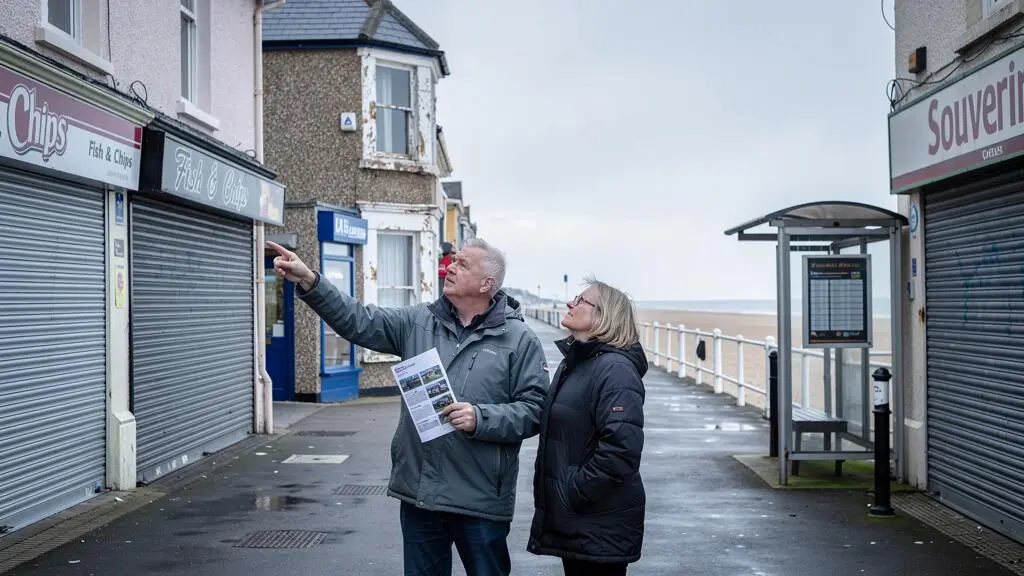
Comparing coastal resorts before buying a holiday home means looking beyond beach quality, sea views and summer appeal. A destination that feels lively during the main holiday season may offer limited services, difficult transport connections and challenging property conditions during the rest of the year. These differences influence how frequently an owner can use a property, how much it costs to maintain and how attractive it remains to future buyers.
A meaningful comparison should examine four connected factors: year-round services, realistic journey times, environmental exposure and long-term ownership costs. Local employment patterns and the balance between permanent residents and seasonal visitors also help explain whether a resort remains functional outside peak season. The relevant evidence depends on the destination: English coastal planning documents, for example, cannot automatically be applied to other anglophone countries.
The objective is to identify a location that matches the intended pattern of ownership. A property for frequent winter weekends requires different local conditions from one used mainly for summer holidays or occasional rental income. Testing these differences before committing provides a more reliable basis for comparing destinations than relying on photographs and property descriptions.
What Matters Most When Comparing Coastal Resorts?
- Check year-round shops, healthcare, transport and local employment rather than judging a resort during its summer peak.
- Test actual door-to-door journey times and assess coastal erosion, wind, salt exposure and storm-related maintenance.
- Compare total annual ownership costs against realistic usage, insurance and potential rental income before making a financial commitment.
- Why Do Some Coastal Resorts Lose Shops and Services Outside Summer?
- How Can You Test Journey Times to a Seaside Home During Busy Summer Weekends?
- Beachfront Flat or Inland Cottage: Which Makes More Sense for Regular Seaside Breaks?
- The Coastal Erosion Risk Buyers Can Miss When a Property Has Uninterrupted Sea Views
- When Should You Visit a Seaside Property to Assess Winter Storm Exposure?
- Working Village or Seasonal Resort: Which Offers Better Everyday Life for Second-Home Owners?
- Seaside Cottage or Alpine Chalet: Which Faces Higher Long-Term Maintenance Costs?
- How Can You Assess a Holiday Property Before Making a Financial Commitment?
Why Do Some Coastal Resorts Lose Shops and Services Outside Summer?
Coastal resorts lose shops and services outside summer when their local economy depends heavily on visitors who are present for only a few months. Businesses serving holidaymakers may generate sufficient revenue during peak season but struggle to cover staffing, premises and operating costs throughout winter. Destinations with a stronger permanent population and a more diverse local economy generally have a better foundation for maintaining everyday services, although individual outcomes vary.
The distinction matters particularly to second-home owners. A resort with restaurants, supermarkets and busy promenades in August may have limited food shopping, healthcare access and public transport in February. Pharmacies, GP practices and other essential services also depend on local demand, staffing and wider provision arrangements, not simply visitor numbers.
The UK Government identifies dependence on seasonal tourism and hospitality employment, limited local opportunities and poor transport connectivity as recurring challenges affecting many coastal communities. Its UK Government report on coastal communities provides useful context for understanding these economic pressures. However, the report does not establish that seasonal tourism directly causes individual businesses or medical practices to close.
For buyers, the most useful distinction is between a seasonal resort and a working coast with a summer peak. The first may rely predominantly on holiday spending, whereas the second supports a broader resident population through employment, education, local services and other economic activity. Neither profile guarantees a particular level of service provision, so observable evidence remains essential.
A practical assessment starts with the high street. Visit in February and record which shops, cafés, restaurants and everyday services are operating. Check whether the nearest pharmacy and GP practice serve permanent residents and whether the local school remains active. These indicators provide a more realistic picture than estate agent descriptions prepared during the busiest months.
Service availability also influences property maintenance. Where businesses and tradespeople operate seasonally, owners may encounter longer repair delays, fewer property management options and higher call-out charges. This can become particularly inconvenient when winter weather damages roofing, gutters, external fittings or windows and several properties require attention simultaneously.
A resort does not need to remain busy throughout winter to be a suitable second-home location. However, buyers planning frequent visits should understand which facilities remain accessible and whether the local maintenance network can support a property when seasonal businesses close.
How Can You Test Journey Times to a Seaside Home During Busy Summer Weekends?
The most reliable way to test access to a seaside property is to complete the journey at the times when the home is most likely to be used. A route that takes two hours on a quiet weekday may become considerably less convenient during a busy summer Saturday. Buyers should compare actual door-to-door journeys, including congestion, parking, transfers and the final approach to the property, rather than relying exclusively on online journey estimates.
Start with two trial journeys: one peak-season Saturday and one midweek off-season trip. Record the departure time, arrival time, delays and any difficulties parking near the property. Where possible, test both driving and public transport to understand whether alternative travel remains practical when roads become congested.
The final approach deserves particular attention. Popular coastal towns are often reached through single-carriageway roads, narrow villages or junctions where traffic builds up during changeover weekends. A navigation application may estimate the main journey reasonably well but fail to reflect the time spent approaching the settlement, finding parking and reaching the property on foot.
Rail access requires a separate assessment. Check the departure and return services for the actual dates you expect to travel, including Sundays and winter weekends. National Rail publishes station-to-station schedules and timetable periods covering 17 May to 12 December 2026 and 13 December 2026 to 15 May 2027. Its National Rail timetables allow prospective buyers to examine scheduled connections for relevant travel periods.
Scheduled train times are not equivalent to a complete door-to-door journey. Allow for travel to the departure station, connections, luggage, the distance between the destination station and the property, and the availability of local transport. Engineering works and temporary service changes can also affect individual journeys.
Travel convenience ultimately influences ownership behaviour. A property within manageable travelling distance may support spontaneous weekends and frequent short breaks. A destination requiring most of a day to reach is more likely to be reserved for longer holidays, reducing the practical value of owning it for regular visits.
Journey time should therefore be treated as part of the ownership calculation. If a property is difficult to reach during the periods when it would normally be used, renting accommodation in the same destination may offer greater flexibility without the responsibilities of ownership.
Beachfront Flat or Inland Cottage: Which Makes More Sense for Regular Seaside Breaks?
A beachfront flat makes sense for buyers who place a high value on immediate beach access and sea views, provided they can accommodate greater environmental exposure and understand the building’s shared maintenance obligations. An inland cottage may offer more space, greater separation from salt spray and potentially better protection from direct coastal weather, but usually requires a walk or drive to reach the shore. The better option depends on intended use, building condition and total ownership costs.
The main difference is exposure. A property facing open water in the first line of buildings may receive regular salt spray, strong winds and wind-driven rain. These conditions can accelerate deterioration of external metalwork, fixings, render, timber and window seals. An inland property may experience less direct exposure, although its actual vulnerability still depends on elevation, aspect, local topography and prevailing weather.
UK Government-funded research identifies coastal buildings as particularly exposed to high winds and highlights the importance of maintaining metal components to reduce salt spray-induced corrosion. The report also examines the influence of wind direction on wind-driven rain exposure. These findings support a building-specific assessment rather than assuming that every property at the same distance from the sea faces identical maintenance requirements.
The purchase price is only one part of the comparison. A sea-view premium may be justified by frequent beach access and personal enjoyment, but buyers should also consider external maintenance, insurance, service charges and the responsibilities associated with communal areas.
| Criterion | Beachfront flat | Inland cottage |
|---|---|---|
| Beach access | Often immediate or within a short walk | Usually requires walking or driving |
| Environmental exposure | Potentially greater salt spray and wind-driven rain exposure | Often more sheltered, depending on location and orientation |
| External maintenance | May be managed collectively through the building’s arrangements | Often involves direct owner responsibility |
| Running costs | Service charges, building insurance and communal repairs may apply | Individual maintenance, heating and insurance costs require assessment |
| Space and privacy | Can be more compact, with shared facilities | May offer additional space, storage and private outdoor areas |
| Rental considerations | Beach proximity may appeal to short-stay visitors | May attract visitors seeking quieter surroundings and longer stays |
For leasehold flats, the financial implications of shared building management deserve particular attention. Review the lease, service-charge history, building insurance arrangements, reserve funds and planned major works. Ask whether previous storm damage has resulted in additional contributions or unresolved maintenance obligations. These issues can materially change the apparent affordability of a beachfront apartment.
Rental potential should also be assessed realistically. Beach proximity may support visitor demand, but income depends on local competition, seasonality, management costs, applicable letting rules and the condition of the property. An inland cottage with greater space and comfortable winter facilities may appeal to a different visitor profile, rather than necessarily generating less income.
For regular seaside breaks, convenience and comfort often matter more than an uninterrupted view. Buyers should prioritise the property that remains practical across their intended visiting seasons and whose maintenance responsibilities are clearly understood.
The Coastal Erosion Risk Buyers Can Miss When a Property Has Uninterrupted Sea Views
Coastal erosion can affect a property’s long-term security even when its present-day appearance suggests a stable shoreline. Clifftop and exposed shoreline positions may provide exceptional views while also concentrating erosion and coastal change risks. Buyers should investigate official erosion projections and shoreline management policies before purchasing, because existing sea defences and attractive landscaping do not guarantee long-term protection.
The first step is to establish the property’s precise coastal location and identify the relevant planning and environmental information. In England, the Environment Agency publishes guidance on Shoreline Management Plans and national coastal erosion mapping. Its Environment Agency Shoreline Management Plans explain the strategies used to manage different sections of the coastline.
Four official management approaches are particularly important:
- Hold the line: maintain or construct coastal defences to keep the existing shoreline position.
- No active intervention: do not plan active intervention to maintain or advance the existing defence line.
- Managed realignment: allow the shoreline to move landward in a controlled manner.
- Advance the line: construct new defences seaward of the existing shoreline.
These approaches describe strategic coastal management rather than a guarantee of protection for an individual property. Their implementation can depend on funding, technical evidence and changing management priorities.
2055 and 2105
The projection horizons used by England’s National Coastal Erosion Risk Map provide a longer-term perspective on potential erosion exposure. They are not guaranteed dates when erosion will reach a particular building.
Environment Agency coastal erosion projection periods.
The English coastline is covered by 20 Shoreline Management Plans. Buyers should identify the relevant plan, locate the management unit covering the property and examine the associated policy and erosion projections. The National Coastal Erosion Risk Map provides area-level information, not a definitive prediction for an individual plot.
Financial implications require separate verification. Depending on the location and circumstances, coastal exposure may affect insurance availability, policy excesses, mortgage conditions and future buyer demand. However, a property within a no active intervention or managed realignment area is not automatically uninsurable or unmortgageable. Buyers should obtain property-specific responses from insurers, lenders and appropriately qualified professionals.
Visual evidence alone is insufficient. A maintained sea wall, healthy lawn or apparently stable cliff edge reveals present conditions but cannot establish the long-term position of the shoreline. Ask for available erosion assessments, previous monitoring information, relevant planning restrictions and documentation concerning coastal defences.
Geographical scope matters when interpreting the evidence. The Environment Agency guidance discussed here applies to England; buyers in Scotland, Wales, Northern Ireland or other anglophone countries must consult the relevant local authorities and environmental agencies for their own coastal management arrangements.
When Should You Visit a Seaside Property to Assess Winter Storm Exposure?
A seaside property should be inspected during the stormier part of the year as well as in fair weather. A winter visit can reveal wind-driven rain, salt deposits, water ingress, exposed roof components and uncomfortable conditions that a summer viewing cannot reproduce. Ideally, buyers should assess the property in ordinary winter conditions and, where safe and practical, observe the location during or shortly after a significant storm.
Timing matters because environmental exposure is not uniform throughout a coastal settlement. Two properties on the same street may experience different levels of wind and rain depending on their orientation, elevation, surrounding buildings and exposure to prevailing weather systems. The plot itself therefore deserves as much attention as the wider resort.
UK research on building exposure identifies coastal areas as particularly vulnerable to high-wind gusts compared with many inland locations. It also highlights the importance of wind direction in determining exposure to wind-driven rain. A building’s aspect and the protection provided by surrounding structures can influence the condition of external walls, windows and roofing.
The survey should concentrate on physical signs of deterioration. Check the condition of external metalwork, window seals, masonry joints, roofing fixings, gutters and boundary walls. Look for rust staining, salt deposits, flaking paint, damp patches and evidence of previous repairs. Pay particular attention to window and door reveals, where water ingress may become visible.
Inside the property, examine condensation, cold spots, draughts and signs of water penetration. Check whether garages, external doors and exposed pipework are adequately protected. Noise is another practical consideration: wind and surf that appear attractive during a brief summer viewing may affect sleep and comfort during prolonged winter stays.
UK Government-funded research also recommends regular maintenance of coastal metal components, including appropriate repainting and recoating of ironwork and attention to mortar joints, to reduce salt spray-induced corrosion. This is useful general guidance, not a universal maintenance schedule or a fixed annual cost. The property’s actual condition should determine the maintenance plan.
Insurance information provides another useful comparison. Request a quotation based on the actual property address and construction details. Examine exclusions, storm-damage excesses, requirements for unoccupied periods and any conditions concerning preventative maintenance. A general postcode estimate is not a substitute for confirmation of the proposed cover.
Translate the inspection findings into an annual ownership budget. A property with exposed windows, ageing external metalwork and poorly protected pipework may require more attention than an otherwise similar home in a sheltered position. The cost should be established through professional advice and contractor estimates rather than guessed from the appearance of the building.
The most useful winter visit is one that produces evidence: photographs of defects, surveyor observations, insurance conditions and a list of potential repairs. This converts weather exposure from an abstract concern into a practical ownership consideration.
Working Village or Seasonal Resort: Which Offers Better Everyday Life for Second-Home Owners?
A working coastal village generally offers a more consistent everyday environment for second-home owners who intend to visit throughout the year. Its permanent population supports local shops, services and trades beyond the main holiday season. A seasonal resort may provide more visitor-oriented amenities and stronger summer activity, but can become noticeably quieter during winter. The right choice depends on how frequently the property will be used and which services are essential.
A working village is not necessarily a large or highly developed destination. Its defining characteristic is a functioning local community with residents whose everyday needs support businesses and public services throughout the year. This can make practical matters such as grocery shopping, routine maintenance and access to healthcare easier to organise.
However, second-home ownership can create local sensitivities. In communities where housing availability is already a concern, the growth of holiday homes and short-term lets may be a contentious issue. Buyers should understand local attitudes, planning restrictions and any applicable rules governing holiday accommodation before assuming that a property can be used in any preferred way.
Seasonal resorts offer a different ownership experience. Their economies may be more closely linked to tourism, with restaurants, entertainment and accommodation businesses concentrating activity during peak visitor periods. Owners who mainly visit in summer may find this arrangement entirely suitable, particularly where the property is intended for occasional personal use or a carefully assessed letting strategy.
The differences become clearer when everyday ownership factors are compared.
| Ownership factor | Working village | Seasonal resort |
|---|---|---|
| Year-round services | Often supported by permanent local demand | May have reduced provision outside peak season |
| Trades and maintenance | Potentially more consistent local availability | May be affected by seasonal workloads and closures |
| Winter atmosphere | Usually retains an established resident community | Can become considerably quieter |
| Community relationships | Second-home owners integrate into an established population | Holiday ownership may be more prominent |
| Rental potential | May appeal to visitors seeking quieter, year-round stays | May benefit from concentrated seasonal visitor demand |
| Resale audience | May attract holiday buyers, retirees and permanent residents | May depend more heavily on holiday-home demand |
Resale liquidity also deserves consideration. A property that appeals to several buyer groups may have a broader potential market than one whose attractiveness depends almost entirely on tourism demand. Nevertheless, neither profile guarantees stronger price performance: local employment, housing supply, affordability, planning rules and wider market conditions all influence demand.
For buyers planning regular winter and spring breaks, a working village may offer a more dependable base. For those concentrating their visits during summer and prioritising visitor amenities, a seasonal resort may be perfectly appropriate. The key is to match the location to the actual ownership pattern rather than expecting every destination to deliver the same benefits.
Before deciding, revisit the shortlist outside the holiday season and speak with local residents and businesses where appropriate. Their observations can help establish whether the destination remains practical, welcoming and maintainable when visitor numbers fall.
Seaside Cottage or Alpine Chalet: Which Faces Higher Long-Term Maintenance Costs?
Neither a seaside cottage nor an alpine chalet is automatically more expensive to maintain. Their costs arise from different environmental pressures: coastal buildings face salt spray, wind-driven rain and corrosion, while mountain properties may experience freeze-thaw cycles, snow loading and demanding timber-preservation requirements. The higher long-term cost depends on the building’s construction, exposure, condition, accessibility, insurance and availability of local tradespeople.
A seaside cottage may require regular attention to external metalwork, paint coatings, mortar joints, window seals and roof fixings. Salt carried by sea spray can accelerate corrosion, particularly where metal components are inadequately protected. Wind-driven rain can also increase pressure on exposed façades and poorly maintained openings.
An alpine chalet faces a different set of challenges. Repeated freezing and thawing can affect vulnerable building materials, while accumulated snow places demands on roofing structures and drainage arrangements. Timber construction may require appropriate inspection and protection against deterioration. The specific risks depend on altitude, local climate, building design and maintenance history.
These differences should be translated into comparable budget categories rather than a general assumption that one environment is always more demanding.
| Cost category | Seaside cottage | Alpine chalet |
|---|---|---|
| External fabric | Salt-related corrosion, weathered coatings and wind-driven rain | Freeze-thaw deterioration and moisture-related damage |
| Roof and gutters | Wind damage, corrosion and exposure to driving rain | Snow loading, ice formation and drainage performance |
| Heating | Insulation, draughts and coastal winter conditions | Heating demand during prolonged cold periods |
| Timber and metalwork | Salt spray protection and regular inspection | Timber preservation and protection from moisture and temperature changes |
| Insurance | Storm exposure and property-specific coastal conditions | Snow, winter weather and location-specific building risks |
| Repair access | Possible seasonal shortages of local tradespeople | Potential access difficulties during severe winter weather |
Access to labour is an important but frequently overlooked cost. In a seasonal coastal resort, local contractors may be heavily occupied during the summer or unavailable during parts of winter. In an alpine destination, snow and difficult road conditions may delay deliveries and repairs. In either case, a relatively straightforward defect can become more expensive if access, labour availability or specialist equipment creates delays.
Heating costs should also be evaluated in the context of actual use. A property left empty for extended periods may require frost protection, appropriate ventilation and regular checks. Heating systems, pipework and insulation should be assessed for the climate and the intended occupancy pattern rather than judged only by their performance during a viewing.
Insurance quotations and independent surveys provide essential early evidence. For coastal properties, investigate wind exposure, corrosion and water ingress. For mountain properties, review roof specifications, snow-load requirements and timber condition. In both cases, ask the surveyor to distinguish immediate defects from foreseeable maintenance requirements.
A reliable ownership budget should reflect the property’s actual exposure, the frequency of maintenance, local contractor availability and insurance conditions. Obtaining these details before purchase is considerably more useful than assuming that a picturesque location will remain inexpensive to maintain.
Key Considerations Before Making a Decision
- A destination should remain accessible and functional during the periods when the property will actually be used.
- Environmental exposure must be evaluated at the individual property level, with particular attention to erosion, storm conditions and building orientation.
- Ownership costs should account for unoccupied periods, repairs, insurance and realistic usage rather than relying on optimistic rental assumptions.
How Can You Assess a Holiday Property Before Making a Financial Commitment?
Assessing a holiday property before committing financially requires a structured review of its location, accessibility, environmental exposure, condition and total ownership costs. Buyers should investigate the local area first, arrange visits during different seasons, obtain an independent survey and confirm financing and insurance availability before proceeding. This sequence helps identify fundamental problems early, reducing the risk of spending money on a property that does not meet practical or financial requirements.
The first stage is a location assessment. Establish whether the destination offers sufficient year-round services, a suitable maintenance network and realistic access from the buyer’s main residence. Record the differences between peak-season and off-season conditions rather than relying on one visit. If the property is intended for regular breaks, its journey time should be acceptable during the periods when travel is most likely.
The second stage concerns environmental exposure. Review relevant coastal erosion information, shoreline management policies and available flood-risk information. Inspect the property’s orientation, external fabric, roofing and windows, and ask whether previous storm damage or repeated water ingress has been recorded. A property with an attractive sea view should not be considered secure simply because its current surroundings appear well maintained.
The third stage is financial stress-testing. Annual ownership costs extend beyond mortgage repayments or the purchase price. They may include insurance, utilities, council or local property taxes where applicable, service charges, routine maintenance, repairs, management fees and costs associated with periods when the property is empty. The precise categories and tax treatment depend on the country and local regulations.
Three scenarios provide a useful comparison:
| Scenario | Assumption | What to assess |
|---|---|---|
| Planned personal use | The property is used as originally intended. | Annual running costs, travel expenditure, maintenance and the practical value of the expected stays. |
| Reduced personal use | Work, travel difficulties or changing circumstances result in fewer visits. | Empty-period bills, security, heating, property checks and whether the annual costs remain affordable. |
| Partial letting | The property is rented to guests for some of the year. | Realistic gross income, management fees, cleaning, maintenance, taxation, regulation and periods without bookings. |
Rental income should be treated as a scenario rather than a guaranteed contribution to affordability. Demand can vary according to season, competition, local restrictions and visitor preferences. Buyers should calculate income after relevant operating costs and confirm that the intended letting arrangement is permitted under the property’s title, lease and applicable local rules.
The order of due diligence also matters. Start with local research and multiple property visits, then commission the appropriate building and specialist surveys. Review the legal documentation and confirm the property’s status, restrictions and ownership obligations. Obtain financing approval and property-specific insurance confirmation before becoming financially committed.
Your Five-Step Coastal Property Assessment
- Document the local area: visit in peak and off-season periods and produce a written record of open shops, healthcare provision, transport and available tradespeople.
- Record realistic journey times: complete a peak-season road journey and an off-season journey, compare rail alternatives where relevant, and save the actual door-to-door timings.
- Compile an environmental risk file: identify applicable coastal erosion and shoreline management information, record the property’s orientation and collect photographs of visible exposure or deterioration.
- Obtain professional and financial evidence: arrange an independent survey, request property-specific insurance quotations and document financing, maintenance and ownership costs.
- Complete a three-scenario budget: calculate annual expenditure for planned use, reduced use and partial letting, retaining a written comparison of the assumptions and expected financial commitments.
The final decision should reflect the intended ownership experience rather than the property’s appearance alone. A resort with dependable services, manageable travel times, understood environmental exposure and predictable running costs may offer a stronger proposition than a more spectacular destination with unresolved practical risks.
Before making an offer or committing to a purchase, review the evidence for each shortlisted destination and identify any unanswered questions that could affect insurance, lending, maintenance or future resale. A coastal holiday home should remain a practical and affordable place to visit, not simply an attractive property in a summer brochure.
What is the most important factor when comparing coastal resorts for a holiday home?
The most important factor is how well the destination matches the intended pattern of ownership. Buyers planning regular visits should prioritise year-round services, realistic journey times and reliable local maintenance provision. Environmental exposure, insurance and total running costs are equally important when assessing long-term affordability and resale prospects.
How can buyers identify a coastal resort that remains active during winter?
Visit in January or February and check which shops, restaurants and essential services remain open. Investigate local healthcare provision, school activity, public transport and the availability of tradespeople. Speaking with permanent residents can provide additional insight into the difference between a genuinely functioning community and a predominantly seasonal holiday destination.
Are beachfront properties more expensive to maintain than inland coastal homes?
They can be, particularly when directly exposed to salt spray, strong winds and wind-driven rain. These conditions can accelerate corrosion and deterioration of external materials. However, actual maintenance costs depend on construction quality, orientation, building condition and management arrangements. An independent survey is more reliable than distance from the sea alone when estimating future expenditure.
Can a coastal property affected by erosion still be mortgaged or insured?
Potentially, but the outcome depends on the property’s precise location, available risk information, insurance terms and lender requirements. Coastal erosion exposure does not automatically make a property uninsurable or unmortgageable. Buyers should obtain property-specific insurance quotations, investigate relevant shoreline management policies and consult their lender before proceeding.
Is buying a coastal holiday home better than renting accommodation for regular breaks?
Buying may make sense for people who visit frequently, value having a consistent base and can comfortably afford the ongoing responsibilities. Renting may offer greater flexibility for occasional visits, particularly when travel times are long or maintenance and insurance costs are substantial. Comparing total annual ownership expenditure with the cost of equivalent accommodation helps clarify which option better suits the intended usage pattern.